

Bathroom Bath Chair Manufacturer Guide to Safe and Comfortable Bathing
2026-08-24
Most bathroom falls happen in the few seconds it takes to sit down or stand up. A bath chair can make those seconds safe—but only if it’s built for real-world use. This guide from Suncare, a manufacturer focused on bathing safety, walks you through what actually matters: frame stability, seat comfort, drainage, and corrosion resistance. Instead of generic advice, you’ll get the details that separate a chair that wobbles from one that stays put. Keep reading to choose a bath chair that makes every shower steadier and more comfortable.
Choosing a Bath Chair That Fits the Actual Bathroom, Not Just the Person
Most buyers fixate on seat width and weight capacity, but a chair that fits your body can still be useless if its legs won't sit level on a sloped tub floor or the frame can't angle past a glass shower door. Start by measuring the stall or tub footprint—not just at the base, but at the height where the seat will actually sit, because many tub walls curve inward.
Doorway swing and surrounding fixtures matter just as much as the shower interior. If you have to lift the chair over a high tub ledge or thread it between a toilet and vanity, a bulky welded frame with fixed legs becomes a daily wrestling match. Look for models with adjustable, flared legs that can compensate for uneven surfaces and still fit under the faucet without blocking the drain.
Think about where the chair lives when it's not in use. A folding bench might tuck between the wall and toilet tank, while a heavier teak stool may require permanent real estate that your bathroom simply doesn't have. Pick a chair that matches the clear floor space you can spare, not the space you wish the room had.
Why Seat Height Matters More Than You'd Think for Safe Transfers
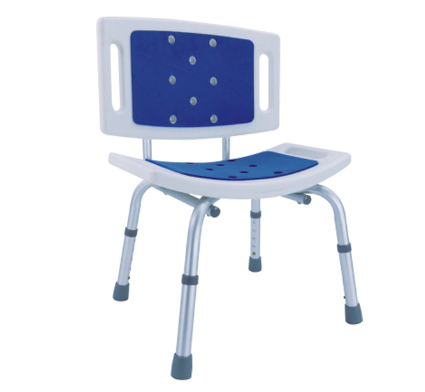
Most people assume a safe transfer depends on grip strength or armrest placement, but seat height is the quiet factor that either sets you up for a smooth lift or forces a risky heave. If the seat sits too low, your hips drop below your knees, which shifts your centre of gravity backward and demands far more quadriceps and core effort just to rise. That extra strain does not just tire muscles; it increases the chance of a missed step, a twisted knee, or a fall halfway up.
On the other hand, a seat that is too high leaves your feet barely touching the floor, so you end up sliding forward, gripping the armrests, and relying on momentum instead of controlled leg drive. The ideal height allows your feet to rest flat with knees bent at roughly 90 degrees, giving you a stable base and letting the big muscles of your legs do the work. Even a one-inch adjustment can mean the difference between a transfer that feels effortless and one that feels like a daily gamble.
For transfers from a wheelchair to a bed or toilet, the destination height matters just as much. Matching the seat heights or using a slight downward slope toward the target reduces the need to lift your body weight against gravity. A height mismatch of even a couple of centimetres forces you to push up more, hold awkward positions longer, and often twist at the spine to compensate. That twisting under load is where back injuries and shoulder strains quietly begin.
Slip-Resistant Feet and Other Details That Keep the Chair in Place
The first thing you notice when you sit down is how the chair doesn't budge an inch, even on smooth hardwood. That's thanks to the grippy rubber pads on the bottom of each leg. They're not just cosmetic—they compress slightly under your weight, creating a firm hold without scratching the floor. You can shift around, lean back, or reach for something across the desk, and the chair stays exactly where you left it.
Beyond the feet, the weight distribution plays a quiet but crucial role. The base is engineered with a lower center of gravity than most office chairs, so even if you're the type who perches on the edge or crosses one leg under the other, there's no wobble or tilt. The joints are reinforced with steel brackets, not just glue or cheap plastic, which means the frame stays rigid over years of daily use. You won't hear creaks or feel the seat loosen under you after a few months.
It's the small, unglamorous details that make the difference. The backrest lock clicks into place with a satisfying solidity, and the armrests don't slide down on their own once you set the height. Even the casters—if your model has them—engage only when you deliberately push, so there's no accidental rolling while you're trying to concentrate. Taken together, these touches turn an ordinary chair into something that truly stays put.
Materials That Survive Constant Moisture Without Feeling Clinical
There's a quiet luxury in materials that laugh off humidity without resorting to the sterile sheen of a hospital corridor. Think of a worn teak bench left out in a coastal garden—its surface grows silvery and softly textured, but never succumbs to rot. Or a thick slab of soapstone, cool to the touch, that has absorbed years of steam from a busy kitchen and still feels like a river stone rather than a lab counter. These are the workhorses of damp environments, chosen not for their resistance to life, but for how gracefully they let moisture become part of their character.
Linen, often dismissed as too wrinkly for polite company, turns out to be a hero in muggy climates. It wicks sweat away from skin, dries in minutes, and develops a rumpled patina that reads as intentional ease rather than neglect. Pair it with solid brass hardware—unlacquered, so it tarnishes into a deep, mottled bronze—and you have a bathroom or laundry room that feels like a well-kept secret. Even cork, usually tethered to wine bottles, can be a revelation: it resists mildew, cushions footsteps, and warms to the touch, all while looking like something you'd find in a mid-century cabin, not a clinic.
The trick is to avoid anything that shouts 'waterproof' through shiny polymers or too-perfect sealing. Instead, lean into natural oil finishes, waxed canvas, or reclaimed woods that have already proven their mettle. A piece of driftwood-inspired furniture, for instance, has nothing to lose from a little damp—it has already been shaped by the sea. By choosing materials that age with moisture rather than fight it, you create spaces that feel lived-in and resilient, never clinical, and always ready for the next humid afternoon.
Adjusting the Backrest and Armrests for Everyday Comfort
Tuning the backrest isn't about finding some perfect angle from a manual—it's about letting your spine settle into its natural curve while you breathe. Start by leaning back fully, then ease the tension until you feel the chair take your weight without pushing you forward. A slightly open angle, maybe ten or fifteen degrees past vertical, keeps your lower back supported while your shoulders stay relaxed. If the chair rocks or reclines, set the resistance so you can move without flopping back, and let that gentle give become part of how you sit through calls, reading, or just thinking.
Armrests quietly shape how your neck and wrists feel by the end of the day. Raise or lower them until your elbows rest at about ninety degrees with your hands floating over the keyboard—not reaching up or splaying out. If the pads slide forward or pivot, bring them close enough that your forearms touch down without hunching your shoulders. The trick is to forget the armrests are there; when they're doing their job, your arms feel almost weightless, and the usual tightness between your shoulder blades never gets a chance to build.
Small tweaks beat big overhauls here. Move one setting a few millimeters, then type for a minute and notice where the pressure lands. Maybe your lower back wants a touch more contact, or your elbows feel better with the rests slightly lower than textbook advice suggests. The goal is a setup that fades into the background, letting you shift, stretch, and stay focused without constantly readjusting.
What to Do When the Chair Gets Wobbly or Starts to Show Wear
A wobbly chair rarely announces itself with a bang—it starts as a faint creak or a slight tilt you only notice when reaching for a book. The moment you feel that give, stop using it. Continuing to sit on a loose joint turns a five-minute fix into a split leg or a cracked stretcher. Flip the chair upside down on a soft cloth and check every connection: where the legs meet the seat, where the back attaches, any crossbars underneath. Wood glue, a couple of clamps, and a bit of patience will handle most looseness. For chairs held by screws or bolts, tighten them first—often that's all it takes.
If the finish is starting to show wear—cloudy patches, fine scratches, worn edges—don't rush to refinish the whole piece. A gentle cleaning with a damp cloth and mild soap can remove grime that looks like damage. For deeper scuffs, a touch-up marker matched to the wood tone works wonders, followed by a light rub of paste wax. Watch for peeling veneer: lifting edges should be glued down immediately before they catch and tear. The goal is to slow the wear without erasing the chair's history.
Sometimes the problem isn't the chair itself but the floor it stands on. Adding felt pads or adjustable glides can stop rocking on uneven surfaces and protect the legs from further wear. If a leg has been sanded unevenly from years of dragging, level it carefully with a file and reapply a matching finish to the bare wood. Check the chair every few months—loose joints tighten best early, and worn spots stay small if you catch them in time. A chair that gets a little attention now won't need a rescue later.
FAQ
Look for a maker that controls the full production process—from raw material selection to final assembly—rather than outsourcing critical steps. They should offer transparent testing data, comply with ISO 13485 or similar medical device standards, and provide real warranty support. A dependable manufacturer also welcomes factory audits and can share material certifications for every component.
A well-designed bath chair gives users a stable, non-slip surface that eliminates the need to stand on wet tile. Rubber-tipped or suction-cup legs grip the floor, while armrests and back supports offer leverage points for sitting and standing. This reduces balance demands and keeps the user centered over the tub or shower pan.
Anodized aluminum frames resist corrosion and stay lightweight, while high-density polyethylene seats and backrests won't crack or harbor mold. Stainless steel hardware should be marine-grade to prevent rust. Avoid cheap plastics that become brittle after repeated hot-water exposure.
Yes, the better manufacturers offer adjustable leg heights, removable armrests, and reversible backrests to accommodate narrow stalls, corner tubs, or low-clearance shower bases. Some will even work from your measurements to produce a custom width or a cut-out seat for easier hygiene access.
The chair should undergo load testing at 1.5 times its maximum rated weight, a stability test on a 10-degree incline, and salt-spray corrosion testing for metal parts. Additionally, each batch should have a documented inspection record covering weld points, rivet tightness, and surface finish.
A contoured seat with drainage slots prevents water pooling and skin maceration. A slight backrest recline of 5–10 degrees reduces pressure on the lower spine. Padded armrests that stay cool and dry are often overlooked but make a big difference for users who need to push themselves up.
Standard chairs usually support up to 300 pounds, while bariatric models are engineered for 500 pounds or more with reinforced cross-bracing, wider seating, and heavier-gauge aluminum. The bariatric version will have larger rubber feet and a lower center of gravity to maintain stability under load.
Slots should be tapered—wider underneath than on the surface—so water and soap residue flow through completely. Space them no more than 8 mm apart to keep skin from pressing through, and avoid sharp edges that can trap biofilm. The seat should sit slightly angled forward when installed.
Conclusion
The right bath chair does more than hold a person steady—it has to work inside the real bathroom where it will live. A common mistake is choosing a seat based only on the user's body measurements while ignoring the tight corners, sliding shower doors, or a tub edge that changes everything. Smart buyers start by measuring the actual bathing space, including clearance around the toilet or sink if the chair gets moved. Then they look at seat height: too low makes standing up a struggle, too high leaves feet dangling and reduces leverage. Ideally, the user's feet rest flat on the floor or tub base with knees at roughly a right angle, which makes transfers safer and less frightening. The difference of an inch or two often decides whether someone feels independent or trapped.
Stability comes from details that are easy to overlook. Slip-resistant rubber feet, wide leg stance, and a frame that doesn't flex under shifting weight keep the chair planted on wet surfaces. Materials matter too—aluminum or reinforced plastic handles constant moisture without rusting or cracking, yet a matte, warm-toned finish avoids that cold, medical look. Comfort isn't an afterthought: backrest and armrests should be adjustable so the user can lean back slightly during a shower without pressure points, and armrests can act as push-off supports. Finally, a good guide reminds owners to check for wobbles, loose screws, or cracked tips every few weeks. Tightening a bolt early or replacing worn feet costs little and prevents a fall that could undo all the careful planning.
Contact Us
Contact Person: Frank Chan
Email: [email protected]
Tel/WhatsApp: 0086-13924529088
Website: https://www.suncare-medical.com