

Best Cooling Gel Mattress Topper for Hot Sleepers Who Want Deeper Rest
2026-11-19
Waking up drenched in sweat despite the AC running all night? Most traditional mattress toppers trap heat and leave you tossing. That’s where the Kunbao cooling gel mattress topper changes the story — built to actively draw heat away from your body so you stop sleeping hot and finally get the deeper, uninterrupted rest you’ve been missing.
How Heat Quietly Sabotages Deep Sleep
Most people blame a warm bedroom on simple discomfort, but the problem runs deeper. Your core temperature has to drop by roughly one to two degrees before slow-wave sleep can settle in. When the room traps heat, your body keeps working to shed it, and that quiet effort pulls you out of the deeper stages you need most. You may technically be asleep, but the restorative part keeps slipping away.
Heat also changes how your sleep cycles behave. Instead of moving smoothly through the night, the brain hovers in lighter sleep and can wake more often without you fully noticing. Even if you stay in bed for eight hours, the loss of slow-wave sleep leaves you groggy, moody, and strangely unrefreshed by morning. High humidity makes it worse because sweat stops evaporating efficiently, leaving your skin damp and your body stuck in a cooling loop that never finishes.
The most deceptive part is that the damage accumulates quietly. One warm night may only leave you slightly off, but repeated heat exposure trains your body to expect disruption. You may start falling asleep out of exhaustion rather than genuine tiredness, and deep sleep becomes less reliable over time. Keeping the sleep surface and air cooler than you think necessary often does more for rest than any sleep aid or calming routine.
The Cooling Gel Illusion: What to Look For Instead
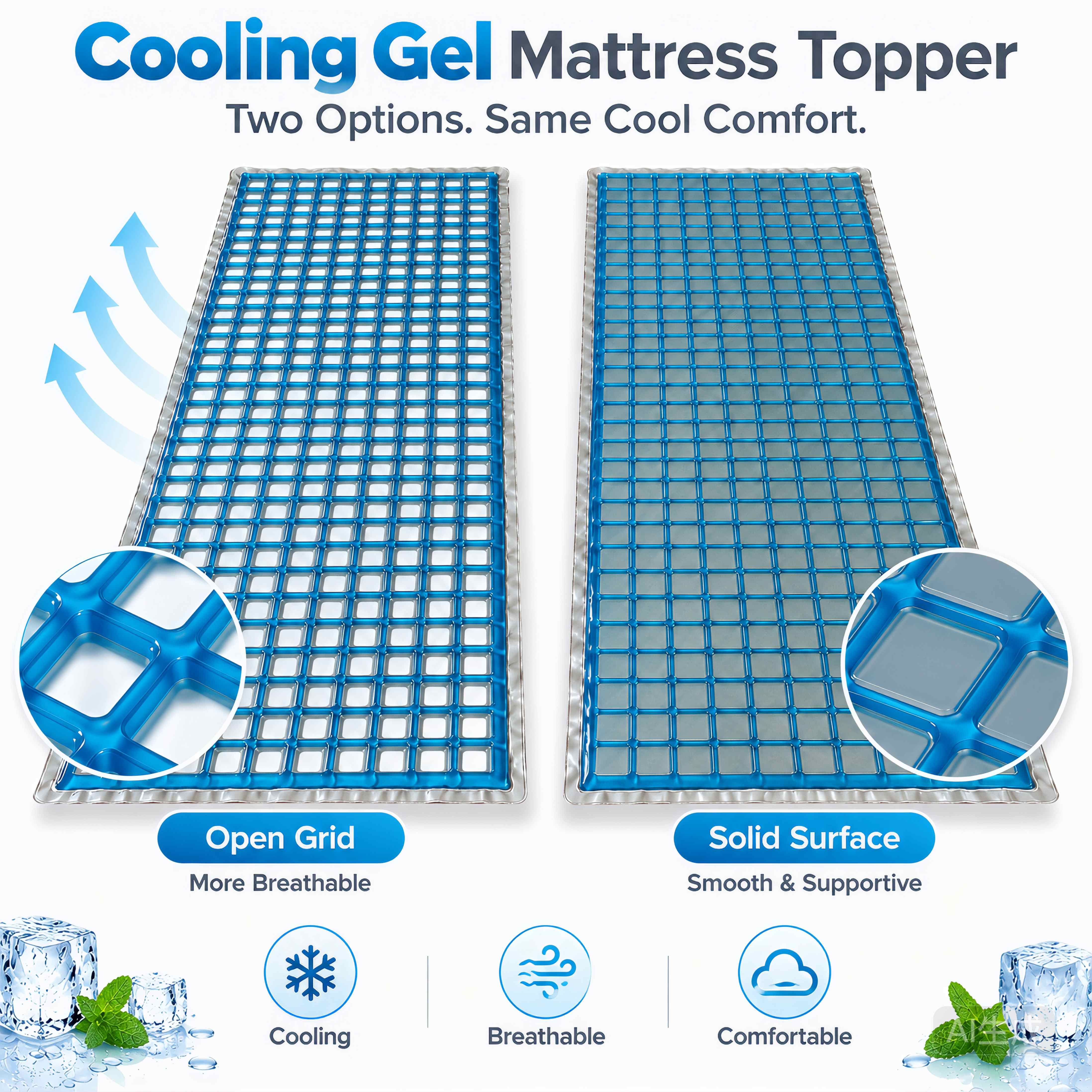
A cold-to-the-touch surface can feel convincing in a showroom, but the effect rarely survives a full night. Most cooling gel layers absorb body heat quickly, and once they reach your skin temperature, there is no active mechanism pushing that warmth away. What you are left with is often a dense, heat-trapping material that feels cool for ten minutes and then goes flat.
A more dependable approach is to pay attention to how air moves through the product. Open-cell foam, ventilated support cores, and covers made from natural fibers like cotton or lyocell tend to do more for nighttime comfort than a thin gel coating. Phase-change materials can also help when they are placed close enough to the surface to absorb and release heat gradually, but they work best alongside breathable construction rather than as a standalone fix.
Before buying, look past the gel label and check for practical details: a removable, washable cover, a support layer that is not overly dense, and visible airflow channels. Those features tell you more about long-term temperature regulation than any instant chill on the palm of your hand.
Materials That Keep Night Sweats From Winning
Cotton might feel like the safe default, but once it soaks through it just holds cold moisture against your skin. Bamboo viscose and Tencel tend to wick sweat outward and dry faster, so the fabric rarely turns into a damp layer at 3 a.m. Merino wool works even when it looks too thin to help—it pulls moisture away and keeps its warmth without turning clammy.
The weave matters as much as the fiber. Open knits or lightweight jerseys give heat an escape route before your body ramps up another sweat cycle. Look for labels that mention moisture-wicking finishes or temperature-balancing blends rather than brushed fleece, which traps humidity exactly where you don't want it.
If you want a simpler fix, change the layer closest to your skin first. A loose, breathable top made from lyocell or a wool blend can stop the cycle of waking up damp, then freezing once you throw off the covers. Keep synthetics like solid polyester out of that first layer—they often repel water in the wash but still seal heat against your chest at night.
Firmness and Support for Stomach, Back, and Side Sleepers
Most mattresses lean toward one sleep position, but this one manages to feel balanced without turning into a compromise. The surface yields just enough under the shoulders and hips for side sleepers to avoid pressure buildup, while a slightly firmer core keeps the spine from bowing when you roll onto your back. Stomach sleepers get the support they need under the pelvis, so the lower back does not sink into an exaggerated curve overnight.
What stands out is how the support shifts with your movement rather than fighting it. The top layer has a subtle give that softens the first contact, but the deeper layers engage quickly to create a stable, even plane. That means less of the trapped, sinking feeling that can make changing positions feel like a workout, and more of a smooth roll from side to back to stomach.
Edge support holds up well too, which matters when you sleep close to the perimeter or sit on the side of the bed in the morning. There is no dramatic collapse or sliding sensation, and the mattress keeps its shape across the full surface instead of feeling supportive only in the middle.
Cover Fabrics That Feel Cool Before You Even Lie Down
Some covers start pulling heat away the moment your hand touches them. It is not just a lighter thread count or a smoother weave. Fabrics like bamboo viscose, Tencel lyocell, and certain high-gauge cotton percales have an open structure that lets air move before body heat gets trapped between you and the mattress.
That first cool sensation matters because it shapes how the bed feels before you settle in. A cover with a dense synthetic knit can hold warmth at the surface, while a breathable, moisture-wicking blend drops the resting temperature by a few degrees. The difference shows up most in warm rooms or for people who run hot at night.
Look for covers with cooling weaves rather than added chemical finishes. A crisp percale or a naturally smooth lyocell will usually feel cooler on contact than brushed microfiber or heavyweight sateen. If the fabric feels chilled against the inside of your wrist, it will likely do the same when you finally lie down.
Care and Placement Tweaks That Preserve the Cooling Effect
Small changes in how you position and maintain cooling items often matter more than replacing them. Keep surfaces free of dust and lint, since even a thin layer can trap heat and weaken airflow. For fabric covers or breathable panels, follow the care tag but skip fabric softener where possible; softener can clog open weaves and hold warmth close to the skin. A gentle rinse or vacuum every couple of weeks keeps the pores clear and the surface feeling noticeably fresher.
Placement deserves just as much attention. Move the item away from direct sun, especially during midday, because radiated heat can linger long after the room cools down. If you use a cooling pad, mat, or pillow, give it space underneath rather than burying it under thick blankets or mattress protectors. Open air on both sides lets passive heat escape instead of cycling back. A spot near a window with a cross breeze usually works well, but avoid areas beside electronics, radiators, or heat-reflecting walls. Steadier temperatures help the cooling effect appear faster and last longer.
Treat the surrounding room as part of the system. Light-colored, breathable covers can make a bigger difference than expected, and folding instead of compressing the item keeps internal layers from flattening. When not in use, store it flat or loosely rolled in a cool, dry place because heat and moisture gradually break down cooling fibers. Even small habits, like closing curtains before the afternoon sun hits, reduce the workload and help the original cooling performance stay intact.
FAQ
The gel is usually infused into foam or placed as a separate layer to pull heat away from your body and spread it across the surface, so you don't get that trapped warmth that regular foam often creates. It also tends to have a more breathable structure, which helps air move through instead of settling around you.
People who wake up sweaty, feel heat building under their back or hips, or simply run warm at night tend to notice the biggest difference. It can also help if your current mattress sleeps too hot but you're not ready to replace the whole bed.
Two to three inches is a good middle ground for most adults. If you're a side sleeper or have pressure points, closer to three inches gives more cushioning; back and stomach sleepers often do fine with two inches because they need less sink.
It won't change your body temperature, but it can make the sleep surface feel noticeably cooler for the first few hours and prevent heat from building up as much overnight. For many people, that's enough to cut down on clamminess and wake-ups.
A breathable, waterproof protector is a good idea if you want to shield the topper from sweat, spills, or oils. Just avoid thick quilted pads, because they can block the cooling effect and trap heat right where you don't want it.
Most can't be machine washed. Spot clean with mild soap and water, let it air dry completely, and vacuum the surface occasionally to remove dust. A removable cover with a zipper makes upkeep much easier.
With normal use, expect around three to five years before it starts to lose support or the cooling surface feels less effective. Rotating it every few months and keeping it clean can stretch that lifespan a bit.
Conclusion
Overheating at night is rarely dramatic, but it quietly pulls you out of the deeper stages of sleep before you realize you are awake. Your core temperature needs to dip slightly for slow-wave sleep to take hold, and a mattress that traps body heat fights that process all night. Many shoppers assume any cooling gel topper will solve the problem, yet a thin layer of gel-infused memory foam often warms up within an hour and does little once the room or your body heat rises. A better approach is to look past the word 'gel' and pay attention to how the whole topper breathes. Open-cell foam, ventilated latex, and hybrids with graphite or copper draw heat away instead of simply feeling cold at first touch. Those materials matter most if night sweats or humid bedrooms keep disrupting your rest.
Support still has to work with your sleep position, because a topper that only cools but lets your hips sink too far will create its own aches. Stomach sleepers usually need a firmer surface to keep the spine aligned, back sleepers do well with medium support, and side sleepers need enough give at the shoulder and hip without collapsing. The cover fabric also does more than people expect. A cool-to-the-touch knit made from Tencel, bamboo, or cotton can feel breathable before you lie down, while dense polyester covers tend to hold warmth. Small habits help the cooling effect last longer: skip waterproof protectors that seal in heat, wash the cover regularly so body oils do not clog the weave, and let the topper air out when you change the sheets. Rotating it every few weeks also keeps one side from packing down and losing airflow.
Contact Us
Contact Person: Catherine Peng
Email: [email protected]
Tel/WhatsApp: +86-13434169510
Website: https://www.kbcoolgel.com/