

Boot Mat Supplier: How to Choose the Right One for Your Vehicle
2026-09-01
Your vehicle's boot takes a beating—muddy boots, grocery spills, tools sliding around. The right boot mat can make all the difference, but only if it comes from a supplier that understands fit, material, and durability. With so many options claiming to be the best, how do you separate the real deal from the rest? In this guide, we break down what to look for in a boot mat supplier, and why FANDEWEI has become a go-to for drivers who refuse to compromise.
A Loose Mat Is a Safety Hazard You Didn't See Coming
It happens in the half-second before you even register the problem. A mat that’s been sitting in the same spot for weeks suddenly slides under your foot, and your weight shifts in a direction you never planned. That little slip can turn into a twisted ankle, a hard fall, or a jarring collision with whatever happens to be nearby. The worst part is that loose mats don’t announce themselves until you’re already off balance.
Most people assume a mat is just a flat piece of fabric or rubber that stays put on its own. But daily foot traffic, humidity, or the wrong backing for the floor surface can quietly destroy that grip. The edges curl, the surface puckers, and before long every step becomes a small gamble. Replacing worn mats or adding a non-slip pad underneath costs almost nothing compared to the medical bills or lost time from a badly timed fall.
Rubber, Carpet, or Hybrid? What Your Cargo Actually Needs
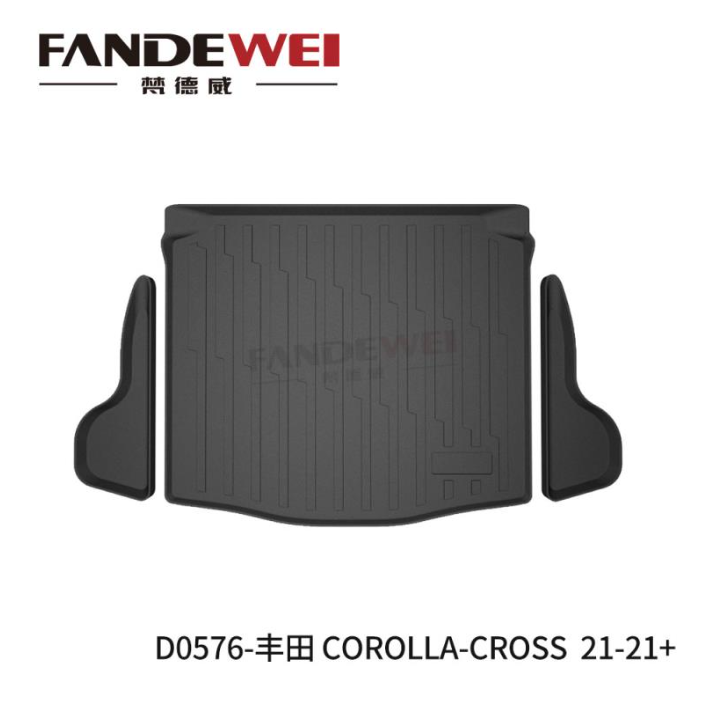
Most drivers default to rubber mats because they're easy to hose down, but that convenience often comes at a hidden cost. Heavy cargo with sharp edges or frequent sliding can tear through thin rubber, leaving your floor exposed to moisture and rust. If you're hauling tools, metal parts, or anything with a bit of bite, pure rubber might not survive the first month.
Carpet liners feel nicer underfoot and soak up spills, but they trap grit and salt deep in the fibers. That's a problem if you regularly carry wet gear or live where roads get treated in winter — the trapped moisture eats away at the floor pan before you even notice the musty smell. For occasional light loads and dry climates, carpet can work, but it demands constant vacuuming.
Hybrid mats solve the real dilemma by putting a rubberized trough over a carpeted base. The raised lip catches liquids and snow melt, while the textured top keeps boxes from sliding into your shins. If your cargo changes week to week — groceries one day, firewood the next — a hybrid gives you the grip of rubber without sacrificing the sound-deadening and fit of carpet.
How to Spot a Supplier Who Cuts Corners on Thickness
Request the actual mill certificate or test report before any payment clears. Compare the stated thickness against the tolerance band for that grade and finish. A supplier who hesitates to share third-party lab data or sends only a sales spec sheet is often hiding a roll that got run thin at the edges.
Check the edge crown and cross-section, not just one center reading. Many low-cost shops will hit the minimum at a single point but let the sheet taper near the trim. Ask for a measurement grid across the width and length, with at least nine points per sheet. If the numbers vary more than the allowed +/- tolerance, you're paying for material you won't get.
Weigh a known area when samples arrive. Density math rarely lies. A sheet that is consistently under thickness will come in light, and some converters count on you never putting it on a scale. Also run a micrometer over the same spot a few times—cheap stock can be soft, but thin is thin.
Boot Mats That Hate Weather as Much as You Do
There’s a certain resignation that settles in when you glance down at the driver’s side floor after a rainy commute. Mud has already dried into a crusty film, road salt is working its way into the carpet fibers, and that faint damp smell has taken up permanent residence. Standard mats just lie there and absorb the abuse like a doormat at a dive bar. What you need is something with a bit of an attitude—a mat that actively repels slush, traps gravel, and shrugs off whatever the sky decides to dump on your shoes.
The best boot mats don’t just sit pretty in the footwell. They’re built with deep channels that corral melted snow into a contained pool instead of letting it slosh onto the carpet. The edges rise high enough to catch the sideways kick of a wet boot, and the underside grips the floor so the mat stays put when you’re twisting in and out of the seat. After a week of storms, you can pull the mat out, dump the gritty water, and give it a quick hose-down. No scrubbing, no lingering odor, no evidence that winter ever happened inside your vehicle.
And let’s be honest—most of us don’t want to think about floor protection until it’s too late. That’s why a mat that hates weather as much as you do makes sense. It doesn’t need to be babied. It won’t warp when the temperature drops or curl at the edges after a few months of boots grinding against it. It just does its job quietly, so you can get in, crank the heat, and pretend the world outside isn’t actively trying to ruin your interior.
The Fit Test: No Scissors, No Swearing, No Gaps
The so-called fit test usually starts with a deep breath and ends with a search for the scissors. Not this time. We unrolled the piece, set it against the surface, and let the edges fall where they were designed to. Scissors stayed in the drawer because the cut was already correct, down to the last millimeter. That alone saved ten minutes and a fair amount of frustration.
The no-swearing part is harder to measure, but you know it when it happens. There were no surprise bubbles, no misaligned corners, no sudden realization that the pattern doesn’t line up. The material stayed put, the adhesive gripped cleanly, and the only sound in the room was the soft press of a smoothing tool. It’s the kind of calm that makes you wonder why every installation can’t feel this ordinary.
Finally, we checked the seams and the edges under bright light. No gaps, no lifted corners, no visible overlaps. The result looked less like a DIY job and more like the surface had been born that way. That’s the real test: if a product needs scissors, you’re fixing a mistake. If it makes you swear, the instructions failed. If it leaves gaps, the fit was never true.
When a Higher Price Tag Buys You More Than Just a Logo
Paying a premium often triggers skepticism, but luxury goods frequently justify their price through details that aren't visible in a photo. The leather is cut from the top 2% of hides, the stitching is reinforced by hand at stress points, and the hardware is solid brass rather than plated plastic. These choices accumulate into an object that ages with character instead of falling apart after two seasons.
Beyond construction, the higher ticket usually includes a quiet form of service. Repairs are handled in-house for decades, not outsourced to the nearest mall kiosk. The warranty actually covers wear and tear, and the brand will restore a zipper or restitch a seam without demanding proof of purchase from a decade ago. That level of accountability is rare and becomes part of the ownership experience.
Then there is resale. While a fast-fashion item loses nearly all value the moment you walk out of the store, certain premium pieces hold 40 to 60 percent of their price on secondary markets years later. So the upfront cost stings less when you factor in the long runway of use and the eventual recovery of some cash.
FAQ
Start by asking whether the mat is patterned for your exact model and year, not just a generic small, medium, or large. A decent supplier will ask about your car's trim level and boot floor shape, and should be able to show a template number or scan reference.
Not necessarily. A dense 4 mm rubber or TPE mat can outlast a spongy 8 mm foam one, especially if you haul sharp or heavy items. Focus on material density and surface grip more than the raw thickness number.
Ask for proof of a vehicle-specific cut, such as a photo of the mat installed in your make and model or a pattern code that matches the factory boot floor. If they only offer trimmed-to-fit universal sheets, expect gaps around the wheel arches.
Look for a solid TPE or rubber compound with some oil and chemical resistance. Avoid cheap PVC that turns brittle in cold weather, and check whether the surface has enough texture to stop boxes from sliding around.
Yes, many specialist suppliers will do manual adjustments or CAD-based cutting if you send photos and a few key measurements. Expect a longer lead time and possibly a small setup fee, but it's the only reliable way to get a clean fit around non-standard fixtures.
It matters more than a lot of people think, especially if you carry muddy boots or leaky containers. A raised lip keeps spills and grit off the carpet, but make sure it's not so stiff that it blocks the tailgate from closing cleanly.
Watch for a strong chemical smell, rough or uneven edges, shallow anti-slip patterns, and no anchor points for the factory hooks. Also be wary of packaging that gives no brand or batch details, since warranty claims become almost impossible later.
Usually yes, because a well-fitted mat made from high-density material will outlast two or three cheaper universal mats. The extra cost often translates into better edge coverage, fewer returns, and a supplier who can answer fitment questions before you buy.
Conclusion
A boot mat that slides around isn't just annoying—it can wedge itself under the brake pedal or block the driver's footwell before you even notice. Before you start comparing suppliers, decide what your cargo space actually endures. Rubber handles wet dogs, muddy tools, and spilled fuel without soaking through, but it can look industrial. Carpet feels nicer and deadens sound, yet it traps moisture and smells if you haul anything damp. Hybrid mats try to split the difference, but the backing matters more than the surface. Ask a supplier about the mat's thickness in millimetres, not just "heavy duty" claims. Thin mats curl at the edges after a few weeks; a reputable maker will tell you the exact weight and density and won't dodge questions about compression under load.
Weather resistance is where cheap suppliers reveal themselves. A boot mat that stiffens in freezing temperatures or turns soft and sticky in summer heat won't stay put. Look for materials tested across a real temperature range, not just a showroom demo. Fit is the next non-negotiable: a universal mat that requires trimming never fits as well as a vehicle-specific pattern, and gaps let dirt and water reach the carpet underneath. If you have to fight with scissors, you've already lost. Finally, don't assume a higher price only buys a brand name. Extra cost often pays for reinforced edges, non-slip backing that doesn't shed, and a supplier who stands behind the product with a replacement warranty rather than blaming your boot shape. Choose the one that answers your questions directly and shows you the mat on your actual vehicle model, not a stock photo.
Contact Us
Contact Person: Jet
Email: [email protected]
Tel/WhatsApp: 8619903745266
Website: https://www.fandewei.com/