

Chemical Printing and Dyeing Membrane Filter Press Solutions for Effective Wastewater Treatment
2026-10-04
In the demanding world of chemical printing and dyeing, wastewater treatment is not just a regulatory hurdle—it’s a critical step for sustainable operation. Traditional methods often fall short, leaving operators frustrated with high moisture content and costly disposal. That’s where the right membrane filter press changes everything. At Sinou, we understand that every drop of reclaimed water and every dry cake counts. This blog dives into how advanced filter press solutions can transform your effluent challenges into operational wins, without the usual complexity.
How Membrane Filter Presses Handle Reactive and Disperse Dye Slurries
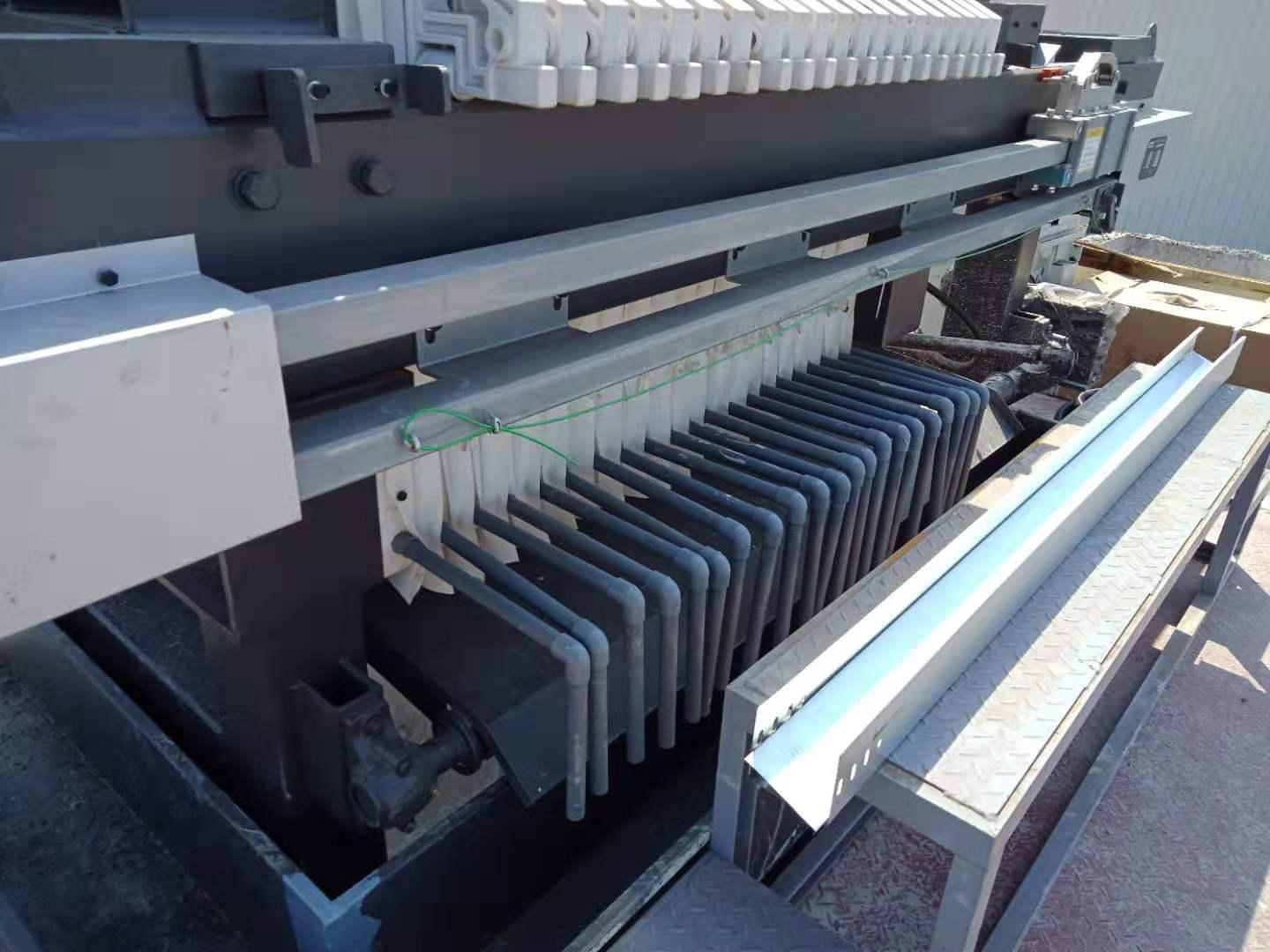
Reactive dye slurries are typically full of fine, water-loving solids that do not give up moisture easily under gravity or vacuum. A membrane filter press changes that by forming a filter cake at low feed pressure, then using the flexible membrane to press the cake from one side. This second squeeze drives out trapped water without forcing solids through the cloth, so the cake comes away firmer and the filtrate stays clearer.
Disperse dye slurries behave differently—they pack into dense layers and can blind standard filter cloths if pressure spikes early. The membrane press steps around this by keeping the initial filtration slow and even, then expanding the membrane in a controlled ramp. The even pressure compresses the whole cake face at once, which avoids channeling and yields a uniform moisture profile from center to edge.
In practice, the settings shift with the slurry. Reactive systems often tolerate a shorter, sharper squeeze because the cake is more compressible; disperse systems need a longer, lower-pressure squeeze to prevent cracking and fines generation. Operators use this built-in flexibility to run both types on the same machine without sacrificing throughput or cake release.
Reducing Sludge Cake Moisture Without Overdosing Conditioners
Operators often chase lower moisture by adding more polymer, but that backfires once the dose passes the optimum. Excess conditioner leaves residual charge in the liquid phase, making the flocs sticky and less porous. The cake traps water inside instead of releasing it under pressure. A better starting point is to map dose response with a simple jar test and watch for the point where free drainage peaks, not where floc looks largest.
Adjusting shear energy is another lever. In a centrifuge, lowering the differential speed a bit can compact the cake without needing more chemicals. In a belt press, slowing the belt and using a slightly lower wash water flow can let gravity do more of the work. These changes often reduce moisture by a point or two, while the polymer dose stays flat or even drops slightly.
Monitor the sludge's ionic demand as well. If lime or ferric is added, a swing in pH or alkalinity changes how the polymer unfolds. Instead of increasing the conditioner, correct the upstream pH or blend different sludge batches. That preserves the dewaterability window and avoids the rubbery cake that overdosing produces.
Choosing the Right Filter Cloth for Acidic and Alkaline Dye Baths
Matching filter cloth to the chemistry of your dye bath often comes down to fiber resistance. In acidic conditions, polypropylene and polyester tend to hold up well, but polypropylene edges ahead when the pH dips below 3 for extended runs. Alkaline baths, on the other hand, can chew through polyester faster than you'd expect—especially with hot caustic solutions. Nylon and polyamide fabrics offer better stamina there, though they can swell and lose some dimensional stability.
Beyond material choice, pay attention to weave and finish. A calendered surface reduces particle bleed-through when you're trapping insoluble dye aggregates, while a singed finish helps with sticky alkaline thickeners. For mixed production lines, it might be worth keeping two sets of cloths and tagging them clearly—acid bath cloths can become brittle if later exposed to strong bases, and vice versa.
Don't ignore the hardware either. Gaskets and backing screens react differently to pH swings, and a perfectly chosen filter cloth won't save you if the plate frame is corroding. Ask your supplier for chemical compatibility charts, but also run a small side-by-side trial with your actual dye recipe—lab data rarely captures the combined effect of temperature, surfactants, and repeated cleaning cycles.
Shortening Filtration Cycles in High-Solids Printing Wastewater
High-solids printing wastewater tends to form a thin, slimy filter cake that blinds the medium within minutes, so the usual fix of simply raising pressure rarely works. The key is to condition the slurry before it reaches the filter—using a short-chain cationic flocculant in combination with a small dose of bentonite or alum can restructure the fine pigment and binder particles into larger, more open agglomerates. This shift alone often cuts the filtration time by half without adding much sludge volume.
Mixing intensity during conditioning plays an underappreciated role. A brief, high-shear flash mix followed by gentle flocculation builds flocs that hold up under vacuum or pressure, rather than collapsing into a gel layer. Operators who tune the stirrer speed and residence time instead of just increasing polymer dose typically see more consistent cycle times, even when the ink solids concentration fluctuates between batches.
On the equipment side, pre-coating the filter with diatomaceous earth or perlite before each cycle prevents the sticky ink solids from embedding in the cloth. Add a low vacuum ramp-up during the first minute of cake formation, and the cake stays porous enough to peel away cleanly. Monitoring the pressure differential and stopping the cycle when the cake reaches about two-thirds of its maximum thickness avoids the long tail of inefficient filtration that often hides at the end of a run.
Corrosion-Resistant Plate Designs That Survive Harsh Dye Effluent
Dye effluent rarely behaves like a single, predictable fluid. Depending on the dye class and finishing step, the stream can swing from acidic to alkaline within hours, carrying chlorides, sulfates, and residual oxidizers that chew through standard stainless grades. A plate that survives must start with an alloy whose passive film reforms quickly after mechanical or chemical disruption. Super austenitic grades with high molybdenum and nitrogen, or duplex stainless with balanced ferrite-austenite ratios, tend to outperform 316L by a wide margin when pitting and crevice attack are the primary failure modes. Designers also need to specify low surface roughness and avoid sharp corners on plate edges, because dye solids and biofilm can lodge there and create oxygen-depleted zones that trigger localized corrosion.
Beyond alloy choice, the way plates are joined and finished often decides service life. Welds on corrosion-resistant plate need full penetration and a smooth, slag-free cap, since any tiny undercut or spatter becomes a crevice in high-chloride dye baths. Post-weld pickling and passivation restore the chromium oxide layer and remove heat tint, which is far more susceptible to attack than the base metal. Some operations go further by using cladding—a thin layer of a high-nickel alloy bonded to a cheaper carbon steel backing—to balance cost and performance. In areas where dye liquor stagnates, such as behind baffles or under weirs, adding drain holes or standoff spacers prevents the wet-dry cycles that accelerate chloride stress corrosion cracking.
Field data from textile mills show that even small design changes can double plate life. For instance, rounded corners on overflow weirs and launder plates reduce turbulence and solids accumulation, while a slight downward slope on horizontal surfaces keeps dye effluent moving instead of pooling. Coatings are rarely a standalone fix; they work best as a secondary barrier over a corrosion-resistant substrate, because any pinhole in a coating on carbon steel invites rapid underfilm corrosion. Regular ultrasonic thickness monitoring at known trouble spots—such as the splash zone near dye addition points—helps maintenance teams replace plates before leaks occur, rather than reacting to unexpected failures during production runs.
What Real Dyeing Facilities See in Effluent Quality After Press Upgrades
On the floor, the most immediate change after a press upgrade is what operators see in the equalization tank. Within two or three sludge cycles, the supernatant often clears noticeably, and the lab reports drop in suspended solids from the 35-50 mg/L range to below 15 mg/L. Filtrate still carries dissolved color from hydrolyzed reactive dyes, but the visible turbidity improves because better cake release and cloth washing keep fine solids from returning to the headworks.
What surprises many dyehouse managers is that COD does not always follow TSS. A higher-pressure membrane press will squeeze cakes to 25-30% moisture instead of 40-45%, which reduces leachate volume, but unless the dissolved organic fraction is removed upstream, effluent COD may only dip 5-10%. Some facilities see a bigger drop in total phosphorus because metal-salt sludge stays in the cake rather than bleeding back, but that depends on polymer dosing and cycle time.
Color is the stubborn metric. Press upgrades rarely touch ADMI or Pt-Co values, and in a few plants, filtrate color actually looks darker because more dye-laden water is squeezed out of the cake. The reliable wins are filterable solids, sludge return flows, and occasionally heavy metals if the cake stays intact. Real facilities that log data often find the press upgrade helps them stay under TSS permit limits without extra polymer, but they still need chemical pretreatment for color and COD compliance.
FAQ
Printing pastes often contain thickening agents and residual dyes that create sticky, slow-filtering slurries. Membrane plates apply a secondary squeeze after the initial feed cycle, forcing out trapped interstitial water and producing a drier, more compact cake. This cuts hauling costs and keeps the cloths from blinding as quickly.
The plate pack and cloth materials can be specified in polypropylene or specialty alloys that tolerate pH swings from 2 to 12 and sustained temperatures up to 80°C. Operators often add a neutralization or cooling step ahead of the press, but the membrane design itself does not rely on fragile seals or coated steel that would corrode.
It targets suspended solids, precipitated dyes, fiber lint, and heavy metal hydroxides after coagulation. While the press itself is a physical separation step, it excels at capturing the floc formed from reactive and disperse dyes, reducing chemical oxygen demand indirectly by removing the solids that would otherwise continue leaching color.
A conventional recessed press stops at the point where hydraulic feed pressure can no longer push water through the cake. The membrane adds a flexible diaphragm that inflates against the cake, squeezing out another 10 to 20 percent moisture. Drier cakes lower disposal weight and often pass the paint filter test for landfill acceptance.
For a well-conditioned slurry with adequate flocculant dosing, a full cycle including feed, membrane squeeze, core blow, and cake discharge runs between 2 and 4 hours. Highly variable solids loads from batch dyeing can stretch this to 6 hours, so buffer tanks and equalization are just as important as the press itself.
Rarely alone. The filter press removes the bulk of suspended color and solids, but soluble reactive dyes and small organic molecules pass through unless precipitated first. Most facilities use the press as the primary solids-separation stage, followed by activated sludge or advanced oxidation to handle the dissolved fraction.
Cloth condition and plate alignment matter most. Dye particles can wear grooves into old cloths, causing uneven cake release. Check hydraulic oil temperature, membrane inflation pressure, and the drip tray for stray solids after each cycle. A quick 10-minute inspection of cloth tie-downs and plate surfaces prevents most unplanned downtime.
Choosing the right coagulant and flocculant is the hidden half of the process. With dyehouse streams, a combination of ferric or aluminum salts plus a high-molecular-weight polymer creates larger, more porous flocs that dewater faster under membrane squeeze. Overdosing polymer makes a slimy cake that sticks to cloths, so jar testing each shift is worthwhile.
Conclusion
Membrane filter presses have become a practical fixture in dyeing wastewater treatment, largely because they adapt well to the sticky, high-solids slurries typical of reactive and disperse dye operations. The real work happens in the details: picking a filter cloth that can stand up to both acidic and alkaline dye baths without blinding, and tuning the press so sludge cake moisture drops without pouring in extra conditioners. Overdosing chemicals rarely solves anything—it just shifts the problem downstream. Instead, operators find that adjusting feed pressure, cycle timing, and cloth weave often trims cake moisture more reliably. For harsher effluents, corrosion-resistant plate designs make a noticeable difference, especially where dye baths swing between pH extremes and eat away at standard materials.
When printing and dyeing facilities upgrade their presses, the changes show up in day-to-day operations. Filtration cycles get shorter in high-solids printing wastewater because the membrane squeeze step removes more water before the cake is discharged. This means less downtime and fewer bottlenecks during peak production. More importantly, the effluent quality after the press improves enough that downstream treatment steps—biological or polishing units—face a lighter load. Facilities report clearer filtrate, lower total suspended solids, and a sludge cake that is easier to handle and cheaper to transport. The combination of the right cloth, corrosion-resistant plates, and better cycle control turns a routine dewatering step into a genuine part of the wastewater treatment strategy.
Contact Us
Contact Person: HaiYan
Email: [email protected]
Tel/WhatsApp: +86 18957325588
Website: https://www.senyoubeton.com/