

China Commercial Ozone Generator: A Comprehensive Guide for Industrial Buyers
2026-09-18
If you’re sourcing commercial ozone generators from China, you already know the drill: endless supplier lists, specs that blur together, and that nagging question of who actually builds equipment that lasts. This guide cuts through the noise. We’ll walk you through what really matters for industrial buyers—from output consistency to component quality—and spotlight why forward-thinking facilities are turning to LUFUTATECH as a benchmark for reliable, no-nonsense ozone systems. Whether you’re upgrading a water treatment line or sizing a large-scale disinfection project, you’re about to learn what separates a bargain from a smart investment.
Mapping the Real Cost of Ownership for Chinese Ozone Systems
The sticker price on a Chinese ozone generator is rarely the number that ends up on your balance sheet. Most buyers fixate on the upfront quote, then quietly absorb a trail of hidden expenses: oversized power draw during peak hours, electrode replacements every eighteen months, and cooling systems that struggle in warmer climates. If you only compare catalog prices across suppliers, you are effectively betting your operating budget on a number that ignores where 70% of the lifetime spend actually hides.
A more honest mapping starts with three costs that never appear on the invoice. First, feed gas preparation—if your system assumes dry, filtered oxygen but your facility runs on ambient air, the added dryers and filters can double your auxiliary energy use. Second, dielectric degradation: cheap ceramic tubes lose ozone output gradually, so operators compensate by raising voltage, which accelerates failure and spikes electricity costs long before a hard breakdown. Third, downtime during maintenance; a unit that needs weekly cleaning versus one that runs a month between interventions changes labor budgets dramatically. Factor in local electricity tariffs and your expected duty cycle, and the 'cheap' system often becomes the most expensive option within two years.
The practical fix is to request a five-year total cost sheet from any supplier, not just a warranty card. Ask for measured ozone output at 90% of rated capacity after 2,000 hours, not on day one. Insist on electrode replacement cost and lead time, and verify whether the quoted power consumption includes all auxiliary components. For Chinese systems specifically, the variance between manufacturers is wide—some export units with premium materials and honest derating, while others cut corners on internal seals that leak ozone and corrode nearby wiring. Mapping real ownership cost is less about finding the lowest price and more about identifying which supplier's engineering choices align with how you actually run the equipment.
Where Chinese Manufacturers Actually Outperform (and Where They Don't)
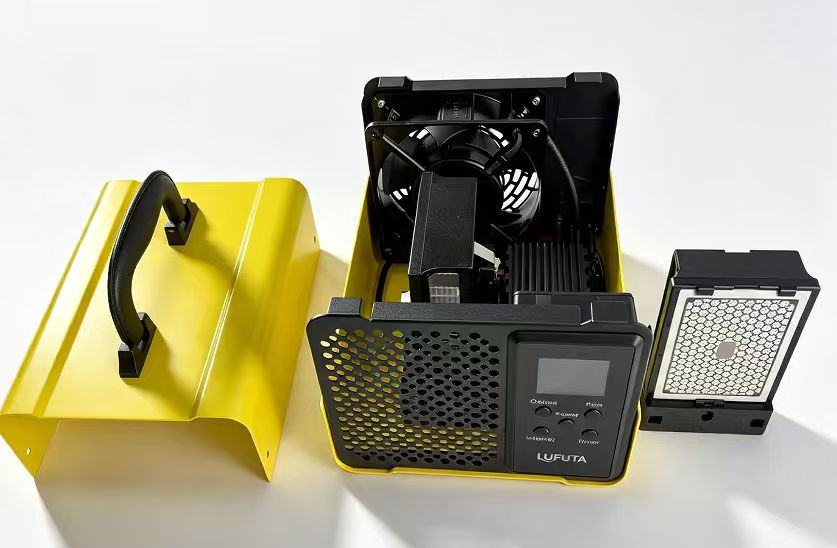
Ask anyone who has placed a production order in Shenzhen or Ningbo, and they’ll tell you the same thing: the speed at which a sample goes from CAD file to physical prototype is unlike anywhere else. Tooling that takes six weeks in Germany can often be turned around in ten days across the Pearl River Delta. That advantage isn’t just about cheap labor—it’s about clustering. When a mold shop, a plating line, and a PCB assembler sit within the same industrial park, the handoffs happen over lunch, not over a three-week customs clearance. For consumer electronics, fast-moving home goods, and most mid-range hardware, Chinese factories still win on iteration velocity and unit economics.
But the moment the part requires sub-micron tolerances, certified aerospace-grade alloys, or long-term traceability of every batch, the picture shifts. Many Chinese manufacturers can hit tight specs—but only the top tier, and often with imported measurement equipment and foreign-trained process engineers. After-sales support, documentation discipline, and willingness to take liability for field failures are areas where established German, Swiss, or Japanese suppliers still hold a clear edge. So the real advantage is not universal; it’s situational. If the product lives in a fast product cycle and tolerates minor finish variations, China is hard to beat. If the product must survive a decade in a surgical robot or a jet engine, the calculus changes quickly.
Reading Between the Lines of Spec Sheets and Certifications
Spec sheets love to flaunt impressive numbers, but the real story often hides in the footnotes. A high lumen count or a wide frequency range means little without context—how those figures were measured, under what conditions, and whether they hold up in actual use. Learning to spot the missing details, like the tolerance limits or the test environment, turns a glossy brochure into a useful tool instead of a clever trap.
Certifications add another layer of nuance. Not all badges carry equal weight; some are rigorous third-party verifications, while others are little more than a manufacturer’s self-declared claim. The difference becomes apparent when you dig into what a certification actually covers—does it test safety for a specific scenario, or just confirm that a product meets a broad, generic standard? Reading between these lines helps you separate meaningful assurance from clever marketing.
The art lies in asking the right questions before you commit. Compare the fine print across similar products, note what each spec sheet omits, and check whether certifications reference real-world conditions. A little skepticism up front saves you from discovering later that the impressive figures only apply in a lab, not in your own workflow.
Negotiation Tactics That Go Beyond the First Quote
Most buyers fixate on the first number they hear, but seasoned negotiators know the real work starts after that initial exchange. Instead of anchoring to a single quote, they treat it as a rough sketch—something to redraw through targeted questions about volume discounts, delivery timelines, or bundled services. This shift turns a static price into a flexible framework where value gets redefined on both sides of the table.
A quieter tactic involves letting the other party speak first about what the quote fails to include. Often, the gaps they mention—maintenance fees, training, rush charges—open the door to trade-offs that cost you little but mean a lot to them. Trading a few extra support hours for a faster payment schedule can feel less like concession and more like customizing the deal to fit real priorities.
Finally, don’t underestimate the power of revisiting a quote days after it’s been sent. By then, internal pressures or budget shifts may have changed the landscape. A simple follow-up that asks, “What would make this workable for your team?” signals flexibility without undercutting your position, often revealing the non-price levers that actually drive the decision.
Logistics, Customs, and Avoiding the Usual Delays
Most delays that appear at the border actually start well before the truck or container reaches the terminal. Getting the commodity description right, using the proper harmonized code, and aligning your Incoterms with who is responsible for import clearance removes a large share of routine holds. It also helps to have a freight forwarder or customs broker look over the invoice, packing list, and any certificates before departure, because small mismatches between document sets are one of the fastest ways to get pulled aside.
On the customs side, consistency matters more than speed. Declared values should match the commercial invoice, country of origin should be listed at the item level when required, and generic descriptions like "parts" or "gifts" tend to trigger a closer look. If you ship to multiple regions, pay attention to specific requirements such as an importer registration number, a phytosanitary certificate, or a conformity document; missing one can add days even when the physical goods are fine.
A practical way to avoid the usual delays is to treat every shipment as if it will be inspected. Add a day or two of buffer into the schedule, keep electronic copies of all documents where drivers or brokers can access them, and avoid changing the destination or consignee late in transit. When an inspection does happen, a clear paper trail lets customs move through the check more quickly than a rush of explanations after the fact.
After the Sale: Service, Spare Parts, and Building a Reliable Supply Chain
Post-purchase support often separates a memorable customer experience from a forgettable one. Without a clear plan for servicing equipment or delivering spare parts on time, even the best product can leave buyers stranded and frustrated. A well-designed after-sales framework starts with mapping out common failure points and stocking critical components closer to the customer, not just in a central warehouse.
Reliability isn't just about having parts on a shelf—it's about predicting demand before it becomes an emergency. Many companies rely on usage data and maintenance histories to anticipate which components wear out first, then position inventory accordingly. This proactive approach reduces downtime for customers and prevents the scramble of expedited shipping that erodes margins.
Building a dependable supply chain after the sale also means training local service partners and giving them the authority to make real-time decisions. When a technician can swap a board or replace a seal without waiting for approval, the customer feels the difference. Over time, that trust translates into repeat orders and referrals—far more valuable than any short-term cost saving.
FAQ
Focus on the dielectric material and electrode design first. Ceramic tubes tend to outlast glass, and a well-designed gap between electrodes decides both ozone concentration and energy draw. Ask for a third-party test report from a lab like TUV or SGS, not just an in-house certificate. Also check whether the power supply is matched to the ozone cell—many cheap units fail because the transformer and the tube were never tuned together.
Reputable suppliers run every unit on a bench test before shipping and record the actual ozone concentration, flow rate, and power consumption. Some will even send you a video of your specific unit being tested with a UV ozone analyzer. If a factory refuses to show live test data or only gives you a theoretical calculation, treat that as a red flag.
Yes, especially around safety certifications and documentation. Chinese factories often build to IEC or CE requirements if you ask, but internal wiring and moisture protection can vary. Always request a wiring diagram and check that the enclosure is rated for your environment—humid or dusty plants need proper IP ratings. Don't assume a CE mark means it was tested by an independent body; ask for the actual certificate.
For standard models under 100 g/h, many suppliers keep components in stock and can ship within 10–15 days. Larger or customized units, especially those with oxygen concentrators or PLC controls, usually take 30–45 days. Add another week or two if you need special voltage, language on the control panel, or a different color. Always lock the delivery date in the contract with a penalty clause.
Request a sample electrode set and run it for at least 200 hours at your site. Look for signs of pitting, brown deposits, or cracked ceramic. Then cut one electrode open to inspect the inner coating thickness. A consistent 0.3–0.5 mm dielectric layer is a good sign. Also ask the factory what raw material they use for the stainless steel mesh—316L holds up better than 304 in humid conditions.
Most offer online troubleshooting and spare parts delivery, but on-site service is rare unless you have a large enough order. Check whether the supplier provides a detailed maintenance manual with torque specs and cleaning intervals for the ozone cell. Some better factories offer video call support where they walk your technician through electrode replacement. Ask about the stock of spare parts and whether they can ship by air in an emergency.
The biggest factor is the ozone cell construction. A cheap unit might use a glass tube with a simple wire mesh, while a pricier one uses a ceramic tube with a titanium electrode and a dedicated high-frequency power supply. The difference in lifespan and ozone stability can be 5–10 times. Also, some suppliers include proper pre-filters, oxygen concentrators, and cooling fans, while others sell a bare cell and call it a generator.
Water treatment plants use them for disinfection and odor control, food processors for surface sanitation, and HVAC contractors for duct cleaning. Another growing use is in aquaculture, where ozone replaces chlorine to keep fish tanks pathogen-free without chemical residue. Many Chinese units also end up in small bottling plants for final rinse water sterilization.
Conclusion
Most buyers fixate on the sticker price of a Chinese commercial ozone generator, but the actual cost of ownership shows up later in energy draw, electrode replacement cycles, and unplanned downtime when a unit underperforms. A low upfront quote often hides lower-grade dielectric materials or undersized cooling, which quietly push operating costs higher. That said, Chinese manufacturers do outperform in several areas that matter for industrial use: rapid customization, high-output corona discharge cells, and the ability to scale orders quickly without long lead times. The weak spots tend to be documentation consistency, over-optimistic performance curves, and uneven quality between batches from the same factory.
Reading spec sheets and certifications requires a skeptical eye. Ask for third-party test reports, not just a CE logo or an ISO certificate that may be easy to obtain. During negotiation, move beyond the first quote by tying price to guaranteed ozone output at a specified gas flow and concentration, and push for spare parts kits and payment terms that protect you if the unit falls short. Logistics and customs delays are common, but they can be managed with a forwarder who handles ozone equipment, correct HS codes, and a pre-shipment inspection to catch missing components. After the sale, the relationship with the manufacturer matters as much as the hardware; secure a local stock of critical spares, agree on response times for service, and avoid relying on a single factory if your process cannot tolerate downtime.
Contact Us
Contact Person: Paul Luo
Email: [email protected]
Tel/WhatsApp: 0086-19966314501
Website: https://www.lufutatech.com