

China Cylinder Head Insights: Advancing Engine Performance and Durability
2026-07-29
Engine builders know that a cylinder head isn't just a casting—it's the heart of combustion control. In China's precision engineering landscape, DDR has quietly redefined how performance and longevity coexist. This piece uncovers the breakthroughs that turn raw power into reliable, mile-after-mile dominance.
How Advanced Metallurgy Is Redefining Cylinder Head Longevity
For decades, cylinder heads were cast from tried-and-true gray iron or basic aluminum alloys, materials that did the job but always left engineers wanting more. The relentless heat cycling and pressure pulses inside a combustion chamber would inevitably take their toll, leading to micro-cracks, warpage, and valve seat recession. Today, that narrative is being rewritten at the molecular level. Advanced metallurgy isn’t just about tweaking a formula; it’s about engineering grain structures, controlling phase transformations, and introducing nano-scale reinforcements that fundamentally alter how a cylinder head ages. We’re seeing alloys that actively resist creep deformation at temperatures that would have softened older materials in minutes, effectively pushing the fatigue limit far beyond what was once considered the ceiling.
Take the move toward compacted graphite iron (CGI) and high-silicon aluminum hybrids. CGI offers a middle ground between the vibration damping of gray iron and the strength of ductile iron, but with a thermal conductivity that pulls heat away from critical areas with remarkable efficiency. On the aluminum side, adding silicon in precise percentages creates a hypereutectic structure where primary silicon particles act as wear-resistant islands, preserving sealing surfaces long after the break-in period. These aren’t just material substitutions; they allow for thinner, more intricate castings that shed weight without sacrificing rigidity. Paired with specialized heat treatments like T7 aging, the microstructure is locked into a state that resists thermal growth, keeping valve seats and deck surfaces dimensionally stable for hundreds of thousands of miles.
Perhaps the most overlooked revolution is happening at the interface between the head and the valvetrain. Powder metallurgy valve seat inserts and guides, sintered from blends of tool steels and carbide-forming elements, are being integrated into the casting process itself. This eliminates the microscopic gaps that can act as thermal barriers, instead creating a metallurgical bond that transfers heat nearly as efficiently as a single piece of metal. Combined with surface treatments like plasma-transferred wire arc coatings on the fire deck, modern cylinder heads can operate at peak output with far less thermal stress. The result is a longevity that makes the old notion of a “high-mileage rebuild” seem like a relic from a slower, cooler era.
Inside China’s Shift to High-Precision Casting Processes
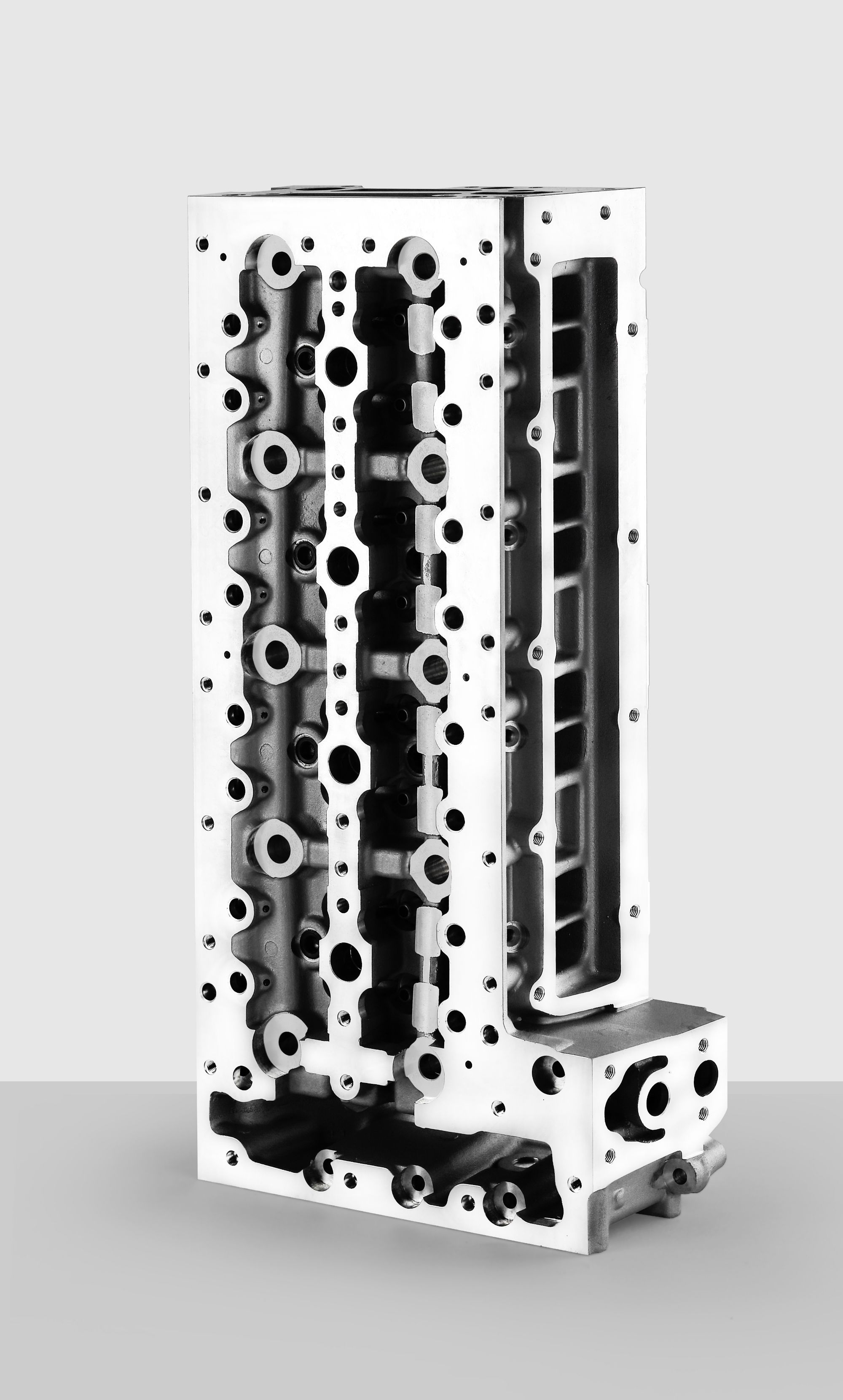
The move toward high-precision casting in China is rooted in a strategic calibration of advanced metallurgy and digital process control. Foundries have upgraded their induction furnaces with real-time thermal imaging and closed-loop feedback, allowing for alloy composition tolerances within ±0.5%. This tight control, combined with ceramic shell investment casting adapted from aerospace methods, enables intricate geometries with wall thicknesses down to 0.8 millimeters—a threshold once deemed impractical for mass production.
Behind the technical facade lies a less visible transformation: the re-tooling of workforce expertise. Engineers trained in conventional sand casting now apprentice alongside simulation specialists who use computational fluid dynamics to predict molten metal flow and solidification. These cross-disciplinary teams iterate rapidly, validating mold designs virtually before any metal is poured. The result is a dramatic reduction in trial-and-error, slashing development cycles from months to weeks while consistently hitting tolerances below 0.1 millimeter for critical components.
What distinguishes this shift is not merely the machinery, but the integration of traceability and adaptive quality loops. Every casting batch is laser-etched with a unique identifier, feeding data back into a machine learning pipeline that flags subtle drift in pore formation or grain structure. Over time, the process learns to self-correct, nudging parameters like pouring temperature or shell pre-heat to maintain yield rates above 95%. This level of intelligent refinement puts high-precision casting into arenas typically reserved for subtractive manufacturing, reshaping how supply chains think about near-net-shape production.
Thermal Barrier Coatings: The Silent Guardian of Engine Performance
Tucked away inside the combustion chamber, a thin ceramic layer works tirelessly to shield metal parts from temperatures that would otherwise melt them. This is the role of thermal barrier coatings (TBCs)—a silent, unseen line of defense that lets jet engines and gas turbines operate at the ragged edge of material limits. By reflecting heat away from underlying alloys, TBCs keep the core metal hundreds of degrees cooler than the surrounding gases, enabling higher firing temperatures, better efficiency, and longer component life without adding weight.
The workhorse material, yttria-stabilized zirconia, gets applied through plasma spray or electron-beam physical vapor deposition, building up a porous, strain-tolerant ceramic skin. That microstructure is no accident; it’s engineered with microcracks and columnar grains that stretch and breathe as the metal expands and contracts, preventing spallation. Every startup and shutdown cycle tests this bond, yet the coating holds, quietly absorbing thermal shock that would cripple a bare superalloy in hours.
Beyond just protecting hardware, these coatings have reshaped engine thermodynamics. By allowing turbines to burn hotter and leaner, they slash fuel consumption and knock down nitrogen oxide emissions in power generation while boosting thrust-to-weight ratios in aircraft. They’re one of those rare technologies that deliver both performance and durability, all while hidden from sight—true silent guardians of modern propulsion.
Balancing Weight and Strength in Modern Cylinder Head Designs
Modern cylinder head development hinges on a delicate trade-off: shedding every possible gram without compromising structural integrity. Engineers push material boundaries, employing advanced casting techniques and high-grade aluminum alloys that offer a favorable strength-to-weight ratio. The goal is to minimize mass high in the engine bay, which improves vehicle dynamics and fuel efficiency, yet the component must resist extreme thermal cycling and the relentless pounding of combustion pressures.
To achieve this balance, computational optimization plays a central role. Finite element analysis and topology optimization algorithms identify areas where material can be strategically removed—often from non-load-bearing ribs or thick flange sections—while reinforcing critical regions around valve seats, spark plug bosses, and head bolt columns. The resulting designs feature organic, almost skeletal internal structures that look radically different from traditional castings, with curved webbing and variable wall thicknesses that precisely match local stress demands.
On the production floor, this translates into tighter process controls and innovative casting methods like semi-permanent mold or low-pressure sand casting, which allow for thinner walls and more complex internal geometry without sacrificing material integrity. Post-casting treatments, including heat-treating and Hot Isostatic Pressing, can further refine the microstructure, ensuring that the lightweight head can endure the long-term abuse of high-performance operation without cracking or warping. The result is a component that feels almost impossibly light when lifted by hand, yet holds firm under extreme conditions.
The Impact of Airflow Dynamics on Combustion Efficiency
The way air moves through a combustion chamber fundamentally shapes how fuel burns. Even minor shifts in velocity or turbulence can tip the balance between thorough, clean burning and incomplete combustion that leaves unburnt fuel, soot, and wasted energy in its wake. Efficient mixing relies not just on the total volume of air, but on the precision with which it enters and swirls around the fuel, ensuring every available oxygen molecule finds its counterpart before temperatures drop or flow paths diverge. When the airflow pattern aligns with the fuel spray or injection strategy, combustion becomes remarkably steady, releasing heat uniformly and minimizing the formation of pollutants.
Turbulence often gets a bad rap in aerodynamics, but inside a burner or engine cylinder, controlled turbulence is a silent workhorse. It shreds fuel droplets, stretches flame fronts, and accelerates the molecular dance between fuel and oxidizer. Yet, too much of it can shear the flame right off its anchor point, causing instability or even flameout. The art lies in designing inlets, swirl vanes, and chamber geometries that sustain the right scale of eddies—not so violent that they disrupt ignition, but vigorous enough to renew the reaction zone continuously. This delicate equilibrium is why engineers obsess over parameters like swirl number and recirculation zones, as they directly dictate how long gases reside in the high-temperature region and whether combustion reaches its peak potential.
Beyond steady-state operation, transient airflow behaviors—during startup, load changes, or gusts in a gas turbine—often expose hidden weaknesses. A sudden drop in air velocity can starve the flame, while a surge may cool the reaction prematurely, both scenarios sending efficiency tumbling. Advanced diagnostics now map these fluctuations in real time, revealing that even seemingly chaotic flow structures often follow repeatable patterns that can be harnessed. By synchronizing fuel delivery with these natural pulsations, some systems have nudged efficiency upward by several percentage points, proving that airflow dynamics are not merely a background condition but a primary control lever for combustion performance.
Rigorous Testing Protocols That Ensure Real-World Durability
We push materials far beyond their advertised limits, exposing them to cycles of stress, temperature swings, and corrosive elements that mirror years of field use. Our test chambers don't just simulate conditions—they accelerate decay until weak points reveal themselves, long before the product ever reaches a customer. Every flaw is documented, analyzed, and engineered out of existence, ensuring that only designs which survive this gauntlet make it to production.
Instead of relying on standard industry benchmarks, we developed a multi-phase torture test that combines vibration, impact, and environmental aging. Prototypes are subjected to 10,000+ drop cycles, salt-spray baths lasting weeks, and thermal shocks from sub-zero to blistering heat. This brutal regimen compresses a decade of wear into months, giving us the confidence to stand behind every unit that leaves our facility.
Our team scrutinizes failures at the microscopic level, using high-speed cameras and strain gauges to capture the exact moment of material fatigue. The insights feed directly back into our iterative design process, where seams are reinforced, alloys are upgraded, and seals are redesigned until they become practically impervious. What emerges is a product that doesn't just meet durability claims—it exceeds them in ways no spec sheet can fully convey.
FAQ
Chinese cylinder heads have gained a competitive edge largely through a combination of advanced foundry technology, skilled labor, and rigorous quality standards that rival those of established Western manufacturers. The integration of computer-aided design and simulation tools allows for rapid prototyping and optimization of port geometries, while cost-efficient production methods—without compromising on material grades—enable attractive pricing. Additionally, many factories have adopted ISO/TS certifications, ensuring consistency and reliability that meet the demands of both aftermarket and OEM clients worldwide.
Material innovation has been central to the durability leap seen in Chinese cylinder heads. The shift from conventional gray cast iron to compacted graphite iron (CGI) and high-silicon aluminum alloys has significantly improved thermal conductivity and fatigue resistance. These materials reduce the risk of cracking under thermal cycling and allow for thinner, lighter designs that dissipate heat more effectively. Surface treatments such as plasma-sprayed coatings on valve seats and laser-hardened camshaft bearing areas further extend service life, even in high-stress turbocharged applications.
They achieve this balance by focusing on modular design platforms that can be adapted across multiple engine families, reducing tooling and development costs. Extensive use of simulation-driven development minimizes physical prototyping, and smart foundry processes like low-pressure die casting or permanent mold casting yield near-net shapes that require minimal machining. By sourcing raw materials locally and investing in high-automation production lines, they maintain tight tolerances and high throughput without inflating costs, passing the savings on to the customer while still delivering measurable power and efficiency improvements.
Precision casting, particularly lost-foam and investment casting, allows Chinese manufacturers to produce complex port shapes and coolant passages that would be impossible or cost-prohibitive with traditional sand casting. These techniques ensure smoother internal surfaces, reducing airflow turbulence and improving volumetric efficiency. The precise replication of internal geometries also optimizes the swirl and tumble of the air-fuel mixture, leading to more complete combustion, better fuel economy, and cleaner emissions. Moreover, the consistency of precision-cast heads eliminates core-shift issues that can hinder performance.
Top-tier producers employ a multi-layered quality assurance process that includes spectrographic analysis of each melt batch to verify alloy composition, 3D scanning for dimensional accuracy, and helium leak testing for coolant and oil passages. In-process inspections using automated vision systems catch surface defects early, while a percentage of each production run undergoes destructive testing—such as sectioning and microscopic examination—to confirm internal integrity. Many also conduct hot-cycle testing on assembled heads to simulate real-world thermal stress, ensuring that every unit meets or exceeds OEM specifications.
By incorporating reinforced deck surfaces and optimizing coolant jacket designs, Chinese cylinder heads are engineered to withstand the punishing conditions of downsized, forced-induction engines. Computational fluid dynamics (CFD) analysis guides the placement of cooling galleries to eliminate hot spots around the exhaust valves and spark plug areas. Multi-layer steel head gaskets in conjunction with finely machined mating surfaces ensure a robust seal under high cylinder pressures. The use of high-strength aluminum alloys with copper and magnesium additions maintains structural integrity at elevated temperatures, reducing bore distortion and head-gasket failures.
Yes, several innovative features have emerged from Chinese R&D efforts. One notable example is the development of variable intake runner geometries integrated directly into the cylinder head, which optimizes airflow velocity across a wide RPM range without external actuators. Another is the use of pent-roof combustion chambers with carefully positioned squish areas to enhance in-cylinder mixture motion. Some designs incorporate tumble flaps cast into the intake port themselves, simplifying the intake manifold and reducing production costs while still achieving high tumble ratios for improved part-load efficiency and emissions performance.
Buyers should evaluate suppliers based on their material certifications and the completeness of their quality documentation. Look for evidence of spectrophotometer-based alloy checks, ISO/TS 16949 compliance, and traceability from raw material to finished product. It’s wise to request samples for independent lab testing, including hardness mapping and sectioning to assess casting soundness. Assess the supplier’s familiarity with the specific engine platform—reputable producers often have detailed records of each OEM’s specifications. Finally, consider manufacturers that offer value-added services like CNC-ported heads or assembled units with pre-installed valve train components, as this indicates a higher level of engineering capability and commitment to performance.
Conclusion
The push for more durable and efficient engines has placed cylinder head technology at the forefront of China’s automotive advancements. Engineers are leaning heavily on breakthroughs in metallurgy, where carefully tuned alloy compositions and heat treatments now resist thermal fatigue far longer than conventional materials. This shift is supported by a move toward high-precision casting processes that minimize internal porosity and dimensional scatter, resulting in heads that hold up under extreme cycle loads. Thermal barrier coatings applied to combustion faces act as a discrete but powerful layer of protection, keeping heat where it belongs and preserving the structural integrity of the underlying metal.
Beyond material science, modern cylinder head designs balance weight and strength through topology optimization and strategic ribbing, shedding mass without compromising stiffness. The pursuit of combustion efficiency has intensified the focus on airflow dynamics, with port shapes and valve angles tuned to promote rapid, complete burn cycles. Each of these developments feeds into a culture of relentless testing—dyno runs that replicate years of abuse, thermal shock cycles, and real-world validation on diverse terrains ensure that durability claims translate from the lab to the road. Together, these insights signal a mature, integrated approach to engine performance.
Contact Us
Contact Person: Shelly
Email: [email protected]
Tel/WhatsApp: 8613967667688
Website: https://www.yongyu.com/