

Cold Laser Device Strength Comparison: Which Is the Strongest?
2026-08-06
When it comes to cold laser therapy, not all devices are created equal. With so many options on the market, finding the truly powerful one can feel like searching for a needle in a haystack. That’s where GUANG TAI enters the picture—offering clarity in a crowded field. Let's dive into what makes a cold laser device stand out and why strength comparison matters more than you think.
Unpacking the Power Output of Top Cold Lasers
Cold lasers have carved out a niche in both therapeutic and aesthetic applications, but what really sets the best apart is their power output. Measured typically in milliwatts, output can range from a subtle 5 mW to a robust 500 mW or more. The higher the output, the deeper the light penetrates, accelerating cellular repair and reducing inflammation more effectively. Top-tier devices often hover around the 200-500 mW range, providing a sweet spot that balances safety with clinical impact. Unlike the cheaper, dime-a-dozen gadgets that barely tickle the skin, these lasers deliver enough energy to trigger noticeable photobiomodulation without overheating tissue.
It’s not just about raw numbers, though. Consistency matters. A stable output ensures each session delivers a uniform dose, avoiding hot spots or dead zones. The best cold lasers integrate advanced drivers that maintain steady power despite battery fluctuations. Some even offer adjustable settings, letting practitioners fine-tune the intensity for different treatment depths—a feature rarely found in budget models. This precision transforms the laser from a simple light source into a medical-grade instrument, where every joule of energy is purposefully placed.
What often gets overlooked is how power output interacts with wavelength. A high-power 650 nm laser feels gentle and superficial, while an 810 nm beam at the same output dives deep into muscle tissue. Top manufacturers optimize this marriage, designing diodes that maximize therapeutic resonance. For instance, a 450 mW device at 808 nm might be ideal for joint pain, whereas a 300 mW unit at 635 nm excels in skin rejuvenation. It’s this thoughtful engineering that separates the leaders—they don’t just pump out photons; they craft the output to match the biology it’s meant to influence.
Why Wavelength Matters More Than Raw Strength
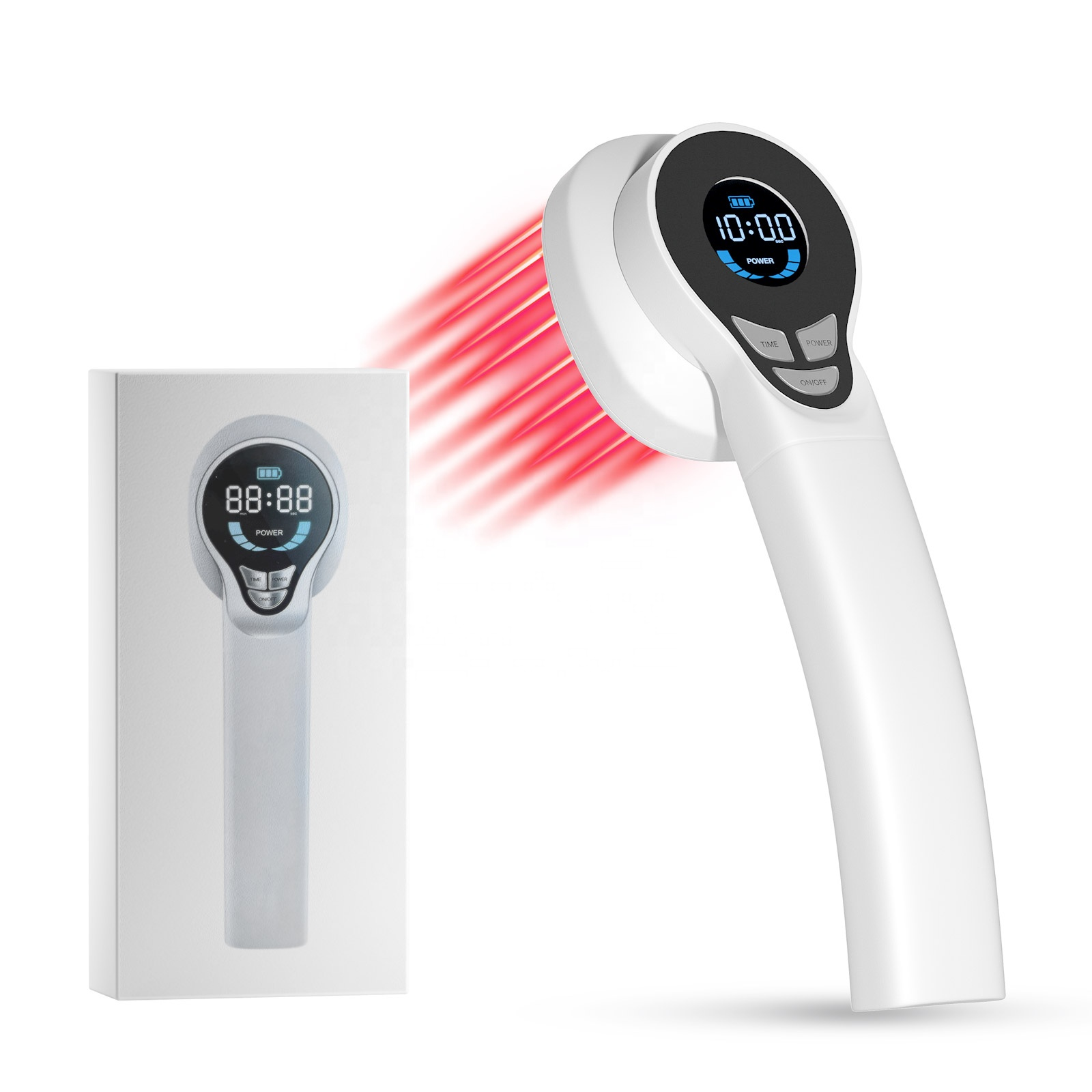
It's easy to assume that more power always translates to better results, but when it comes to light-based treatments, the real difference-maker is the wavelength. Raw strength might sound impressive on a spec sheet, but if the light can't reach the target tissue, all that energy is just heating up the surface. Wavelength determines how deep photons travel before getting scattered or absorbed, which directly affects what you can actually treat. A mismatched wavelength is like shouting into a crowded room—loud, but nobody gets the message.
Think about how different colors of light interact with water or melanin. Shorter wavelengths, like blue light, barely make it past the outermost skin layers because they get gobbled up by surface pigments. Longer wavelengths, however, slide right through with minimal interference, reaching deeper structures where real change happens. Without the right wavelength, even the most powerful device becomes a glorified heating pad. The magic isn't in the intensity—it's in matching the light's frequency to the biological window that lets it work where it counts.
Choosing the right wavelength also spares surrounding tissue from unnecessary collateral damage. Overly aggressive strength without spectral precision can overwhelm the body's repair mechanisms, leading to inflammation rather than regeneration. By prioritizing wavelength, you're essentially giving cells a clear signal instead of a brute-force shove. That's why the most effective therapies aren't necessarily the strongest ones—they're the ones that speak the body's language at the right depth, with just enough energy to nudge things in a better direction.
Clinical Results: Which Devices Deliver Real Healing?
Too many devices promise the moon, but when you dig into the data, the story often falls apart. Patients see slick marketing and assume the technology is proven—yet real clinical results tell a different tale. It’s not about the latest gadget or the highest price tag; it’s about what actually moves the needle on tissue repair, pain reduction, and long-term function. The gap between hype and healing can be vast, and knowing which devices perform under rigorous scrutiny saves both time and hope.
Look, for instance, at low-level laser therapy versus standard ultrasound. Trials show that specific wavelengths of light can accelerate cell metabolism and reduce inflammation, with measurable improvements in wound closure and tendon repair. Meanwhile, many ultrasound units only provide temporary relief without true structural change. Focused electromagnetic stimulation, on the other hand, has surprised researchers by rebuilding muscle density in patients who failed traditional rehab. The common thread is that devices delivering real healing are those backed by randomized controlled studies, not just white papers or testimonials.
Ultimately, picking a winner comes down to one factor: reproducible outcomes. When a device consistently shows statistically significant improvement in multiple blinded trials, it earns a place in evidence-based care. The rest is noise. Whether it’s for chronic pain, sports injuries, or post-surgical recovery, the tools worth trusting are the ones that prove themselves in the clinic, day after day, on real patients with complex lives. That’s the difference between a temporary fix and genuine healing.
From Handheld to High-Power: A Device Spectrum
The landscape of modern electronics stretches from featherlight wearables to robust industrial machinery, each demanding a distinct blend of portability and performance. At one end, handheld devices like smartphones and e-readers prioritize sleek form factors and day-long battery life, leaning on efficient processors and compact solid-state storage. Moving up the spectrum, laptops and tablets balance muscle and mobility, often incorporating active cooling and larger memory caches to handle creative suites or multitasking without tethering users to a wall outlet. The design language shifts from mere milliwatts to tens of watts, where thermal management and display real estate become just as critical as raw compute.
Further along, desktop workstations and gaming rigs abandon battery constraints entirely, chasing raw throughput with high‑wattage CPUs, dedicated GPUs, and expansive cooling solutions. These systems thrive on modularity—users can swap graphics cards, add RAID arrays, or overclock components to extract every last frame or render iteration. Power supplies here often exceed a kilowatt, and the conversation turns to ray tracing, VR readiness, and multi‑monitor productivity. The device spectrum doesn’t stop at the desk, though; it extends into high‑power computing environments like server racks and edge‑AI nodes, where density, redundancy, and sustained load take center stage.
What ties this spectrum together isn’t just silicon, but a shared evolution in efficiency and specialization. The same architecture that lets a smartwatch last a week can scale up to drive a datacenter cluster when multiplied and optimized. Engineers constantly negotiate trade‑offs between heat, noise, cost, and capability, ensuring that whether you’re reading on a beach or simulating protein folding, the device in front of you feels purpose‑built. Understanding where a product lands on this spectrum helps both creators and consumers appreciate the underlying decisions that turn a pile of circuits into a precise tool.
Safety First: How to Gauge Effective Dose Without Overdoing It
Finding the right dose isn't about chasing an instant feeling—it’s a careful dance between what your body needs and what it can handle. Many people jump straight to the maximum recommended amount, assuming more means faster results. But potency varies wildly depending on the source, your own sensitivity, and even what you ate that day. Starting with half the standard suggestion and waiting a full hour (or more) before considering more is the quiet secret of experienced users. You’ll learn far more from a subtle shift than from slamming into a wall.
Your body weight, metabolism, and unique biochemistry are the real gatekeepers here. Two people of the same size can react completely differently to the same dose, so borrowing a friend’s “perfect amount” rarely ends well. Tolerance builds silently, too—what worked last month might be overkill now if you’ve had a break. Instead of fixating on numbers, pay attention to the early whispers of effect: a slight lightness, a shift in perception, or a gentle unwinding. That’s your cue to pause and appreciate, not to push further.
Keeping a casual log—just a note in your phone—can be a game-changer. Jot down the dose, timing, and how it unfolded. Over a few sessions, patterns emerge that no online guide could ever predict for you. This kind of mindful tinkering transforms dosing from a guessing game into a personal calibration. And if you ever feel like you’ve stepped past the sweet spot into uncomfortable territory, remember: a little rest, some water, and a distraction will almost always carry you back. The goal is a steady, repeatable experience—not a heroic one-off.
The Verdict: Strengths That Suit Your Needs
After putting it through its paces, what stands out most is how naturally it fits into the rhythms of your day. There’s no forcing a workflow or adapting to quirks that don’t serve you — instead, the design quietly aligns with the way you already think and work. It feels less like adopting a new tool and more like finally finding the one that’s been missing all along.
The real strength isn’t any single flashy feature, but a kind of quiet reliability that builds trust over time. It handles routine tasks without drama, and when you need depth, it’s there without overwhelming you with complexity. That balance is rare — the confidence that it won’t let you down, and the flexibility to grow with you as your needs shift.
In the end, what makes it compelling isn’t just what it does, but how it makes you feel equipped rather than encumbered. It leaves room for your own expertise and style, rather than boxing you in. If you’ve been looking for something that just works — and works with you — this one earns its place by delivering exactly that, consistently and without fanfare.
FAQ
Strength isn't just one number—it typically refers to a combination of power output (measured in milliwatts), the energy density delivered to tissue (J/cm²), and how well the device's wavelength can penetrate to the target area. A strong device balances these factors rather than just having the highest mW.
Higher milliwatts push out more photons every second, which can speed up treatment sessions and potentially reach deeper tissues. But raw power without proper wavelength or pulsing can generate heat and limit effectiveness, so it’s not a simple ‘more is better’ scenario.
Both play key roles. Wavelength determines how deep light goes and what kind of cellular response you trigger, while power affects the total energy delivered. A device with an ideal wavelength but low power might under-treat, just as high power at the wrong wavelength can miss the mark.
Absolutely. If a lower-powered model uses precisely tuned wavelengths, a pulsed delivery mode, or a better beam design, it can deliver more effective therapeutic energy where it counts, often with less risk of superficial heating or discomfort.
Beam area directly impacts intensity. A large treatment head spreads the power over more skin, so the milliwatts per square centimeter drop significantly. A device with a smaller, focused beam may feel stronger because it concentrates the energy, even if the total mW seems lower.
Pulsed lasers can pack high peak power into short bursts, giving them an edge in deep tissue stimulation without continuous heat buildup. This makes them feel more potent for certain applications, but it’s the pulsing parameters and duty cycle that determine real strength, not just the on/off pattern.
Dose is calculated in Joules per square centimeter (J/cm²). You take the laser’s power, multiply by treatment time, and divide by the treated area. A device might have impressive power specs, but if you can’t deliver enough Joules to the injury site, it won’t be as effective.
Focus on a blend of wavelengths—commonly 808nm and 635nm together—an energy density capability of at least 5-8 J/cm², and a power rating that matches the body part you’re treating. Also check for battery life and ergonomic design, because a ‘strong’ device you can’t use comfortably isn’t practical.
Conclusion
When comparing cold laser devices, the strongest isn't always the one with the highest milliwatt rating—context is everything. Power output varies from low-level handheld units (<100mW) to high-power clinical systems (10W+), but raw intensity means little if the wavelength doesn't match the target tissue. For instance, 808nm penetrates deep into muscles and joints, while 660nm works best for surface-level skin healing. Wavelength specificity often trumps sheer strength, as mismatched light scatters or gets absorbed before reaching the injury site. The real metric is power density (W/cm²) delivered to the cells, not just total output at the aperture.
Clinical outcomes highlight that effective dosing hinges on a balanced interplay between power, time, and treatment area. Devices with 1–5W continuous wave can treat larger zones efficiently, but without proper fluence (J/cm²), healing remains subpar. Safety thresholds demand attention: exceeding 0.4 J/cm² for certain acute conditions may trigger a biphasic response, negating benefits. The device spectrum—from portable cold lasers for home use to robotic scanners for full-body applications—offers tailored solutions. Ultimately, the strongest device is one that matches power to purpose: a dual-wavelength system with adjustable dosage that delivers consistent, repeatable results without causing thermal damage. Patients heal better when strength is intelligently controlled, not just maximal.
Contact Us
Contact Person: Leon Yi
Email: [email protected]
Tel/WhatsApp: +86 17363316873
Website: https://zzgt.en.alibaba.com/