

Contact Plate Freezer Recommendations for Efficient Food Freezing
2026-08-31
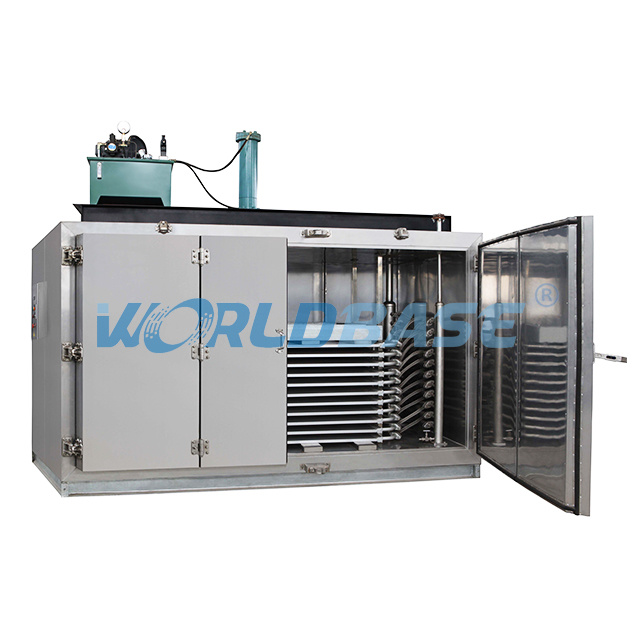
If you're still relying on air-blast freezing, you know the drill: longer cycles, inconsistent core temperatures, and cell damage that quietly erodes product quality. Contact plate freezers flip that script by using direct surface conduction to pull heat out fast—locking in texture, moisture, and flavor. But with so many models on the market, choosing the right one for your production line can feel like guesswork. That's where this guide steps in. Below, we break down practical recommendations for efficient food freezing, including standout systems from Worldbase that balance footprint, energy use, and throughput. Let's cut through the specs and find a freezer that actually earns its place on your floor.
Rapid Freezing Without Freezer Burn: Why Contact Plates Win for High-Moisture Foods
High-moisture foods freeze poorly when heat leaves slowly. Air-blast chambers chill the surface first, and as water inside turns to ice, crystals grow large enough to tear cell walls. That damage releases liquid, which then migrates outward and sublimates in dry freezer air—the rough, pale patches known as freezer burn. Contact plates stop this chain reaction by pulling heat directly through the food's broadest surfaces, cutting the freezing time from hours to minutes.
The speed matters because ice crystal size is set during the phase change, not by the final storage temperature. With contact plates, water molecules lock into small, evenly distributed crystals before they can coalesce. The result is less cellular rupture, little free moisture, and a surface that stays tightly bound to the product. For berries, fish fillets, or ready-to-cook proteins, that translates to firm texture and a clean thaw with almost no drip loss—something air freezing rarely delivers.
Sizing Your Freezer to Peak Harvest Windows Without Overspending
Matching freezer capacity to your garden's actual yield starts with tracking what you really harvest at peak, not what seed catalogs promise. Keep a simple note on your phone for a season: how many pounds of green beans, berries, or tomatoes actually land in your kitchen each week. Then, instead of buying a massive chest freezer that gulps electricity year-round, consider a mid-size upright model with adjustable baskets. You can rotate your frozen stock by date, so nothing gets lost under a pile of frost. Look for freezers with thick, well-sealed gaskets and manual defrost—they cost less to run and hold temperature longer if the power hiccups.
Another practical trick is to freeze only what you'll eat within six to eight months, because quality fades fast beyond that. This means sizing your freezer to your real consumption patterns, not your ambition. If you preserve for two people, a 7 to 9 cubic foot unit often handles the peak of zucchini, sweet corn, and berries without forcing you to buy a second appliance. For families who eat soups and stews all winter, add a small upright freezer rather than one giant chest—you'll actually use the door space, and smaller units are easier to organize. Don't forget to leave about 20 percent empty space for air circulation; a jam-packed freezer works harder and can develop warm spots that ruin texture.
Finally, timing your purchase matters more than brand loyalty. Late summer and fall are when harvests peak, but freezer prices tend to dip in November and January. If you can wait, you'll often find floor models or holiday rebates that cut the cost by a third. Calculate the cubic feet per dollar, and compare the energy guide labels—an extra $50 upfront for better insulation often pays for itself in lower bills within two years. And remember: a freezer full of homegrown food is only a bargain if you actually eat it, so keep a whiteboard list on the lid and rotate older items to the front. That way, peak harvest spending stays in your pocket, not your power bill.
Refrigerant Choices That Keep Operating Costs Low in Warm Climates
In warm climates, the refrigerant you select has a direct impact on how hard your cooling system works and how much you pay each month. Many older systems still run on R-22, which is not only being phased out but also performs poorly under high ambient temperatures, forcing compressors to run longer and draw more electricity. Switching to a modern alternative like R-410A or newer low-GWP options such as R-32 can reduce compressor strain, lower energy consumption, and keep indoor spaces comfortable without spiking your utility bill.
It is not just about the refrigerant itself but how well it matches the system design. In hot regions, high condensing temperatures can degrade efficiency if the refrigerant’s pressure-temperature curve is not suited to the operating range. For example, R-32 operates at a higher capacity per unit volume than R-410A, meaning systems can be built with smaller coils and less refrigerant charge while still achieving better heat transfer. This translates into fewer hours of peak operation and lower long-term maintenance expenses, especially during heat waves when demand is highest.
Another practical consideration is leak repair and top-up costs. Refrigerants with higher global warming potential often come with stricter handling requirements and rising prices, which adds to operating overhead. Choosing a refrigerant with lower GWP and good availability, such as R-454B in newer equipment, can reduce the frequency and cost of servicing. In warm climates where systems run almost year-round, even a small improvement in refrigerant choice compounds into significant savings over the equipment’s lifetime.
Panel Pressure Settings for Soft Fruits vs. Dense Meat Blocks
Soft fruits like berries, peaches, and ripe mangoes collapse under even modest vacuum levels, so the panel pressure needs a light, gradual touch. Starting around 30–50 mbar and letting the fruit rest for a few minutes between pulses prevents cell walls from rupturing. A slower ramp-up also keeps juices from being sucked out, which matters more for delicate skins than for anything you'd find in a meat case.
Dense meat blocks, whether they're whole muscle sections or pressed trimmings, need the opposite approach. Set the panel pressure higher, often 150–300 mbar depending on thickness, and hold it longer so the vacuum reaches the core. Quick spikes don't work here; you want a sustained pull that collapses air pockets without tearing the surface fibers. Lower pressures just leave the block spongy and unevenly sealed.
The real difference comes down to how the material responds to stress. Fruits behave like a fluid-filled foam that loses structure fast, while meat blocks act more like a stiff, fibrous matrix that needs force to displace trapped air. Adjusting the panel pressure isn't about one universal setting—it's about reading the texture and matching the vacuum profile to the product's resistance.
What a Good Maintenance Contract Should Cover for Plate Freezers
A solid maintenance contract for plate freezers should spell out hydraulic and refrigeration tasks that generic service plans overlook. Plate movement depends on cylinders, seals, and hoses that wear unevenly under repeated load cycles, so the agreement needs to specify inspection and replacement intervals for those parts, not just a visual check. It should also cover refrigerant leak testing, compressor oil sampling, and calibration of temperature and pressure switches, plus defrost system checks that catch ice bridging between plates before it damages the structure.
Equally important are the commercial terms around parts and labor. The contract should name critical spares—gaskets, solenoid valves, PLC cards—and state whether they are kept in local stock or ordered on demand, because a two-week lead time can idle an entire line. Emergency call-out coverage should define response windows, travel time, and after-hours labor rates, and the provider should be responsible for proper recovery and disposal of refrigerant and oil. If panel software updates and performance trending are not explicitly included, assume they are not part of the scope.
Retrofitting an Existing Blast Freezer Line with Contact Plates: What to Check First
Before touching a single bolt, map out the actual thermal load and dwell time you need from the plates. Many retrofit attempts fail because teams assume the existing refrigeration skid can handle the extra surface area, only to discover the compressor can't pull down fast enough when plates are added mid-line. Pull the original freezer's heat extraction data and compare it against the plate manufacturer's required ΔT and flow rate. If the brine or glycol loop was sized for air-only coils, you'll likely need a separate secondary circuit or a larger pump to keep plate temperature consistent across the full contact zone.
Next, inspect the conveyor or racking structure for deflection under plate weight. Contact plates are not just hanging evaporators—they add significant static load, especially when product is squeezed between them. Check the center support beams and rail guides for sag or worn bushings. A quick laser alignment along the line will reveal if the existing frame can maintain parallel contact across the entire plate surface; even a 3 mm gap at one end cuts heat transfer by a third. If the structure flexes more than your tolerance, you'll need reinforcement before the plates go in.
Finally, verify the control logic integration points. Older blast freezers often run a simple time-based cycle, but contact plates require pressure feedback to avoid crushing product or tripping high-head alarms. Look at the existing PLC I/O count and whether there's a spare analog input for a pressure transducer. Also confirm the defrost strategy: hot gas or electric defrost on plates behaves very differently than air coil defrost, and leftover condensate can freeze the plate stack solid if the drain pan pitch isn't corrected. Walk the line during a defrost cycle and watch for pooling before committing to the retrofit.
FAQ
It uses hollow metal plates filled with refrigerant that come into direct contact with packaged food. Because the cold surface touches the product on both sides, heat transfers much faster than cold air blowing around it. This tight contact results in rapid, even freezing, which helps preserve texture and moisture.
Flat, regularly shaped items work best—think fish fillets, burger patties, ready meals in trays, spinach blocks, or diced vegetables. The key is that the product needs a reasonably uniform thickness so the plates can make good contact. Irregular or bulky items don't transfer heat as efficiently unless they're packed into standard molds.
Start with your peak daily throughput and batch cycle time. Plate freezers work in batches, so you need enough plate area to freeze a full batch within your desired window. Also consider future growth, available floor space, and how you load/unload—manual loading favors lower stack heights, while automated systems can handle taller frames.
Direct conduction is inherently more efficient than convection because you're not cooling large volumes of air. Air blast systems spend energy moving air and fighting frost buildup on coils, while plate freezers put the cold right where it's needed. That means lower electricity use per kilogram of product frozen, plus less dehydration loss during the process.
Make sure packages are filled to a consistent thickness and placed flat against the plates without gaps or trapped air. Overfilling creates bulges that reduce contact area, while underfilling wastes capacity. Also, leave a small gap between packages on the same plate to allow for expansion, but avoid stacking products unless the plates are designed for multi-layer loads.
At minimum, check hydraulic fluid levels, plate alignment, and refrigerant charge weekly. The plates' hinges and bushings need lubrication every month or two, depending on usage. Annually, have a technician pressure-test the plates for internal leaks and check the insulation. Catching a small leak early can prevent oil contamination of the food and a much bigger repair bill.
Yes, but only if they're pre-packed in sealed bags, pouches, or trays that can be flattened to a uniform slab. The plates won't work with open liquids because there's no way to contain them. The packaging must be strong enough to withstand expansion as the product freezes, so leave some headspace or use flexible film that can stretch.
Most plate freezers run with refrigerant temperatures between -30°C and -40°C, which can bring a 50 mm thick package from +20°C down to -18°C core temperature in about 2 to 3 hours. Thinner products can freeze in under an hour. Exact time depends on product density, package thickness, and how well the plates maintain contact.
Conclusion
For operations handling high-moisture items like berries, fish fillets, or prepared sauces, contact plate freezing consistently beats air-blast systems because the direct metal-to-package contact pulls heat out fast enough to lock in moisture before large ice crystals can form. That translates to less drip loss and no surface freezer burn, even on thin or delicate products. When planning capacity, resist the urge to buy for a single record harvest day; instead, map your actual peak intake over a rolling 72-hour window and size the freezer to handle that sustained surge. A unit that runs fully loaded for a week during harvest costs far less over its life than an oversized machine idling eleven months a year. In warm climates, ammonia remains tough to beat for large central plants, but for smaller or remote installations, low-charge CO₂ or propane-based systems often deliver better part-load efficiency and lower maintenance without the regulatory burden.
Panel pressure is not a set-and-forget parameter. Soft fruits and fish portions need gentle, even contact—usually 0.2 to 0.4 bar—to avoid crushing or splitting, while dense meat blocks can take 0.8 bar or higher to reduce freezing time without deforming the package. Your maintenance contract should go beyond quarterly inspections; insist on documented checks of hydraulic cylinders, plate alignment, and refrigerant leak sensors, plus annual thermal imaging of plate surfaces to catch uneven cooling early. If you are retrofitting an existing blast freezer line, first verify that your floor can handle the added weight of plate stations, that your current compressor can manage the lower suction temperatures required for direct-contact freezing, and that your packaging can withstand repeated compression. Often the cheapest retrofit is not a full replacement but adding a plate freezer as a pre-freeze stage for high-moisture items before they enter the blast tunnel.
Contact Us
Contact Person: Mr Yang
Email: [email protected]
Tel/WhatsApp: +8613809083091
Website: https://en.worldbase.cn