

Corn Processing Machine Factory: A Complete Guide to Modern Maize Milling Equipment
2026-09-19
You can spot an outdated maize mill from the doorway: excessive dust, a deafening roar, and throughput numbers that make you wince. Modern corn processing has moved far beyond that. Whether you're outfitting a new facility or retrofitting an existing line, the right equipment separates profitable operations from costly bottlenecks. This guide from PINGLE walks you through the essentials of today's maize milling technology—what to look for, what to avoid, and how to make every kernel count.
What Happens Before Maize Reaches the Mill: Cleaning and Conditioning Steps That Matter
Long before kernels hit the mill rolls, a series of quiet, deliberate steps shapes what the final flour or grits will become. Freshly harvested maize arrives carrying far more than starch: field debris, cracked seed coats, tiny stones, and the occasional bit of metal from harvesting equipment. Removing these is not just about protecting machinery—though that matters—but about preventing off flavors and specks from ending up in finished product. The first pass usually runs the grain over a combination of vibrating screens and air currents. Lighter chaff lifts away, undersized and broken kernels fall through, and anything magnetic gets pulled aside before it can do damage.
After the obvious contaminants are gone, the maize typically moves into conditioning. Here, controlled moisture—often just a light mist of water or a short steam exposure—is allowed to rest on the kernels for a period ranging from a couple of hours to over a day, depending on the mill's setup and the desired end product. This step makes the outer bran layer tougher and more pliable while softening the starchy endosperm inside. The result is cleaner separation later: less bran shattering into the flour, better yield, and a more consistent particle size. Skipping or rushing conditioning often shows up downstream as uneven grinding, higher power draw, and a final product that simply does not perform the same in baking or cooking.
What makes these early steps matter is how quietly they set the ceiling for quality. A mill can have the most advanced rollers and sifters available, but if the incoming maize is poorly cleaned or conditioned unevenly, the rest of the process fights against that foundation. Good cleaning reduces wear and tear, protects food safety, and keeps the mill running at steady capacity. Good conditioning turns an otherwise brittle, difficult kernel into something that separates cleanly under pressure. Both steps happen before any real milling begins, yet they decide much of what the mill can actually achieve.
Choosing the Right Maize Milling Equipment for Your Factory Floor
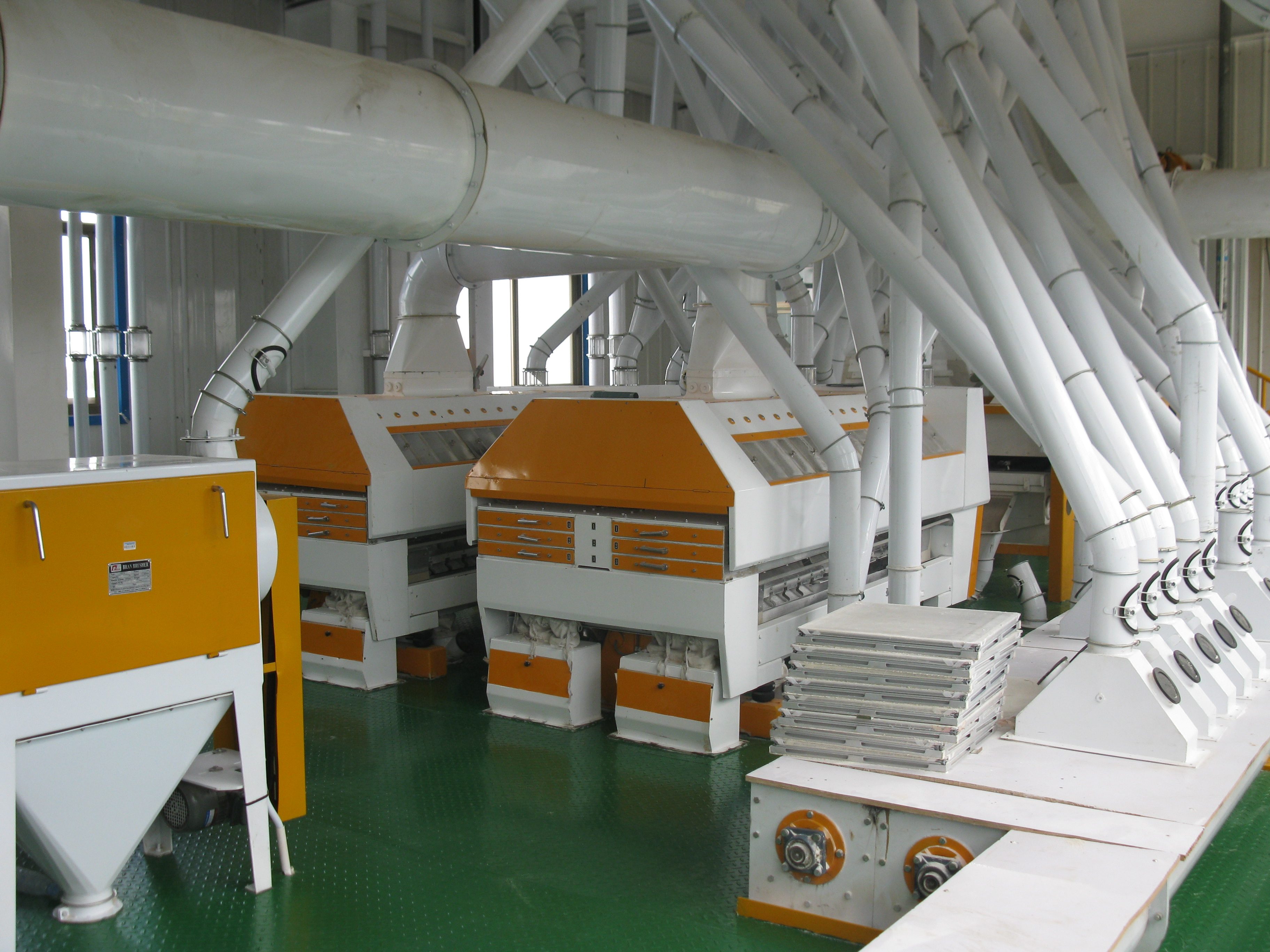
Walking through a maize processing plant, you quickly notice that not all milling lines are built the same. The floor layout, available power, and the final product profile—whether you're after fine flour, coarse grits, or whole meal—shape every equipment decision. Rushing into a purchase based on a single spec sheet often leads to bottlenecks at the cleaning or conditioning stage. Instead, start by mapping your daily throughput and the moisture range of incoming maize. This gives you a realistic baseline for sifter capacity, roller mill length, and degerminator type, rather than relying on theoretical maximums.
Another factor that gets overlooked is how the machines will sit together on your floor. A compact, integrated unit might save space, but if your team values easy access for maintenance, a modular setup with walkways and separate drives could pay off in reduced downtime. Look closely at the power draw per ton of finished product—some older hammer mills use nearly twice the energy of a well-tuned roller mill for the same particle size. Ask vendors for actual running data from a similar installation, not just brochure figures, and consider having a sample batch tested before committing.
Finally, think about future flexibility. Maize varieties and market demand shift, so equipment that can adjust roll gaps quickly or switch between degerming and non-degerming modes will serve you longer than a single-purpose line. Pay attention to the control system as well: a simple manual panel may be fine for a small operator, but sensor-based monitoring with automatic feed adjustment often pays for itself through fewer operator errors and consistent flour quality. The right choice balances today's output needs with the ability to adapt as your product mix evolves.
How Modern Plants Handle Degermination and Bran Removal Without Wasting Grain
Modern degermination lines begin with precision tempering, where moisture is added in controlled increments and rested just long enough to soften the bran and germ without making the endosperm sticky. A degerminator then uses a combination of impact and shear to pop the germ loose and peel the bran away, while classifier screens and air currents carry off the lighter fractions immediately.
Instead of discarding those streams, plants send them through a series of re-processing loops. Bran that still clings to bits of endosperm is returned to the degerminator or a secondary scourer, and the airflow is tuned so that only the lightest, most separated particles leave the circuit. This keeps valuable starch inside the mill flow rather than letting it leak into by-product bins.
Some facilities now pair mechanical separation with real-time sensors that measure particle density or color. When the proportion of endosperm in the bran stream rises, the system automatically adjusts rotor speed or air velocity, preventing both over-milling and under-separation. As a result, the germ can be stabilized for oil extraction, the bran stays clean enough for food-grade fiber, and nearly all of the endosperm becomes flour or grits.
Fine-Tuning Grinding and Sifting to Hit Target Particle Sizes Consistently
Achieving a narrow particle size distribution batch after batch rarely comes down to a single machine setting. It depends on how well you read the upstream variation—moisture content, raw material hardness, even ambient humidity—and translate that into small, deliberate adjustments on the mill gap, rotor speed, or classifier wheel. The operators who get this right treat grinding not as a fixed recipe but as a live balancing act, nudging parameters only when the sieve analysis tells them the curve is drifting.
Sifting is where many processes quietly fall out of spec. A worn mesh or a slightly uneven feed rate can let oversized particles slip through, and once they mix into the final product, no amount of re-sifting will fully rescue the batch. Instead of relying on a single pass, experienced teams use stacked screens with overlapping cut points and periodic checks against a reference sample. The goal isn't just to reject coarse tails—it's to keep the oversize fraction stable enough that the return loop never overloads the mill.
The real differentiator is consistency in the feedback loop. Rather than measuring particle size once per shift, high-performing lines use inline laser diffraction or at least frequent offline sampling to catch drift early. When the D90 starts creeping up, a trained operator adjusts the classifier speed or feed screw before the trend becomes a rejected lot. That kind of proactive fine-tuning—grounded in data, not guesswork—turns particle size control from a hope into a repeatable outcome.
Automation and Monitoring Systems That Keep a Corn Processing Line Running Smoothly
Modern corn processing lines depend on a network of sensors and automated controls to maintain steady throughput without constant manual intervention. From the moment kernels enter the intake pit, level probes, flow meters, and moisture analyzers feed real-time data to a central PLC. The system adjusts conveyor speeds, tempering water, and mill gaps on the fly, preventing bottlenecks that used to require line stoppages for manual checks.
Vibration and temperature sensors on critical equipment like degerminators, roller mills, and dryers catch early signs of bearing wear or misalignment before they turn into costly breakdowns. Operators monitor the entire line from a single HMI screen, where alarms are prioritized and trend logs reveal gradual shifts in performance. This predictive approach means maintenance happens during planned windows, not in the middle of a night shift.
Data from the automation layer also feeds into yield tracking and quality control dashboards. Instead of relying on periodic lab samples alone, the system correlates moisture, particle size, and starch recovery with upstream settings. When a parameter drifts—say, steeping time falls a few minutes short—the line automatically compensates or flags the issue for a quick adjustment, keeping final product within spec without overcorrecting and wasting energy.
Maintenance Schedules and Upgrades That Extend the Life of Your Milling Machinery
Keeping milling machinery in peak condition rarely hinges on a single grand gesture. It is the quiet rhythm of regular lubrication, belt tension checks, and spindle runout measurements that prevents small wear from becoming catastrophic failure. A practical monthly walkthrough, paired with a more thorough quarterly inspection, often reveals loose fasteners or coolant contamination long before they force unplanned downtime.
Beyond routine upkeep, targeted upgrades can dramatically stretch service life. Swapping standard bearings for sealed, high-precision alternatives reduces ingress of fine metal dust, while retrofitting a modern programmable controller improves feed consistency and reduces mechanical stress. For older machines, replacing worn gibs and ways or adding automatic way lubrication can restore lost rigidity without the expense of a full rebuild.
Documenting every adjustment and replacement in a simple log turns maintenance from guesswork into a forward-looking plan. Watch for patterns: a spindle that needs realignment twice a year signals a deeper issue in the motor mounting. Catching that early, and budgeting for a better motor bracket or vibration-damping mounts, prevents the kind of breakdown that halts production and forces rushed, costly repairs.
FAQ
A corn processing machine factory usually builds complete milling lines as well as individual machines. Common equipment includes cleaning screens, degerminators, roller mills, sifters, pneumatic conveyors, and packing units. Many factories also offer turnkey installation, staff training, and after-sales spare parts.
Modern maize milling equipment relies on steel roller mills, pneumatic conveying, and automated control panels instead of stone grinding wheels. This shift allows for finer particle size control, better separation of germ and bran, higher throughput, and consistent flour quality. Stone mills are still used for specialty whole grain products, but industrial production favors roller systems for efficiency and food safety.
Key considerations include the factory's track record with similar installations, the materials used in food-contact parts (preferably food-grade stainless steel), energy consumption per ton of maize, automation level, and whether the supplier can design a whole production line rather than just sell standalone machines. Local technical support and availability of spare parts also matter a lot once the equipment is running.
A modern maize milling line typically includes cleaning to remove stones and foreign material, conditioning to add moisture, degermination to separate germ and bran, grinding through a series of roller mills, sifting to classify particle sizes, and finally packaging. Some plants add a purifier stage for extra-fine maize flour.
Automation directly affects yield stability, labor costs, and product consistency. With PLC-based controls and touchscreen interfaces, operators can monitor moisture, feed rate, and roller pressure in real time. This reduces human error, allows quick recipe changes for different maize products, and helps diagnose faults before they cause downtime.
Yes, most reputable factories design both compact units for small mills and large industrial lines producing dozens of tons per day. Customization can include the number of roller mill passages, type of degerminator, storage silo layout, and whether the final product is maize flour, grits, or animal feed. The factory usually asks about target output, raw maize quality, and available floor space before drafting a layout.
Regular lubrication of bearings, checking roller mill gaps and wear, cleaning sifter screens, and inspecting pneumatic lines for leaks are essential. Sensors and automatic controls should be calibrated periodically. Replacing worn grinding rolls before they become too smooth helps maintain throughput and reduces energy use. Keeping the milling area free of dust and moisture also prevents contamination and corrosion.
Degermination removes the germ and much of the bran before grinding. This lowers the fat content of the final flour, which extends shelf life and prevents rancidity. It also produces a cleaner, lighter-colored maize flour suitable for baked goods and snacks. The separated germ can be sold separately for oil extraction or animal feed, adding extra revenue to the milling operation.
Conclusion
The journey from raw maize to finished flour or grits starts long before the first grinding roll turns. Incoming grain carries dust, stones, broken kernels, and sometimes mold or foreign seeds, so a well-designed cleaning line uses a sequence of aspirators, magnetic separators, and vibrating screens to strip away anything that would damage downstream equipment or contaminate the final product. Conditioning with controlled moisture and resting time then softens the bran and toughens the endosperm, making separation easier. Choosing the right milling machinery for a factory floor means matching capacity, power consumption, and roller configuration to the specific maize varieties and target products, because a setup that excels at super-white breakfast meal may be wasteful for whole-grain grits. Modern plants have also moved away from aggressive degermination that crushes valuable germ and creates excessive fines. Instead, gentle tempering followed by controlled impact or roller degermination recovers more intact germ and clean bran, reducing yield loss and improving oil extraction from the byproduct.
Once the maize is clean and degerminated, the real art is in grinding and sifting. A gradual reduction system with multiple passages lets operators fine-tune roll gaps, flute counts, and sieve meshes to hit target particle sizes consistently, whether the goal is fine flour, medium grits, or flaking grits. Overly aggressive grinding generates heat and starch damage, while under-grinding leaves coarse tails that require rework. Automation and monitoring systems add another layer of control: sensors track motor load, bearing temperature, and product flow in real time, and programmable logic controllers adjust feed rates or alert staff before a blockage or overfill occurs. This reduces operator fatigue and keeps the line running with fewer unplanned stops. Finally, no milling line stays efficient without a practical maintenance schedule. Regular roll inspection, sifter re-tensioning, belt alignment, and replacement of wear plates prevent small issues from becoming costly breakdowns. Planned upgrades—such as improved bearings, energy-efficient motors, or newer sifter designs—can extend machinery life and adapt the factory to changing market demands without a complete rebuild. Together, these steps turn a corn processing machine factory into a reliable, waste-minimizing operation that consistently delivers the texture and purity buyers expect.
Contact Us
Contact Person: Jiakuo Wu
Email: [email protected]
Tel/WhatsApp: +86-13011566087
Website: https://www.pinglemachine.com