

Custom Fire-Resistant Silicone Sealant for Maximum Heat Protection and Safety
2026-11-16
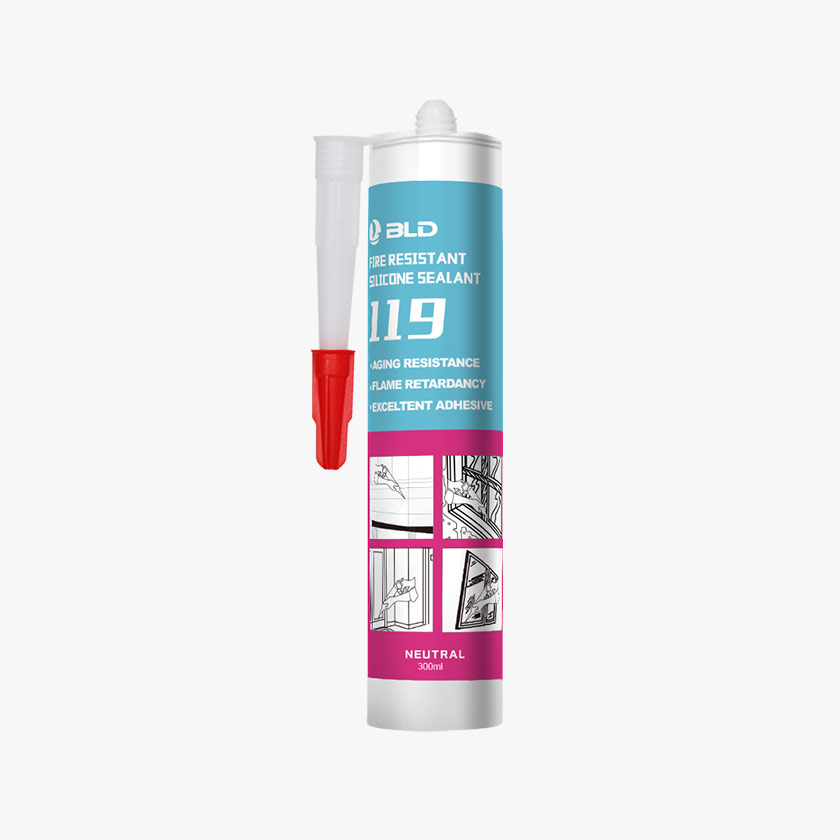
When a standard sealant gives out under extreme heat, the result isn't just a failed joint—it's a safety risk no project can afford. That's why Baolongda Group takes custom fire-resistant silicone sealant seriously, tailoring each formulation to deliver maximum heat protection without compromising flexibility or adhesion. In this guide, you'll discover what sets true high-temperature performance apart, how customization prevents common failures, and why safety starts long before the flames do.
Tailoring Silicone Formulations Around Your Fire Rating
Meeting a specific fire rating starts with the formulation itself, not with a coating applied later. A UL 94 V-0 silicone demands a different balance of fillers, base polymer, and cure chemistry than a less stringent HB rating. For example, achieving V-0 often pushes formulators toward high loadings of alumina trihydrate or a platinum-based synergistic package, but those additions can stiffen the cured elastomer and reduce its tear strength. The art lies in choosing a silicone gum with enough native thermal stability to carry the flame-retardant system without collapsing mechanical performance.
Smoke density and toxicity deserve equal weight, especially in enclosed transit or building applications. Some halogen-free flame retardants can pass a small-scale flame test yet generate thick, acrid smoke that compromises evacuation. Here, selecting a low-smoke, low-toxicity filler system—or even leveraging the inherently high limiting oxygen index of silicone itself—often outperforms simply adding more retardant. Running cone calorimetry early in development helps avoid surprises later.
Processing behavior shifts as the formulation becomes more flame-resistant. Higher filler loadings raise viscosity, which can clog fine extrusion dies or slow mold filling. Surface-treated fillers, a lower-viscosity base polymer, or a tailored inhibitor package can restore workability, but each change ripples back into the fire test results. Treating the formulation as a system rather than a list of ingredients is what turns a target fire rating into a repeatable production reality.
Seals That Keep Working After the Heat Spikes
Most seals fail not during the steady climb to operating temperature, but in the minutes after a sudden spike. The polymer matrix relaxes unevenly, and micro-cracks open at the interface. One practical fix is to look for compounds with a wider glass transition window; these don't harden as quickly when the heat drops back down.
In a recent oven conveyor retrofit, standard FKM seals started leaking after three thermal cycles. Swapping to a perfluoroelastomer with a reinforced lip geometry kept the seal face in contact even as the housing warped by nearly half a millimeter. The difference wasn't just material—it was also the gland design allowing the lip to recover its shape.
If your process runs near the seal's upper limit, run a post-spike leak check before assuming the seal has recovered. A short cool-down under light compression often restores sealing force better than immediate retorquing. That kind of simple change can double the service interval without switching suppliers.
Where Flexible Joints Meet Rigid Fire Codes
Fire codes don't bend. They stay fixed in purpose while the building around them shifts with temperature, settlement, and seismic drift. A flexible joint in a rated wall or floor is exactly where that tension shows up: the assembly must allow movement, yet the barrier cannot lose its fire resistance for even a few minutes. Designers quickly learn that the joint itself isn't the weak point; the weak point is any gap between the tested system and what actually gets installed on site.
The real work happens in the details that never make the cover of a product brochure. A fire-rated expansion joint cover has to handle cyclic movement without tearing the intumescent strip, without pulling away from the substrate, and without creating a hidden channel for smoke. That means anchors matter as much as the sealant. It means the backing material must survive compression and rebound, not just look right on a shop drawing. When an inspector runs a flashlight along the joint, they are not reading the fire code; they are checking whether somebody understood it.
There is no shortcut that survives the first real movement cycle. Some contractors try to fill a dynamic joint with a static firestop sealant, and it cracks within a year. Others install a flexible cover that meets the letter of the listing but fails the hose stream test because the edge assembly was never built to match the tested configuration. The code is rigid for a reason. The joints are flexible for another. The only acceptable answer is a system that respects both without pretending the conflict doesn't exist.
Custom Chemistry for Gaps in High-Temperature Equipment
High-temperature environments expose material weaknesses that standard alloys simply cannot bridge. Rather than forcing a one-size-fits-all solution, custom chemistry targets the specific stress, oxidation, and creep conditions of each equipment segment. This means adjusting trace elements and phase distributions to hold strength where conventional grades fall short.
The real value appears at joints, welds, and transition zones where thermal expansion mismatches create microscopic gaps. A tailored composition can reduce diffusion-driven degradation and maintain a stable oxide layer longer than off-the-shelf alternatives. For operators, that translates into fewer shutdowns and less guesswork during maintenance planning.
Instead of chasing a single miracle alloy, the smarter path is a matrix of small compositional shifts verified through cyclic testing and field data. Each adjustment addresses a distinct failure mode—grain boundary sliding, sulfidation, or thermal fatigue—without compromising the overall ductility. That kind of precision keeps high-temperature equipment running long after generic materials would have been replaced.
Built to Stop Flame Spread Without Going Brittle
Most flame-retardant materials make a trade-off: they slow fire but become stiff, cracked, or crumbly after exposure to heat. This product takes a different route. Its core chemistry resists ignition without sacrificing long-term flexibility, so it stays tough even after repeated thermal cycling.
The key is in how the additive bonds with the polymer matrix. Instead of just sitting on the surface where it can leach out or cause embrittlement, it integrates at a molecular level. That means the material holds its shape under stress while still interrupting the combustion chain reaction before flames can travel far.
In real-world use, that translates to fewer replacements and less downtime. You get the safety rating you need without inheriting a part that snaps like a cracker after its first hot spell. Fire resistance and mechanical resilience don't have to be enemies.
Heat Protection That Adapts to Your Assembly Tolerances
Assembly tolerances rarely follow a perfect line. Sheet metal bends drift by a millimeter, plastic clips seat slightly off-axis, and welded seams settle into unpredictable contours. Rigid heat shields and pre-formed thermal wraps assume those surfaces are flat and true, which means they leave microscopic air gaps or bunch up under compression. Those inconsistencies quietly degrade thermal performance, letting heat bleed through paths that never show up on a CAD drawing.
The alternative is a heat protection layer that works with the actual stack-up, not the nominal one. A conformable, low-durometer core with engineered porosity can absorb local thickness variation without losing its insulating structure. When a fastener torques down, the material compresses just enough to fill the low spots while remaining resilient in the high spots. Edge seals flex rather than crack, and the thermal path stays uniform across the entire contact area. The result is predictable surface temperatures even when the surrounding metal isn't perfectly predictable.
That adaptive behavior also changes how you handle service and replacement. Instead of shimming or reworking brackets to close a gap, installers can position the protection layer and let it settle into the available space. Over time, vibration and thermal cycling cause assemblies to shift slightly; a conformable heat barrier follows those movements instead of fighting them. You get consistent heat rejection without hand-fitting every joint, which matters when production volumes rise and tolerance windows stay wide.
FAQ
It tolerates continuous exposure up to roughly 300°C, with short spikes closer to 350°C. The exact ceiling depends on the custom formula, so it's worth specifying your heat source before ordering.
High-temperature joints around ovens, kilns, boiler flues, exhaust ducts, and fireplace surrounds. It also holds up well in commercial kitchens and anywhere metal housings expand and contract under heat.
Yes. Viscosity, cure speed, color, and even the level of fire resistance can be adjusted. If you need a non-sag paste for vertical gaps or a self-leveling version for horizontal seams, that's doable.
Remove old sealant, grease, rust, and loose particles. Wipe the area with a solvent like isopropyl alcohol and let it dry fully. A clean, dry substrate gives the bond a much better chance of surviving thermal cycling.
Once fully cured, it releases no harmful fumes under normal conditions. During application, keep the area ventilated until the vinegar-like smell disappears. If it's going near food contact surfaces, request a food-safe formulation specifically.
It skins over in about 10 to 20 minutes, but full cure typically needs 24 to 48 hours depending on bead thickness and humidity. Don't expose it to maximum temperature until it's completely cured, otherwise bubbles or weak spots can form.
Standard high-temperature caulk may resist heat but still burn or degrade quickly when flames touch it. A fire-resistant silicone has additives that slow flame spread and limit smoke, which gives you extra time during an emergency rather than just tolerating warmth.
Yes, it keeps a rubbery, elastic consistency over a wide temperature range. That flexibility stops cracks from opening when metal and masonry expand or contract, which is exactly where rigid sealants fail.
Conclusion
Custom fire-resistant silicone sealants aren't one-size-fits-all products. Our chemists adjust base polymers, fillers, and cure systems to match the exact fire rating your project demands—whether that's a 30-minute barrier or a 4-hour assembly. The result is a seal that doesn't just pass a furnace test once, but keeps working after sudden temperature spikes. That's the difference between a sealant that survives a lab scenario and one that holds up on a real production line where heat cycles are unpredictable. We formulate for post-flashover conditions, not just the initial flame exposure. Every batch is tested for adhesion, tensile strength, and elongation at elevated temperatures, so you're not relying on a generic datasheet. We can also incorporate low-VOC plasticizers and reinforcing silicas to hit both fire and mechanical specs simultaneously.
What sets these formulations apart is how they handle movement. High-temperature equipment gaps shift as materials expand and contract, and rigid fire codes often seem to conflict with flexible joint design. But our custom chemistry bridges that gap. The sealant swells and chars in a controlled way to stop flame spread, yet remains pliable enough to avoid cracking or going brittle over time. We also fine-tune viscosity and slump resistance to match your assembly tolerances, so you get a heat-protective seal that installs cleanly and stays in place—no matter how awkward the joint geometry. Fire protection shouldn't force you to redesign your equipment; it should adapt to it. That means fewer callbacks, longer service intervals, and a safer overall installation.
Contact Us
Contact Person: Charles
Email: [email protected]
Tel/WhatsApp: +86-0536-3350888
Website: https://www.baolongda.com/