

Custom Vacuum Load Break Switch Solutions for Reliable Medium Voltage Control
2026-09-06
When medium voltage systems demand more than off-the-shelf components, the right switchgear makes all the difference. Deepwill specializes in custom vacuum load break switches that keep control reliable without compromising on fit or function.
When Standard Load Break Switches Meet Unforgiving Duty Cycles
Standard load break switches are typically engineered for a finite number of operations under relatively benign conditions—intermittent switching with modest current levels and predictable rest periods between actuations. Their contact assemblies, arc quenching chambers, and mechanical linkages are sized to handle thermal stress that dissipates between operations. However, when these same devices are pressed into service on unforgiving duty cycles—frequent switching, high inrush currents, or back-to-back operations without adequate cooling—the cumulative stress begins to reveal weaknesses that never surface in a typical laboratory test sequence.
Under demanding cyclic loads, the most immediate failure point is usually the contact interface. Each interruption generates an arc that erodes a tiny amount of contact material; with short intervals between operations, that erosion accelerates because the contacts have no time to cool and re-harden. The result is pitting, increased contact resistance, and eventually overheating. In parallel, the mechanical drive train suffers from fatigue—springs lose their pre-load, pivot points wear, and latch mechanisms drift out of adjustment. Insulating components, especially those near the arc path, begin to track and carbonize as surface temperatures spike repeatedly. What looks like a minor degradation in a single operation compounds into a rapid breakdown when the switch sees dozens or hundreds of cycles per hour.
Field experience shows that the margin between a standard switch and a heavy-duty one becomes starkly obvious once the duty cycle exceeds a certain threshold. Facilities that keep detailed maintenance logs often see a step change in failure rates after switching frequencies climb past the manufacturer's rated mechanical endurance divided by a small safety factor. Instead of waiting for a contact weld or a frozen mechanism, many engineers now derate standard load break switches or replace them with designs featuring reinforced contacts, stronger arc control, and lubrication systems meant for continuous operation. The lesson is straightforward: the nameplate rating doesn't tell the whole story when the switch is asked to work without rest.
Custom Contact Geometry for Longer Arc-Quenching Life
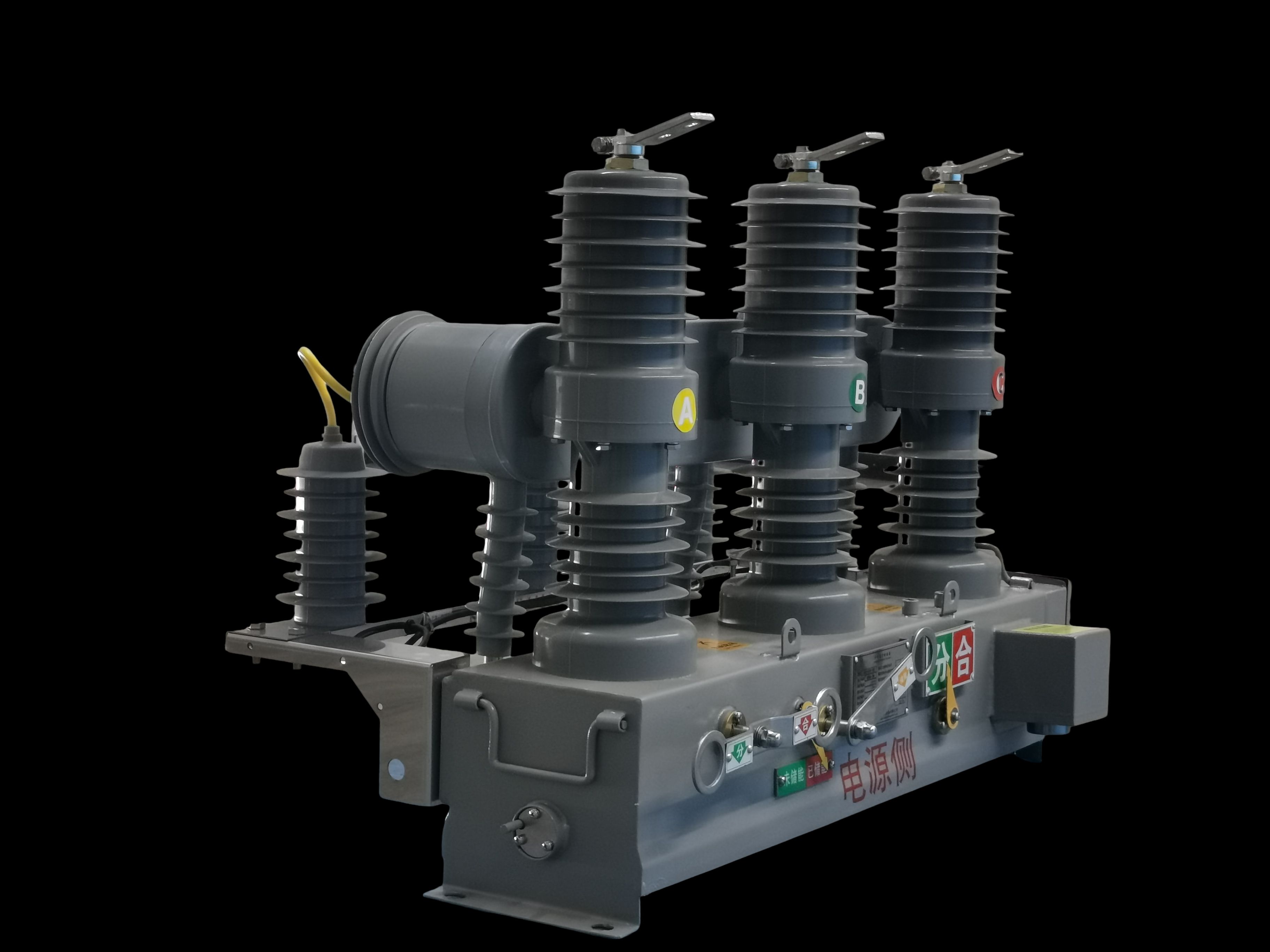
The shape of a contact does more than carry current—it dictates where the arc begins, how it moves, and how quickly it dies. A flat, symmetric face tends to anchor the arc near the same spot on every interruption, concentrating heat and gradually eroding the surface. By introducing a tailored geometry, such as a slight crown, offset ridge, or stepped edge, the arc root is forced to travel outward toward cooler metal or into a pre-shaped gap where electromagnetic forces can stretch it thin.
This motion matters because a stretched arc has a higher voltage gradient and becomes unstable sooner, extinguishing before it transfers enough energy to vaporize contact material. Custom profiles can also work with the surrounding chamber—directing hot plasma toward venting slots or splitter plates while keeping it away from the primary current-carrying region.
Over time, that translates into less pitting, lower and more stable contact resistance, and a markedly longer service life. Rather than relying on heavier contacts or exotic alloys alone, the geometry itself becomes an active part of the arc-quenching system.
Narrow Profiles and Retrofit-Ready Medium Voltage Panels
Retrofitting older electrical infrastructure usually collides with one hard limit: floor space. Many legacy switchgear rooms were laid out for equipment that no longer exists, leaving just centimeters between walls, cable trays, and existing busways. Narrow-profile medium voltage panels solve this by compressing the core components—vacuum circuit breakers, current transformers, and busbar systems—into a footprint up to 40 percent smaller than conventional designs. Instead of forcing a costly building expansion, engineers can slide these panels into the same bay, preserving working clearances and code-required access without weakening interrupting ratings or insulation levels.
The retrofit-ready aspect goes beyond simple dimensional fit. These panels are engineered with adjustable busbar connections, reroutable cable entry zones, and protection relay interfaces that speak the same language as older electromechanical or first-generation digital schemes. Prefabricated transition sections and split-bus compartments allow a phased cutover, so an existing feeder can be moved to the new panel during a brief shutdown rather than a full outage. Field drilling and custom bus fabrication drop away, which keeps retrofit labor predictable and reduces the chance of misalignment between new and old gear.
What makes this approach stand out is how it treats the upgrade as a system constraint problem, not just a product swap. A narrow profile alone does not help if the cable lugs, CT polarities, or grounding paths require rework; retrofit-ready details close that gap. The result is a medium voltage lineup that respects the physical and electrical history of the site while giving operators modern vacuum interruption, safer arc-resistant options, and a clear path for future additions—all without surrendering another square meter of valuable plant floor.
Sealed Vacuum Interrupters That Ignore Dust and Humidity
In switchgear installed outdoors or in dusty industrial settings, ordinary interrupters often suffer from contamination on internal insulation surfaces. Sealed vacuum interrupters take a different route: the contacts and arc-quenching chamber are fully enclosed in a ceramic or glass envelope with metal end plates, so airborne particles and moisture never reach the current-making parts. The vacuum inside stays clean and stable regardless of what is happening outside.
That hermetic construction means maintenance cycles can stretch far longer than with air-insulated alternatives. There is no need to wipe down insulating surfaces, check for condensation, or worry about humidity-driven flashovers after a rainy night. Field crews in mines, cement plants, coastal substations, and paper mills see fewer nuisance trips and fewer insulation failures tied to environmental conditions.
Even in tough climates—think tropical downpours, desert dust storms, or salt-laden sea air—the interrupter's performance remains consistent. Because the sealed chamber keeps the contact gap in a high-vacuum state, the arc extinguishes quickly regardless of external humidity. That makes sealed vacuum interrupters a practical choice for switchgear that has to sit unattended for years and still interrupt fault current on the first try.
Field-Tuned Trip Curves for Distributed Generation Sources
Distributed generation sources rarely behave like conventional rotating machines during a fault. Inverter-based resources, in particular, contribute limited and often non-linear fault current that shifts with control settings, grid stiffness, and even ambient conditions. This makes factory-default trip curves a poor fit once the unit is actually connected to a feeder. Field tuning therefore starts with capturing the real fault response at the point of common coupling, not from nameplate data alone.
A practical approach is to run staged low-level faults or use secondary injection with measured impedance values to map how the generator responds across different voltage dips and overload durations. The resulting curve needs to sit close enough to the upstream protection to maintain coordination, yet wide enough to avoid nuisance trips during momentary disturbances. Many sites discover that an over-reliance on standard inverse-time curves leaves gaps, especially where multiple small sources back-feed a common bus.
Once the customized curve is loaded, verification under actual operating conditions matters more than lab simulations. Field engineers often adjust pickup, time dial, and curve shape iteratively during commissioning, comparing event records against the expected response. These tuned settings should be documented with the voltage and frequency conditions present at the time, since switching between grid-connected and islanded modes can shift the fault contribution enough to invalidate earlier assumptions.
Remote Status Monitoring Without Rewiring the Substation
When substations age, the thought of pulling new cables through conduit banks, trenching across switchyards, or disturbing legacy relay panels can stall even the most necessary monitoring upgrades. Remote status monitoring without rewiring the substation sidesteps that entire headache. Instead of adding dedicated copper pairs or fiber runs, non-invasive sensors clamp around existing current transformers, attach magnetically to breaker cabinets, or harvest energy from stray magnetic fields. They transmit data over wireless mesh networks or low-power cellular links, leaving the original protection and control wiring untouched. This approach slashes installation time from weeks to hours and eliminates the risk of accidental shorts, ground faults, or mislabeled terminations during a retrofit.
The trick lies in choosing data points that don’t require a hardwired signal path. Breaker position, transformer oil temperature, bushing leakage current, and insulator leakage can be inferred from external, contactless measurements. For example, a small Rogowski coil clipped around a breaker’s secondary wiring can detect the current signature that indicates close or open operation without breaking the circuit. Similarly, thermal cameras or IR point sensors mounted on a nearby pole can track hot spots without touching any energized part. All the intelligent processing happens at the edge, so only compact status updates—often just a few bytes—need to travel over the air.
Retrofits become far more attractive to utilities because the asset never goes offline, and no switching procedure endangers personnel. Since there’s no new conduit to route, no cable schedule to update, and no drawings to red-line, the engineering burden drops dramatically. Maintenance teams can deploy a dozen sensors across a substation in a single afternoon using magnetic mounts, zip ties, or adhesive pads rated for outdoor exposure. The result is a monitoring layer that feels almost invisible—yet delivers real-time visibility into equipment health, environmental conditions, and abnormal events, all without touching the original wiring.
FAQ
It replaces conventional air or oil interrupters with a sealed vacuum chamber that clears arcs within milliseconds. The custom approach adapts the switch ratings, dimensions, and control interfaces to your existing lineup, delivering fault interruption and visible isolation without forcing a full switchgear replacement.
They are typically applied between 3 kV and 38 kV for load breaking, loop splitting, transformer isolation, and feeder switching. Utilities install them in ring main units, industrial plants use them on motor feeders, and renewable generation sites place them at collection points where frequent operation would wear out air-break contacts quickly.
The contacts are housed in a permanently sealed ceramic envelope under high vacuum, eliminating ionized gas that sustains arcs. Arc duration is short, contact erosion is minimal, and performance stays consistent over thousands of operations. There is no oil to sample or gas to refill, which lowers environmental exposure and routine upkeep.
Yes, retrofit is often the main reason for customization. The existing panel or enclosure is measured, and the operating mechanism, bushing centers, and mounting frame are adapted to match. Many oil switches have been replaced with vacuum units in the same footprint, avoiding civil work and cutting changeover time.
Manual or motorized operation, different pole configurations, auxiliary contacts, key interlocks, padlock provisions, and custom terminal layouts can all be specified. Some projects require shunt trip coils or under-voltage release, while others need extended creepage distances for coastal or high-altitude installations.
The vacuum interrupter is sealed for life, so internal contacts are unaffected by ambient conditions. External components receive anti-corrosion treatment and the mechanism enclosure can be rated IP54 or higher. For coastal and heavily polluted areas, bushing creepage distances are increased to reduce the risk of tracking.
They can be type-tested to IEC 62271-103 or ANSI/IEEE C37.66 depending on the target market. Testing covers making and breaking capacity, short-time withstand, dielectric strength, and mechanical endurance, providing independent validation beyond catalog ratings.
Conclusion
Standard load break switches often struggle under unforgiving duty cycles, but custom vacuum interrupters redefine what medium voltage control can endure. By tailoring contact geometry, these solutions extend arc-quenching life far beyond off-the-shelf ratings, directly addressing the wear that repeated switching imposes. Narrow profiles and retrofit-ready panel designs mean aging substations gain modern performance without costly rebuilds, while sealed vacuum interrupters shrug off dust and humidity that would degrade exposed contacts. Field-tuned trip curves adapt protection to the quirks of distributed generation sources—solar, wind, or reciprocating engines—so nuisance tripping disappears and genuine faults get cleared precisely when needed.
Beyond hardware, remote status monitoring eliminates the need to rewire a single substation terminal. Sensors and transducers built into the switch mechanism feed real-time condition data over existing communication paths, letting operators see wear, load counts, and environmental stress from a control room miles away. Together, these custom vacuum load break switch solutions deliver reliable medium voltage control that fits the actual duty cycle, environment, and protection philosophy of each site—not a generic catalog line. The result is longer service intervals, fewer emergency callouts, and a switch that behaves like it was designed for the job because, in fact, it was.
Contact Us
Contact Person: Julion
Email: [email protected]
Tel/WhatsApp: 8617351370631
Website: https://www.deyunelectric.com