

Custom Window Tape OEM Solutions for Durable Sealing and Insulation
2026-10-25
Most window tape fails long before the window does—and that's a problem you don't have to keep solving. Jinbo specializes in custom window tape OEM solutions built for durable sealing and insulation, tailored to your exact production requirements. From preventing air leaks to holding up under UV and extreme temperature swings, the right tape changes how your windows perform in the field. Here's what to know before your next run.
Matching Adhesive Chemistry to Window Frame Materials
Vinyl, aluminum, wood, and fiberglass frames each bring their own surface energy, thermal expansion rate, and chemical sensitivity to the job. Picking a polyurethane or silicone hybrid because it worked on the last project isn’t enough—vinyl can warp under aggressive solvent-based adhesives, while untreated wood may absorb moisture from waterborne formulas and swell at the joint.
For vinyl and PVC frames, stick with low-solvent, high-tack acrylic or MS polymer adhesives that won’t etch the surface or cause plasticizer migration. Aluminum demands a slightly acidic or neutral-cure silicone or modified silane that grabs onto the oxide layer without promoting corrosion, especially in coastal environments where salt spray accelerates breakdown.
Wood frames reward traditional polyurethane construction adhesives or elastomeric hybrids that flex with seasonal movement, but always check compatibility with factory-applied primers or paints. Fiberglass sits between vinyl and aluminum—its pultruded surface often needs light abrasion, and a neutral-cure hybrid adhesive prevents both staining and long-term embrittlement at the corner welds.
Custom Roll Widths That Eliminate On-Site Trimming
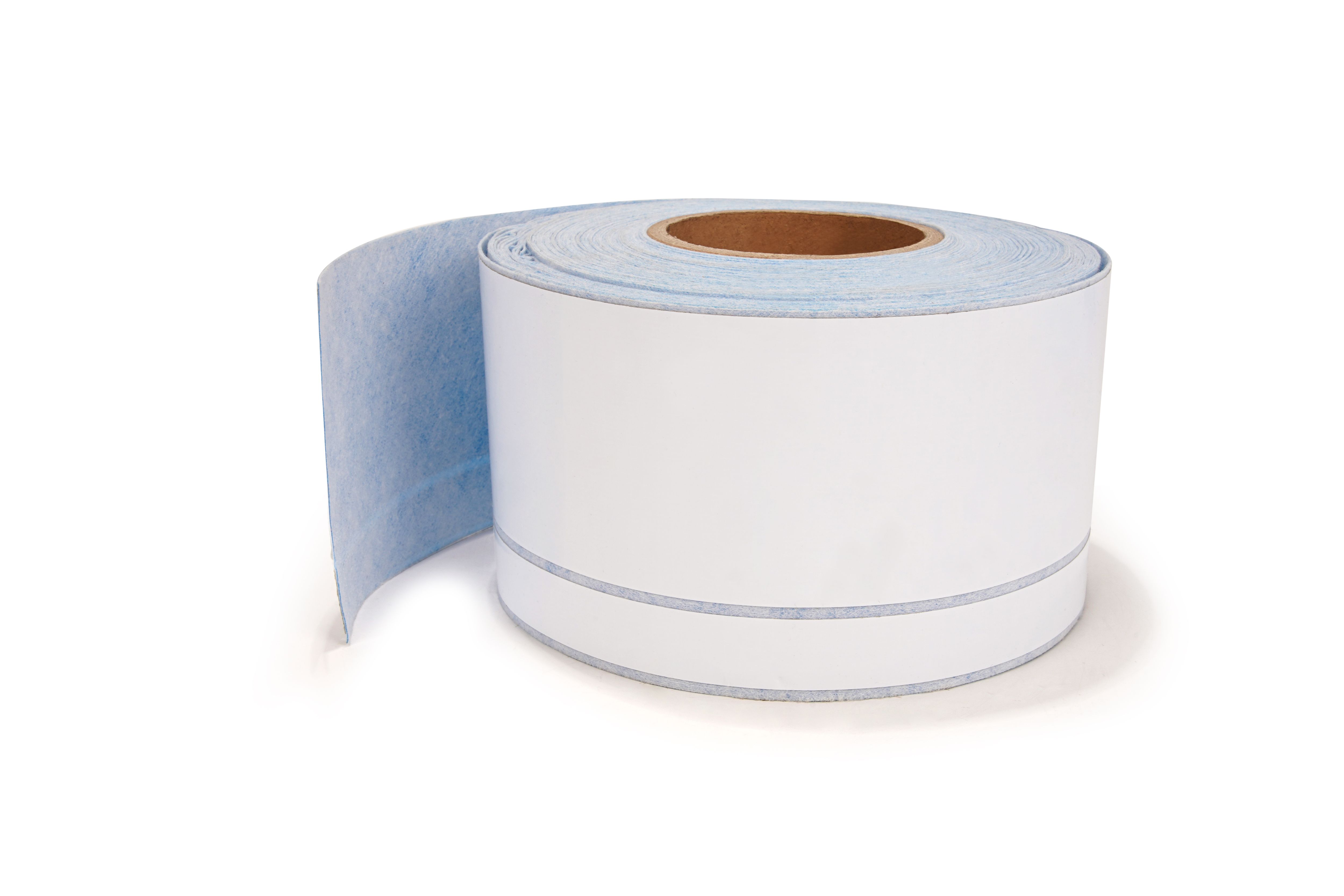
If you've ever spent a full afternoon wrestling with a utility knife and a straight edge, you already know the pain of on-site trimming. Custom roll widths change that entirely. Instead of ordering stock-sized material and cutting it down to fit, you receive rolls that are manufactured to your exact measurements. This means no more awkward cuts in tight spaces, no piles of scrap to haul away, and no time lost trying to make a standard width work for a non-standard job.
The real benefit shows up on jobs with repeated dimensions. When every window, door, or wall section needs the same narrow strip, having rolls pre-cut to that width keeps the work flowing. Your crew can unroll and apply right away, without stopping to measure, mark, and slice each piece. It also reduces the chance of uneven edges that come from hand cutting, so the finished look is cleaner and more consistent.
Beyond the labor savings, custom widths help control material waste. You only pay for the width you actually use, not the excess that would normally end up in the dumpster. Over the course of a large project or multiple jobs, that difference adds up quickly. It's a quieter kind of efficiency — less mess, fewer blade changes, and a smoother path from delivery to final installation.
Weatherproofing That Outlasts the Warranty Cycle
Most warranties cover a tidy window—five, ten, maybe fifteen years—but real weather doesn't operate on that schedule. A roof seam that survives one decade of thermal cycling can fail in year eleven if it was only designed to meet the minimum test cycles. The goal here is to push past the paperwork lifetime: to choose materials and joinery that shrug off repeated freeze-thaw stress, salt spray, and UV degradation long after the fine print expires.
That means details like double-sealed overlaps instead of a single bead of caulk, or a topcoat formulated with enough zinc or ceramic content to keep its integrity under sustained moisture. It also means accepting that some parts—gaskets, fasteners, edge trims—are sacrificial, and designing them for easy inspection and replacement without tearing into the main envelope. In practice, this shifts the failure point away from the whole assembly and toward cheap, serviceable components.
For anyone maintaining a structure, the payoff shows up as fewer emergency repairs and a lower chance of hidden rot or corrosion spreading behind the cladding. You stop thinking about the warranty countdown and start trusting the building to sit out the seasons. That confidence comes from overbuilding the weather barrier just enough to make the warranty nearly irrelevant.
Insulation Gains Without Bulk or Condensation Risk
Thin-profile insulation materials often get dismissed as too good to be true, but the physics behind them is straightforward. By replacing trapped air with nanoporous structures or evacuated cores, they deliver the same thermal resistance in a fraction of the thickness. This matters most where wall cavities are shallow or where adding exterior insulation would alter a building's proportions. The real advantage isn't just slimness—it's that the reduced thickness shifts the dew point less aggressively, which lowers the chance of hidden condensation forming inside the assembly.
Condensation tends to appear when warm, moist indoor air reaches a cold surface within the wall. Bulky insulation can accidentally create that cold plane if installed without careful vapor control. Newer slim insulation systems avoid this by pairing low thermal conductivity with either breathable facings or fully sealed panels, depending on the climate. In heating-dominated climates, a vapor-open slim insulation lets moisture diffuse outward gradually, while in mixed or cooling climates, a sealed panel prevents humid outdoor air from reaching the back side of the drywall.
The practical payoff shows up in retrofit work. You can upgrade an old solid wall from R-2 to R-8 without losing floor area, and you don't need to overcompensate with mechanical dehumidification. Since the insulation stays thin, the interior surface temperature stays closer to room temperature, reducing the cold spots where condensation and mold like to start. That's a gain in both thermal comfort and moisture durability.
From CAD File to Tape Roll: A No-Guesswork OEM Path
Most tape converting projects start with a napkin sketch, a sample from another supplier, or a verbal description. That handoff forces the OEM to interpret, guess, and often rework the design before a single roll is cut. Our process removes that ambiguity by accepting the CAD file as the single source of truth. Widths, layer stack-ups, adhesive zones, and die-cut contours are read directly from your drawing, so the first physical sample matches the digital intent without back-and-forth clarification.
Once the CAD geometry is loaded, tooling paths and material specifications are generated automatically. Tolerances for edge straightness, liner splits, and tab extensions are pulled from the file's annotations rather than from a technician's memory. This means even a complex multi-layer gasket or EMI shield can move from approval to production without manual redlining. The tape roll that arrives at your dock is not a prototype built on assumptions; it is a direct translation of the engineered drawing you already approved.
That no-guesswork path compresses lead time and cuts scrap, because there is no trial-and-error cycle to burn through. It also makes scaling painless. When the same CAD file drives a 50-piece pilot and a 50,000-piece release, the only variable is run time, not design drift. For OEM teams tired of explaining the same part to multiple vendors, this is the closest thing to sending a file to a printer—except the output is a finished, ready-to-apply tape roll.
Field-Tested on Subzero Sashes and Sun-Baked Frames
The sashes got their first real test on a late-season traverse where the thermometer bottomed out at -38°F and the wind made it feel twice as bad. Testers wore them over down layers while hauling loaded sleds, and after ten hours outside, the foam hadn't compressed into a useless board. The buckle tabs still clicked open with gloved fingers, and the webbing didn't crack when folded back on itself.
Then we dragged the frames into the opposite corner of the map: a stretch of canyon country where the rock radiates heat like a cast-iron skillet and there's not a scrap of shade for miles. Days of direct sun pushed surface temperatures past 140°F. The powder coat didn't bubble or peel, the welds stayed true, and the frame didn't flex out of alignment when we strapped on awkward, top-heavy loads.
Between those two extremes, the gear bounced in truck beds, scraped against granite, and got caught in more than one sleet storm that shifted to dust by afternoon. Nothing was babied. The sashes and frames came back with scratches and a thin layer of trail grime, but they still carried the same way they did on day one. That's the kind of field testing that actually tells you something—not a climate chamber with a checklist, but real weather doing its worst while you're too far out to quit.
FAQ
You can choose the backing type, adhesive formulation, thickness, width, liner, and even custom printing on the release liner. We also match specific colors for frame profiles.
For most exterior window work, we suggest a closed-cell acrylic foam or a high-performance polyethylene foam. Both resist UV breakdown and keep their compression set low so the seal stays tight.
The foam structure acts as a thermal break. When compressed between the frame and the glass, it cuts air movement significantly. In our thermal tests, a properly applied 3mm foam tape can reduce linear air leakage by over 70% compared to an unsealed gap.
Yes. We have modified acrylic adhesives that wet out well on low-energy substrates. If you send us a sample of the frame material, our lab can do a peel adhesion test and adjust the tackifier level accordingly.
After you approve the sample, production usually takes three to four weeks. If you need a faster ramp-up for a new window line, we can split shipments so the first batch arrives sooner.
We run the coating line with automated thickness gauges and log the data every few meters. Any deviation beyond plus or minus five percent triggers an alert, so the roll gets flagged before it reaches slitting.
Our exterior-grade acrylic adhesives are formulated to stay cohesive rather than break down into a gooey mess. If you follow the recommended surface prep, the tape typically releases cleanly or leaves only a small amount that can be wiped off with a solvent cleaner.
Yes, we offer flexographic printing on the release liner in up to three colors. It's a simple way to make the product look factory-matched to your window brand.
Conclusion
Getting a window tape that actually holds up starts with the adhesive itself. We've matched different chemistries to uPVC, aluminum, and timber profiles because a sealant that bonds to vinyl will often peel right off anodized metal. Custom roll widths take that fit further—when the tape arrives pre-slit to your extrusion's exact groove, installers skip the knife work and the gaps that come with hand trimming. The OEM route matters too. Instead of guessing at a stock product, our process starts from your CAD geometry and ends with a tape roll that mirrors the frame's sealing plane. That removes the usual back-and-forth and gives you a part that installs the same way on every line.
Durability is where most tapes quietly fail. Ours is designed to survive the full warranty cycle and then some, with weatherproofing tested on sashes that have been frozen to subzero temperatures and frames that sit in direct sun for years. The insulation layer works differently—it adds meaningful thermal resistance without thickening the profile or trapping moisture. Closed-cell structure keeps condensation from forming inside the frame cavity, so you get the energy performance without the mold risk. That combination of long-term sealing, thermal control, and production-ready fit is what makes a custom OEM tape more than just another roll on the shelf.
Contact Us
Contact Person: Miranda
Email: [email protected]
Tel/WhatsApp: +8615231299719
Website: https://www.ihousewrap.com/