

Filter Press Fabrication: Streamlining Your Custom Manufacturing Process for Superior Results
2026-07-30
When it comes to filter press fabrication, every detail counts in achieving superior results. At Sinou, we understand that a one-size-fits-all approach rarely works for complex industrial needs. That’s why we’ve refined our custom manufacturing process to eliminate bottlenecks and deliver precision-engineered solutions that perform under pressure. Discover how streamlining fabrication can transform your separation efficiency and product quality—without the typical delays.
Bespoke Engineering for Unmatched Filtration
Great filtration doesn’t happen by accident—it’s built from the ground up, piece by piece, to suit the exact fluid, pressure, and purity requirements of your process. We don’t rely on shelf-ready parts or universal designs because your operation isn’t universal. From custom housing geometries to proprietary media blends, every element is shaped around the nuances of what you’re filtering, ensuring that nothing slips through unless you want it to.
This isn’t about bending a standard product to fit. It’s about starting with a blank sheet and an open conversation, then iterating until the solution feels inevitable. Our engineers work directly with your team to understand the real-world demands—whether that’s an aggressive chemical environment, a sterile downstream application, or a high-viscosity nightmare—and they respond with quiet precision. The result is a filter that doesn’t just meet a spec sheet; it keeps performing long after others would clog, tear, or give up.
Beyond performance, bespoke engineering also means considering the full lifecycle: ease of maintenance, change-out speed, and how the unit interacts with existing infrastructure. We often embed subtle innovations—like a smarter seal design or a rethought flow path—that eliminate headaches your operators didn’t even know they had. In the end, you get more than a filter; you get a purpose-built asset that quietly makes your entire system more reliable.
Streamlined Workflows from Design to Delivery
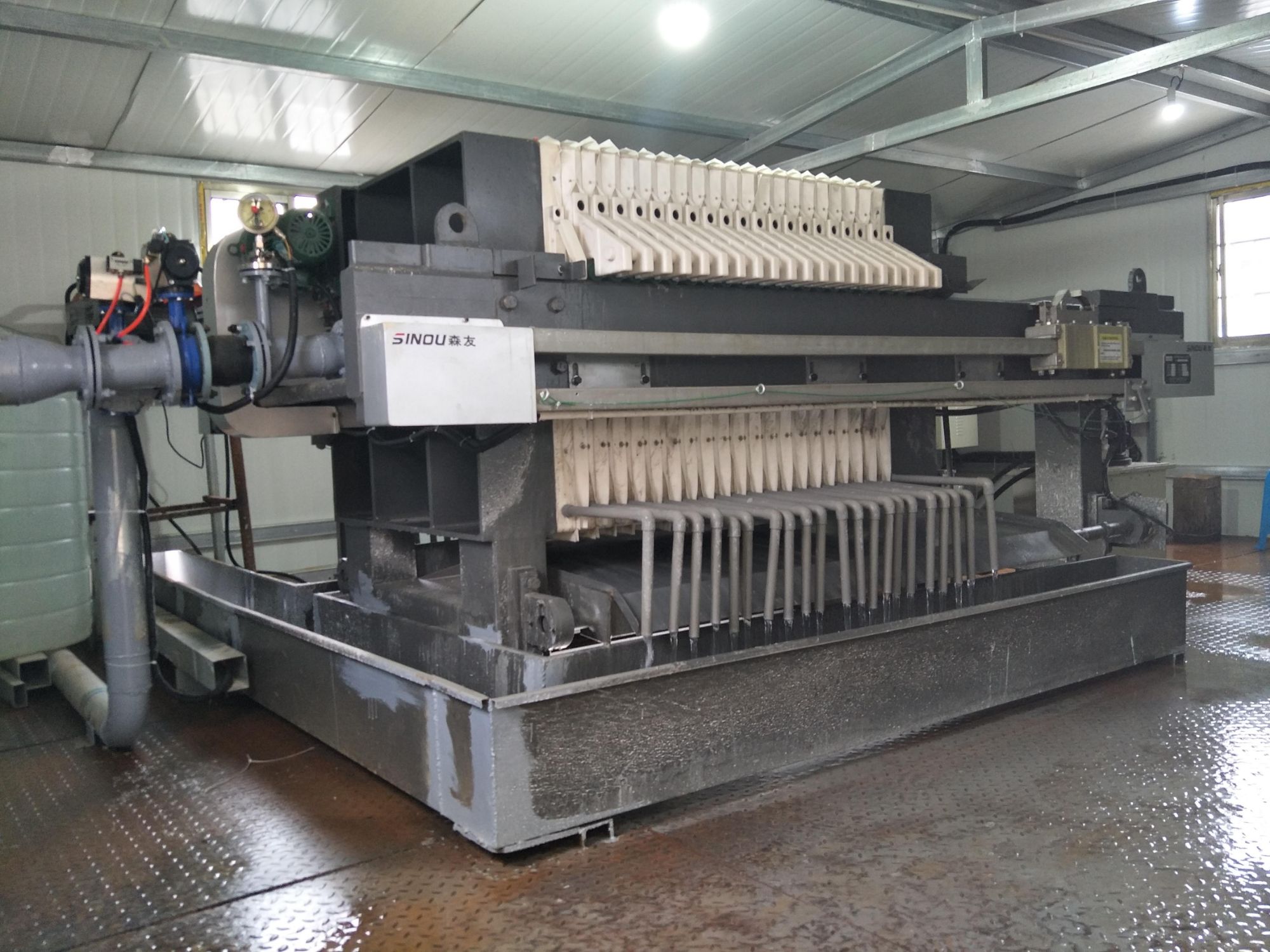
Every project starts with a spark, but turning that vision into a tangible product often feels like navigating a maze. By rethinking the traditional handoff between design and development, we've eliminated the bottlenecks that slow down creativity. Instead of isolated phases, our approach weaves feedback loops and real-time collaboration into the fabric of the process—so iterations happen in hours, not days.
The magic lies in the details that most tools overlook: a shared design language that stays consistent from wireframes to production, automated checks that catch misalignments before they become rework, and a delivery pipeline that treats assets as living components rather than static files. This isn't just about speed; it's about preserving the integrity of the original idea while giving engineers the flexibility they need to build without constant back-and-forth.
In practice, this means designers spend less time organizing layers and more time solving real problems. Developers no longer waste hours deciphering specs or recreating layouts from scratch. The result is a rhythm where releases happen predictably, and the gap between imagination and reality shrinks to almost nothing. It's not a toolchain—it's a mindset shift that makes the journey from concept to customer feel almost effortless.
Advanced Materials for Long-Lasting Systems
As industries push the boundaries of performance under extreme conditions, the demand for materials that stand the test of time has never been higher. From deep-sea pipelines to jet engine turbines, advanced alloys and composites are engineered to resist degradation from heat, corrosion, and mechanical stress. These materials often incorporate nanoscale reinforcements or self-healing capabilities, allowing systems to function reliably far beyond traditional lifespans. The shift toward such innovations is quietly reshaping how engineers think about maintenance cycles and lifecycle costs.
One fascinating area of progress lies in hybrid material systems that combine the best attributes of metals, ceramics, and polymers. For instance, metal matrix composites infused with ceramic particles can handle scorching temperatures while maintaining structural integrity, making them ideal for next-generation power plants. Meanwhile, polymer-based coatings with layered architectures provide exceptional barrier properties against moisture and chemicals, extending the service life of everything from electronic devices to offshore structures.
The real magic, however, is happening at the micro level, where smart materials respond dynamically to their environments. Shape-memory alloys that recover from deformation, or piezoelectric fibers that generate charges under stress, are turning passive components into active participants in system longevity. By embedding these responsive features, designers are building systems that not only endure harsh conditions but also adapt to them, slashing downtime and resource consumption in ways that were once unimaginable.
Precision Assembly: Where Craft Meets Innovation
Every component tells a story of meticulous attention—where seasoned hands guide advanced tools to achieve tolerances that defy expectation. It’s not just about fitting parts together; it’s about orchestrating a silent symphony of precision, where craftsmanship tempers the cold edge of technology with a warmth only human skill can provide.
Innovation here isn’t a buzzword; it’s the quiet evolution of techniques passed down through generations, now augmented by intelligent systems that learn and adapt. The result is an assembly process that feels almost intuitive, bridging the gap between artisan intuition and digital exactness without losing the soul of the craft.
In this space, prototypes become heirlooms, and production lines hum with a rhythm that respects both heritage and progress. Each joint, each fastener, is a testament to the belief that the future of manufacturing lies not in choosing between hands and machines, but in letting them perfect each other.
Rigorous Quality Assurance for Peak Performance
Every component undergoes a series of punishing tests that push far beyond everyday demands. From thermal extremes to relentless vibration trials, we simulate the harshest conditions to expose even the faintest weakness long before it can surface in the real world.
Our inspection protocols rely on a blend of high-resolution imaging and laser-based metrology, capturing defects invisible to the naked eye. Each unit must pass a gauntlet of automated checkpoints and manual expert reviews, where tolerance thresholds are measured in microns, not millimeters.
The final validation stage involves a sustained full-load run that mirrors years of operational stress within a condensed timeframe. Only designs that endure this crucible without a single deviation earn the right to ship, ensuring the performance you depend on never falters when it matters most.
Collaborative Approach to Custom Solutions
We believe the best solutions emerge from genuine partnership. Instead of pushing pre-packaged options, our process starts by sitting down with you to untangle the precise contours of your challenge. This isn’t about superficial consultation—it’s a hands-on dialogue where your team’s insights and our technical depth weave together. The result isn’t just a modification of something off the shelf; it’s a fit-for-purpose answer that carries the fingerprints of everyone who shaped it.
What sets this apart is the absence of a one-size-fits-all playbook. Every engagement is treated as a blank canvas, with discovery sessions that go beyond surface-level requirements. We dig into the why, mapping your workflows, pain points, and long-term ambitions. Then, our cross-disciplinary squad translates these into a living blueprint, iterating rapidly with your feedback. This tight feedback loop ensures the final deliverable feels less like a vendor handoff and more like an extension of your own thinking.
The payoff is a solution that doesn’t just solve for today but adapts as your needs evolve. Because you’ve been intimately involved in the architecture, ongoing adjustments feel intuitive rather than disruptive. It’s a continuous collaboration—we stick around to refine, not just deploy. That’s how we avoid the trap of static systems and instead build something that breathes with your business.
FAQ
It covers the entire build of a filter press from raw materials to a finished system, including frame construction, plate production, hydraulic and control integration, and surface treatment tailored to specific operational demands.
By designing around your exact slurry characteristics, throughput goals, and cake moisture targets, you get a press that delivers maximum solids capture, shorter cycle times, and more consistent output than an off-the-shelf option.
Optimized material procurement, modular plate assembly, pre-wired control panels, and parallel work on frame and filtration internals can significantly cut lead times while maintaining strict quality checks at every step.
Mining, chemical processing, food and beverage, wastewater treatment, and pharmaceutical sectors often see substantial gains because each has unique slurry behavior, purity requirements, and throughput demands.
By selecting corrosion-resistant alloys or coatings, reinforcing high-stress zones in the frame, and testing plates under pressure and temperature extremes that simulate your real-world environment.
Plate geometry, chamber depth, and cloth attachment directly influence cake formation, washing efficiency, and discharge ease, making bespoke plate engineering a cornerstone of high-performance filtration.
Often yes — re-plating with improved chamber profiles, retrofitting automated plate shifters, or adding membrane squeeze capabilities can modernize your asset at a fraction of full replacement cost.
Proven project management with transparent milestones, in-house capabilities for both steelwork and plate machining, and a consultative engineering approach that starts with a thorough analysis of your current process pain points.
Conclusion
Achieving superior filtration performance starts long before the first weld—it's rooted in a deep understanding of each client's operational reality. We don't just build filter presses; we engineer bespoke systems where every chamber, plate, and manifold is tailored to the specific slurry characteristics, throughput demands, and spatial constraints of your facility. By challenging off-the-shelf assumptions, our team turns complex dewatering challenges into elegantly simple designs. This customization is seamlessly connected to a streamlined workflow that collapses the gap between concept and completion. Digital modeling, real-time feedback loops, and synchronized supply chains mean design iterations happen in hours, not weeks, and materials move from spec to shop floor without delay. The result is a manufacturing cadence that feels almost intuitive—anticipating your needs rather than reacting to them.
Behind every lasting system is a relentless focus on material integrity and assembly precision. We select alloys, polymers, and filter media that thrive in aggressive chemical environments and punishing pressure cycles, blending proven performers with emerging composites when it makes sense. Skilled craftspeople then marry these materials through techniques that are equal parts tradition and innovation—hand-finished surfaces meet CNC-repeatable accuracy, so every frame closes square and every plate seals tight. Before a single unit ships, it endures a gauntlet of tests that mimic real-world abuse: cyclic pressure runs, leak-decay checks, and endurance trials that push components past their design limits. This isn't just quality control; it's a commitment to your peace of mind. Throughout this journey, we work shoulder-to-shoulder with your engineers and operators, embracing feedback not as a formality but as the fuel that drives continuous refinement. The final product isn't simply a machine delivered to your dock—it's a co-created solution that elevates your process from day one.
Contact Us
Contact Person: HaiYan
Email: [email protected]
Tel/WhatsApp: +86 18957325588
Website: https://www.senyoubeton.com/