

Gearless CI Flexo Press Export: What Global Printers Need to Know Before Buying
2026-11-16
Most buyers evaluating a gearless CI flexo press for export start with speed and dot gain. The smarter ones start with what happens after the crate arrives: installation torque specs, training depth, and whether the manufacturer will answer a call in your time zone. That's where HuiPeng has quietly changed the export playbook.
Why Gearless Servo Motors Change Your Registration Tolerances
A geared servo always has a little mechanical play between the motor pinion and the driven gear. That backlash, along with gear tooth compliance and reversing error, sits directly in the path of position control. For applications that depend on registration, even a few microns of lost motion can push a print line or cut position outside tolerance. Gearless servo motors eliminate the gear stage entirely, coupling the rotor to the load with no intermediate teeth or belts. Without that mechanical gap, the commanded position is the actual position, so the repeatability budget immediately shrinks by the amount that used to be lost to the gearbox.
The difference shows up even more clearly during rapid moves. Geared axes often have to compensate for inertia reflected through the gear ratio, which can create overshoot and longer settling times. That is exactly where registration errors appear between stations. A gearless direct-drive servo has lower reflected inertia and can accelerate, decelerate, and hold position with less hunting. The control loop does not have to fight gear stiction or varying efficiency, so it can correct small deviations faster. As a result, the machine holds a tighter tolerance band at speed, not just during slow setup moves.
Over time, gear teeth wear and clearance grows. The registration that was acceptable at commissioning may drift weeks later, forcing operators to adjust offsets or slow down the line. Gearless servos remove that wear mechanism, so the mechanical relationship between the motor and the load stays stable across millions of cycles. Thermal drift also drops because there is no gearbox friction adding heat near the axis. That stability is often what separates a process that needs constant babysitting from one that can run long production batches with minimal registration drift.
What Freight Forwarders Won’t Tell You About Flexo Press Imports
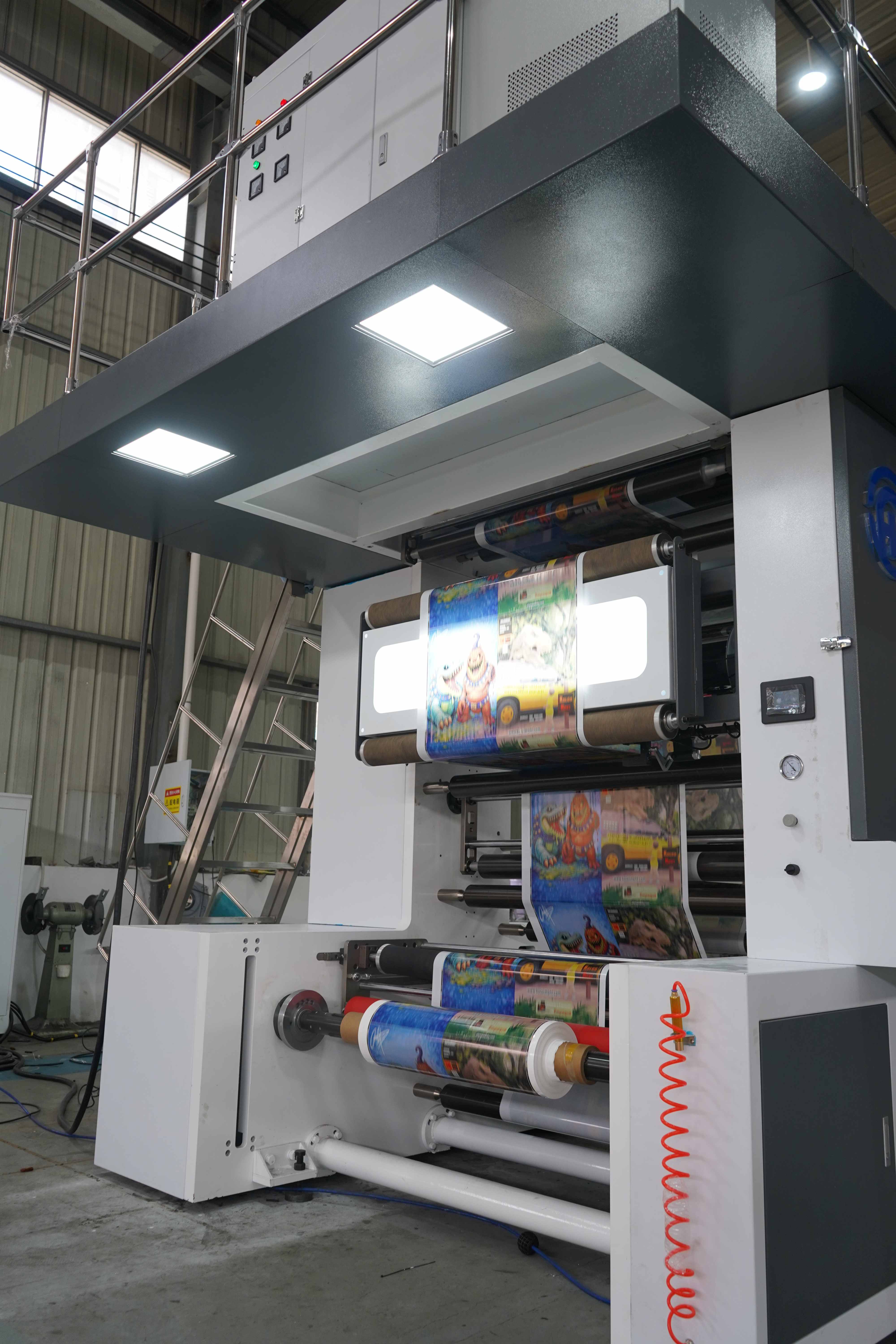
Most freight forwarders quote you a base ocean freight rate and call it a day. What they don't volunteer is that flexo presses, with their oversized frames and awkward dimensions, routinely trigger over-width or over-height surcharges at the port. You won't see these charges until the final invoice lands, often doubling your expected shipping cost. Always ask for a line-item breakdown of all possible accessorials before you commit.
Another quiet corner is tariff classification. A flexo press can be classified under several HS codes depending on its features, and the difference in duty can be thousands of dollars. Your forwarder may rely on a generic code that sounds close enough, but if customs disagrees, you're stuck paying back duties or facing an audit. Insist on seeing the exact classification rationale and, if possible, a binding ruling from the customs authority of the destination country.
Then there's the insurance gap. Standard cargo policies often exclude damage to precision components like servo motors or electronic controls during transit unless you purchase an all-risk rider. Forwarders rarely mention this because it's an upsell they don't get a commission on. Before your flexo press leaves the factory, confirm in writing what your insurance actually covers and get a separate policy for the electronics if needed.
Reading Between the Lines of a Builder’s Reference List
A builder’s reference list is rarely just a page of names—it’s a coded history of working relationships. Look past the surface chatter about “great crew” and “finished on time.” Check how many projects each reference actually covers, how recently they worked together, and whether the builder appears as a subcontractor, general contractor, or design partner. The quiet details in that list often reveal whether the builder consistently lands the kind of work you’re planning or simply pads the page with one-off favors.
Patterns matter more than individual praise. If the same electrician, plumber, or material supplier shows up across several references, that points to a stable network and repeat business—usually a sign of trust and reliable scheduling. On the other hand, a reference list that cycles through different trades on every job can hint at frequent fallouts, unpaid invoices, or a habit of burning bridges. Ask the builder directly why certain trades repeat and others don’t; their answer often tells you more than the list itself.
Pay attention to what’s missing. Vague entries like “homeowner in Oakville” with no phone number, references who only want to be contacted by email, or an absence of projects from the last twelve months are quiet warnings. When you do call a reference, skip the generic “Were you happy?” Instead, ask about how the builder handled mid-project surprises, whether change orders were explained before work began, and if the final invoice matched the original estimate. Those answers live between the lines of any polished reference sheet.
Electrical Compatibility Is More Than a Plug Adapter
Travelers often fixate on the physical shape of a plug, but that little adapter only solves the mechanical fit. The real question is whether your device can handle the local voltage and frequency. A 110-volt hair dryer plugged into a 230-volt outlet with just an adapter will destroy itself in seconds, and the frequency difference (50 Hz vs 60 Hz) can make motors run slow or overheat.
Beyond voltage and frequency, the grounding scheme matters. Some outlets have no earth connection; others have polarity reversed. Plugging a three-prong device into a two-prong adapter might leave it dangerously ungrounded. Then there's the issue of circuit capacity—many hotel or old building circuits are rated lower than what high-wattage devices demand.
Finally, safety certifications differ by region. A device rated for one market may not meet the insulation or fault-current requirements of another. So before relying on any adapter, check the device's input rating label: if it says "100-240V, 50/60Hz," it will likely work worldwide; if not, a voltage converter or a different appliance is the only safe route.
The Print Test Every Buyer Should Demand Before Signing
A contract can hide a lot of shortcomings behind nice mockups. Ask the shop to run a short section of your job on the exact paper or substrate you will pay for, then compare it side by side with the approved digital proof under the same lighting you will use at the final location. Look for shifts in neutral grays, blown-out highlights, and muddy shadows; those are the first places where an uncalibrated press betrays itself.
Do a hands-on check, not just a visual once-over. Fold a corner, scratch a small area with a fingernail, and lightly rub the surface to see how the toner or ink holds. If the piece will be trimmed, ask for a trimmed sample with bleed and registration marks intact so you can confirm nothing important will be cut. Small type should stay crisp, and solid areas should not look streaky or uneven.
Get the test signed off by the actual operator who will run the full job, not only a sales representative. If they hesitate or charge an unreasonable fee for a standard test sheet, treat that as a warning sign. A shop that is confident in its equipment and color management will usually welcome the request because it prevents costly reprints on both sides.
What Happens When a Gearless Press Needs a Part in Year Three
By the third year of running a gearless press, the machine has settled into a rhythm—until a critical component fails. Unlike conventional presses with replaceable gears, a gearless design relies on direct-drive motors and precision couplings. When one of these parts wears out, the operator quickly discovers that sourcing a replacement is not a simple off-the-shelf task.
The first challenge is identifying the exact failed part, because gearless systems often integrate multiple functions into a single module. A vibration sensor might be embedded in the motor housing, or a cooling channel could run through the main shaft. Disassembly requires specialized tools and a thorough understanding of the press's control software, which often locks down after detecting an anomaly.
Once the part is isolated, the real wait begins. Many gearless press components are made to order by the original manufacturer, with lead times stretching from six to twelve weeks. In the meantime, production planners scramble to reroute jobs to older presses or outsource to a partner shop. The lesson learned is clear: keep a critical spares kit and a service contract that guarantees expedited shipment, because a gearless press in year three does not forgive a reactive maintenance strategy.
FAQ
It removes gear train backlash and vibration, so each print deck is driven by an independent servo motor. That means you hold tighter register, especially at high speeds, and fine screens or vignettes come out cleaner than on a conventional geared press.
You need to look at servo drive maintenance, climate-controlled room requirements, spare core rollers, and software licensing. Many printers forget that gearless presses often demand cleaner power supply and higher-spec compressed air, which can add infrastructure expenses.
Ask for the exact number of on-site commissioning days, who pays for travel and lodging, what training is included for operators and maintenance staff, and whether remote diagnostics come free for the first year. Vague promises are a red flag when the machine crosses borders.
Yes. Confirm the press can run on your local voltage and frequency without unstable transformers, and check for CE, UL, or local equivalents your customs or insurers might require. Retrofitting after arrival can cost more than the shipping.
Gearless presses eliminate gearbox oil changes and gear wear, but you trade that for servo drive cooling checks, encoder cleaning, and software updates. Downtime diagnostics shift from mechanical to electronic, so your team needs a different skill set.
Request a recommended spare parts list with lead times and local warehouse locations. Test how fast they can ship a servo drive or a specific board to your country. Also ask if third-party parts are allowed without voiding warranty.
It can work if you get complete service records and run a live print trial at the current owner's site. But older servo systems may have discontinued components, so check the availability of drives and encoders before signing anything.
Many see payback in 2-4 years if they shift work from two geared presses onto one gearless machine, reduce waste from 4-6% down to 1-2%, and win higher-margin flexible packaging jobs that demand tight register. But if your current order mix is simple spot-color labels, the jump may not be justified.
Conclusion
When a gearless CI flexo press crosses a border, the first surprise rarely shows up in the printing unit. Servo-driven decks reset your whole idea of registration tolerance: you can hold tighter, more repeatable colors, but only if the electrical system has been matched to the actual grid and grounding conditions at the destination plant—not just fitted with a plug adapter. A smart buyer asks for a job-specific print test on their own substrate before signing, because a press that looked stable in the builder's demo room may drift once the servo tuning is altered for local power fluctuations.
Freight forwarders often gloss over the details that cause hidden costs: port storage fees, customs bond requirements, and rigging for the extra-wide base frame. Ask for a line-by-line breakdown of Incoterms and insurance. Meanwhile, a builder's reference list tells you more by what it omits than what it includes. Call a printer who has been running the same press for three years and ask what happened when a servo drive or an anilox sleeve needed replacement. That conversation will reveal whether the exporter keeps critical parts in regional hubs or ships everything from the factory—and whether the promised 24-hour support is real. None of this shows up in a glossy brochure, but it decides whether the press keeps making money in year three.
Contact Us
Contact Person: Isaias
Email: [email protected]
Tel/WhatsApp: 86-13868693129
Website: https://www.hpflexo.com/