

Honest Concrete Cutter Manufacturing Concern: Why Trustworthy Production Matters for Your Projects
2026-10-07
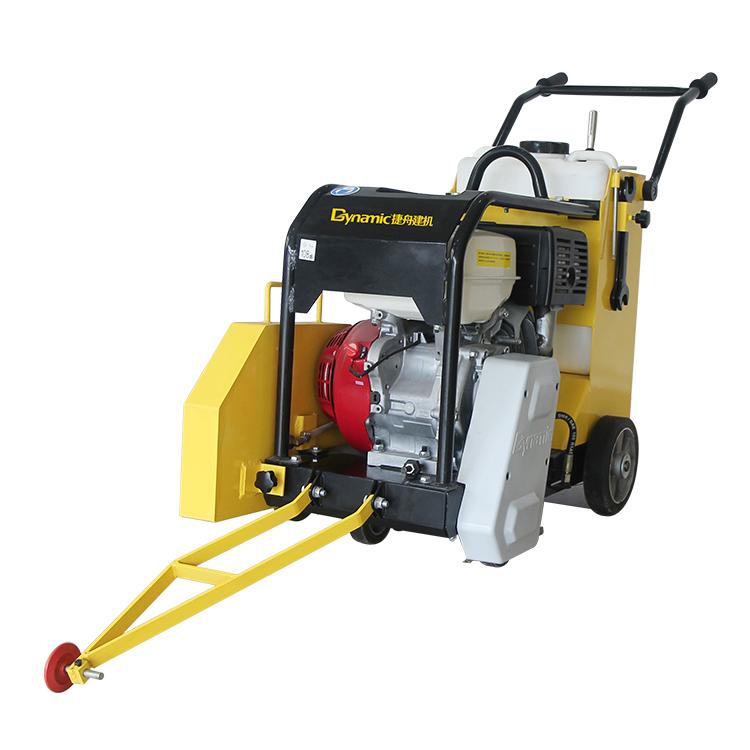
Ask any contractor what keeps them up at night, and a dull or broken concrete cutter rarely makes the list—until it's 6 a.m. on a pour day. Honest manufacturing isn't a buzzword at Dynamic; it's the difference between a tool you trust and a tool you tolerate. We're digging into why trustworthy production matters for your projects, from unexpected downtime to the hidden costs of shortcuts. Read on to see how the right concrete cutter changes more than the cut.
The Real Reason Cheap Concrete Cutters Fail on Day Three
On day one and two, the cheap concrete cutter feels surprisingly capable—maybe a little loud, a touch more vibration than you'd like, but the cuts come out straight enough. By day three, the motor starts whining under load, then spits a thin wisp of smoke from the vents. The failure is not bad luck or operator error. It’s the open-frame design letting fine silica dust coat the armature and commutator, while unsealed bushings grind away against each other. A quality cutter uses sealed bearings and a dust-shielded motor chamber; the budget version skips both to save a few dollars.
The specific day-three collapse usually traces back to brush and bearing wear accelerated by heat cycles. Cheap units often mount the blade arbor on sintered bronze bushings instead of sealed ball bearings. Under the side pressure of even a slightly twisted cut, those bushings develop play within hours. That play lets the armature shift, the brushes start arcing against the commutator, and the added drag produces a thermal runaway that finally trips the breaker or burns the windings. The dust packed into the brush holders only speeds up the process.
There is also a less obvious culprit: the duty cycle of thin field coils. In a budget cutter, the motor windings are wound with lower-class insulation that degrades fast once internal temperature passes about 130°C. Day three often sees longer continuous use—cutting a long control joint or taking down a small wall—and that sustained load pushes the insulation past its limit. Add a low-grade diamond blade that loses tension after the first few linear feet, and the motor works even harder to make the same cut. By the time the smoke appears, the failure was already designed into the tool.
What an Honest Production Line Looks Like Up Close
Up close, the line is not a polished sequence of automated arms. You notice the worn rubber grips on the torque drivers, the handwritten label taped to a bin that says “left-side brackets only,” and a small fan clipped to a shelf to keep the circuit tester from overheating. The operator at station three pauses to blow a fleck of dust off a connector before seating it, a motion that never appears in any process video.
Between stations, the flow is uneven but honest. A tray stutters on a roller because a bearing has been waiting for replacement since Tuesday. The barcode scanner at the final inspection beeps on the second pass about a third of the time, and the quality inspector’s thumb nail is dark from pressing against raw edges all week. Rejected parts don’t disappear; they fill a red crate that gets wheeled back to rework at 2 p.m., with a note clipped to the handle listing the three most common burr locations.
Standing there for an hour, you understand that an honest production line is measured by what stays visible: the scrape on the frame from a forklift mishap, the daily tally sheet with crossed-out entries, and the pause every ninety minutes when the team rotates stations to rest their hands. The products still ship on time, but not because everything runs perfectly. They ship because the people on the line know exactly which imperfections matter and which ones they can work around without hiding them.
How Many Test Cuts Happen Before a Cutter Ships
A cutter doesn't leave the factory without proving itself on real materials. Depending on the brand and the intended use, manufacturers typically run a handful of test cuts—often between 5 and 20—to check edge retention, sharpness, and consistency. These aren't just random chops; each cut is measured against specific performance benchmarks.
For lower-cost utility cutters, the process might stop after a dozen slices through cardboard or plastic strapping. Higher-end or specialty blades face a tougher routine: repeated cuts through rope, leather, or even mild metal sheeting until the edge shows the first sign of wear. In some workshops, a cutter must survive 50 or more test cuts before it's considered ready.
The final number isn't as important as what the tests reveal. A blade that passes 30 clean cuts but dulls on the 31st gets sent back for reworking. The goal is to ship cutters that feel sharp and reliable from the first use—so the testing continues until that standard is met, not until an arbitrary counter reaches zero.
Steel Sourcing Shortcuts That Shorten Tool Life
Many shops looking to trim costs or speed up delivery turn to the lowest-bid steel supplier or skip incoming inspection like spectrometer checks. On the surface it saves money and time, but these shortcuts often mean drifting material composition, excess inclusions, or inconsistent hardness. Cutting tools working through such steel quickly develop micro-chipping and thermal cracks at the edge, and tool life can drop by 30 to 50 percent compared to properly sourced material. Even worse, the early failure doesn't always show up right away—sometimes a tool snaps halfway through a job, scrapping the workpiece.
Another common shortcut is accepting uncertified "equivalent" grades or mixing bar stock from different heats. A supplier may claim a certain alloy performs the same as a standard grade, but missing micro-alloying elements like vanadium or tungsten significantly reduce red hardness and wear resistance. Meanwhile, if hardness varies widely between batches, operators are forced to keep adjusting cutting parameters, which subjects the tool to unstable shock loads. Over time, the seemingly lower purchase price is quickly offset by tool consumption, machine downtime, and rework—often making the per-part cost higher than if proper steel had been used from the start.
Avoiding these pitfalls doesn't require elaborate testing. Stick with suppliers that provide full material certifications, run a simple spark test or portable spectrometer check on critical batches, and track tool life against each steel lot. When unusual wear appears, investigate the material before just swapping tools. Catching the source early helps break the cycle of saving pennies on steel while losing dollars on tooling and lost production.
Why We Document Every Heat Treatment Cycle
Metal doesn't forget, even when people do. A heat treatment cycle is never just "heat it up and cool it down." The exact ramp rate, the soak time at temperature, the quench speed, even the position of parts inside the furnace all leave a permanent fingerprint on the material. If we skip documentation, we're left guessing whether a hardness variation came from a loaded thermocouple or a five-minute delay at the quench tank. That's not a risk we're willing to take.
There's also the moment when a customer asks a simple but terrifying question: "Can you prove this batch was treated correctly?" Without records, the answer is a shrug. With a complete cycle log, we can pull up the actual furnace chart, the operator's notes, and the verified quench temperature for that specific job. It turns a potential dispute into a straightforward conversation. For parts that go into aircraft or surgical tools, that proof isn't optional—it's the whole reason they trust us.
Beyond accountability, the logs become a tool for getting better. After a few hundred cycles, patterns emerge that would otherwise stay invisible. We've caught a slow drift in oil temperature during summer months, adjusted preheat steps for thick-walled components, and reduced rework because the data pointed to a specific racking arrangement. Documentation isn't busywork; it's how we make sure the next batch is better than the last one.
A Concrete Cutter Built to Be Ignored on Site
Most concrete cutters on a job site demand attention—bright paint, loud motors, constant fiddling. This one goes the other way. The housing is a dull, matte grey that doesn't catch the sun or the eye. No oversized branding, no chrome accents. It sits next to the pallet of rebar and disappears until you need it.
The real trick is the noise. Or rather, the lack of it. The blade spins with a low, steady hum that barely rises above the background chatter of a working crew. You can have a conversation six feet away without raising your voice. That quietness isn't just pleasant—it means fewer complaints on tight urban jobsites and less fatigue by mid-afternoon.
Even the controls stay out of your way. The throttle lever has a slight resistance that feels deliberate, not stiff. The water feed is tucked behind a guard, so you won't kick it. And when you're done, the whole unit wipes down in about a minute because there's no place for slurry to hide. It doesn't ask to be admired. It just cuts.
FAQ
Look past the polished brochures. A trustworthy shop will hand over material specs, heat treatment details, and batch test data without being asked twice. They will also tell you where a blade falls short, such as the aggregate hardness that causes glazing or segment loss, instead of promising a single tool for every slab.
Small inconsistencies have a way of turning into big delays. Uneven diamond distribution, a poorly tensioned core, or sloppy segment welding usually appears as vibration, wandering cuts, and lost segments within the first few hours. That forces more blade changes and rework, which eats into the schedule far more than a lower purchase price ever saves.
Reputable shops pull samples from every batch and check runout, arbor fit, and weld strength. They also spin each design up to its rated RPM to catch cracks or wobble before shipping. If a manufacturer cannot explain their pass or fail thresholds clearly, treat that as a missing spec rather than a minor detail.
An honest manufacturer will name the concrete hardness, aggregate type, and reinforcement levels their cutter is built for. They will also tell you when to switch to a different bond or drop to a lower speed. Claims that one blade handles everything from soft limestone to heavy rebar usually mean it does none of them well.
The core is what keeps the blade stable under heat and side pressure. A quality core is stress-relieved and straightened so it resists warping after repeated deep cuts. Cheaper steel warps, the blade starts to wobble, and the cut line drifts, which means you end up fighting the tool instead of letting it do the work.
The bond controls how fast fresh diamonds are exposed. Too hard and the blade glazes over; too soft and the segments wear out before the job is done. Manufacturers that care will match bond hardness to typical concrete conditions and be upfront about the limits, rather than hiding behind a vague 'all-purpose' label.
Look for a warranty that names specific failures, such as segment detachment from a weld defect or core cracking under rated RPM. That specificity shows the manufacturer knows its process well enough to stand behind it. Vague lifetime promises often come with enough exclusions to make them meaningless when a tool fails on site.
Lower numbers often mean the manufacturer is accounting for real-world abuse, heat buildup, and safety margin. If a blade is rated for 4,500 RPM instead of a stretched 5,500, it is because the engineering team wants the tool to survive the worst day on site, not just a clean test bench. That kind of restraint is usually a good sign.
Conclusion
A concrete cutter that dies on day three is rarely a mystery to anyone who has seen the inside of a rushed production run. The steel is thin where it should be thick, the heat treatment skipped or uneven, and the only real test it ever passed was a quick spin in the factory yard. Honest manufacturing flips that script. It starts with steel sourcing that refuses shortcuts: alloys are traced back to the mill, hardness is verified before machining, and every heat treatment cycle is logged in a way that would survive an audit. When you walk through an honest production line, you see the same thing at every station—people checking dimensions, recording furnace temperatures, and cutting sample blocks. Those test cuts aren't decoration. A cutter ships only after it has made enough passes through reinforced concrete to prove the edge won't fold or chip under load.
On a real job site, the best concrete cutter is the one nobody talks about. It starts when asked, cuts clean, and gets set aside without drama. That kind of quiet reliability is built, not promised. It comes from documenting what others hide: heat treatment curves, batch numbers, and the exact number of test cuts before packing. When a manufacturer skips steel quality to save a few dollars, the tool feels fine for a week—then wears unevenly, overheats, or snaps at the arbor. Trustworthy production means those failures are engineered out before the box is taped shut. For your projects, that difference shows up in fewer replacements, less downtime, and a cutting edge that holds its line past the first thousand feet. Honest manufacturing isn't a marketing angle; it's the only reason a tool earns a permanent spot on the truck.
Contact Us
Contact Person: Annie
Email: [email protected]
Tel/WhatsApp: 8613391442963
Website: https://www.dynamic-eq.com