

Hot Blast Stove Factory Selection Guide for Industrial Applications
2026-11-16
Choosing a hot blast stove for industrial applications often comes down to chasing the highest temperature rating or the lowest price—until a failed refractory or uneven heat distribution brings production to a halt. What if the real selection criteria aren't in the spec sheet at all? This guide cuts through the noise, drawing on field data and the engineering perspective of THINKING-LONG to show you the five factors that actually determine long-term performance.
Heat Duty First: Sizing That Survives Real Load Swings
Sizing against a single design point is how you end up with a heat exchanger that works beautifully on paper and stalls the moment feed composition drifts. Heat duty first means pulling real operating data—startup, turndown, seasonal swings—and letting the widest credible load range set the surface area, not the prettiest steady-state number. A condenser sized this way may look oversized in June, but it won’t choke when the upstream reactor runs hot in February.
Separating genuine variability from noise takes more than a flat 20% safety factor. Plot the duty against actual production logs and identify the three or four operating regimes that truly stress the unit. Then check the heat transfer coefficient and pressure drop at each extreme, not just at the midpoint. This often reveals that the limiting case isn’t maximum heat load at all—it’s low flow with fouling, or a sudden change in latent heat when the distillate spec shifts.
When the sizing survives those load swings, operators stop compensating with bypass valves and manual overrides. The unit runs closer to its clean performance curve because the surface was chosen for the messy reality, not the commissioning test. That’s the difference between a spec-sheet heat exchanger and one that actually keeps the plant running through a bad feedstock week.
Fuel Profiles and Combustion Air: The Overlooked Pair
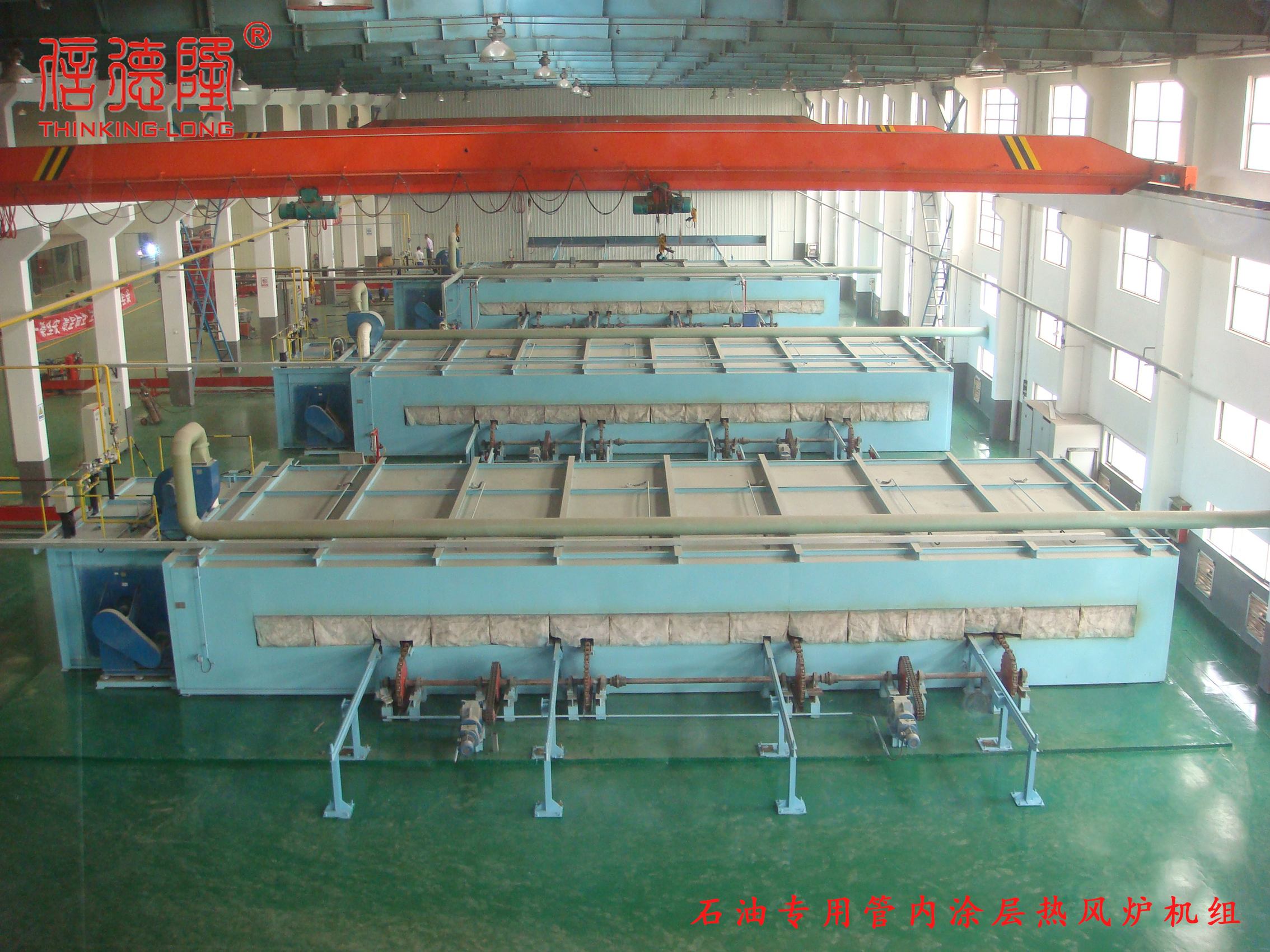
When engineers fine-tune a burner, they rarely look beyond the obvious dials: fuel pressure, nozzle size, damper position. Yet the true performance of any combustion system hinges on a relationship that seldom gets the credit it deserves—the pairing of a specific fuel profile with the exact volume and distribution of combustion air. Different fuels, from natural gas to heavy fuel oil to biomass, demand fundamentally different air strategies, and ignoring these nuances leads to wasted energy, unstable flames, and premature equipment wear.
Consider how a gaseous fuel like methane mixes almost instantaneously with air, requiring only moderate excess air to ensure complete burnout. Compare that to a heavy residual oil, which must first atomize into fine droplets, then evaporate and mix—a process that needs longer residence time, more aggressive turbulence, and often higher excess air to avoid soot formation. Even within the same fuel class, variations in composition, viscosity, or moisture content can shift the optimal air-to-fuel ratio by several percentage points. The overlooked pair, then, is not just about quantity but about timing, turbulence, and the geometry of the flame zone.
A practical operator learns to read the flame itself: a lazy, orange-tipped fire from an oil burner often signals poor atomization or insufficient primary air, while a sharp, roaring blue flame on a gas burner might indicate excessive excess air that is robbing efficiency. Tuning the combustion air to match the specific fuel profile—not to some generic table—is what separates a system that merely runs from one that runs cleanly, efficiently, and for years without fouled heat exchangers or repeated NOx violations.
Reading Factory Floor Signals Before You Sign
Walking a factory floor before you put pen to paper reveals more than any spreadsheet or polished pitch deck ever will. The smell of cutting oil, the way operators adjust a jig without breaking stride, the unspoken rhythm between shifts—these are the signals that separate a well-oiled operation from one held together by duct tape and quarterly targets. If the tour feels rehearsed or every question gets deflected to a slide on 'future capacity,' trust your gut: the real story is already showing itself.
Watch how fork truck drivers navigate blind corners, whether tool boards have missing shadows where a wrench should hang, and whether a supervisor stops to pick up a stray bolt or walks past it. Listen for the sound of machines that are running but not cutting—idle spindles often point to bottlenecked downstream processes. Ask a line worker what happened the last time a shipment went out late; the pause before their answer tells you more than the answer itself.
Sign before you understand the floor's unspoken code and you inherit every inefficiency, every near-miss, and every grudge against management that doesn't show up in the financials. But read those signals first—how people move, what gets maintained, where inventory piles up—and you walk into the deal knowing exactly which levers to pull and which fires to put out first.
Beyond Purchase Price: Refractory Life and Burner Turndown
A lower upfront price often masks what really drives furnace economics. Refractory life determines how often you shut down for relining, and every unplanned outage carries labor, lost production, and thermal cycling costs that dwarf the initial material savings. Cheap linings can fail in 18 to 24 months under demanding conditions, while a properly selected refractory may last five years or longer. The difference is not just durability—it is fewer interruptions and a more predictable maintenance schedule.
Burner turndown is equally easy to overlook when comparing quotes. A high turndown ratio lets the burner hold a stable flame at low firing rates, reducing the need for frequent starts and stops. That matters because each thermal cycle stresses the refractory, causing spalling and cracking over time. Many buyers fixate on maximum output, but a burner that cannot modulate smoothly below 30% load forces operators to cycle the system, wasting fuel and shortening lining life.
The real measure is not the invoice total but the cost per operating hour over five or ten years. A kiln or furnace equipped with a high-turndown burner and a longer-lasting refractory may carry a 20–30% price premium, yet it can pay that back within three years through lower fuel consumption, fewer relines, and less downtime. Purchasing decisions should weigh these factors together—otherwise a bargain burner paired with a short-lived lining creates a cycle of repairs that erodes any initial saving.
Nozzle Geometry for Difficult Process Demands
Conventional nozzle designs often fall short when a process demands something outside the ordinary—high-viscosity fluids that resist shear, slurries packed with abrasive particles, or materials prone to building up on internal walls. In these cases, simply picking a larger orifice or raising the pressure rarely solves the core issue. The real problem usually lies in the geometry itself: a sharp convergence angle that creates dead zones, a long straight section that encourages wear, or a sudden expansion that triggers recirculation. Reworking the internal contour from a simple cone to a compound curve can distribute stress more evenly, while a carefully tuned length-to-diameter ratio shifts the balance between pressure drop and flow stability. The goal is not just to push material through, but to give it a path that keeps every particle moving forward without stalling or grinding against the bore.
One practical approach is to break away from the classic axisymmetric shape and introduce features like helical grooves, offset steps, or asymmetric exits. A helix machined into the wall, for example, can impart a gentle swirl that scours the surface and reduces the buildup of sticky residues. Similarly, a nozzle with a gradually narrowing elliptical cross-section—rather than a perfect circle—can handle fiber-filled polymers by orienting the fibers along the flow direction instead of letting them bridge across the throat. These modifications are rarely obvious from a simple diagram, which is why computational fluid dynamics has become almost indispensable. Running a simulation of particle trajectories under the exact viscosity and shear-rate conditions reveals where stagnation points form, allowing the designer to round out corners or add a small relief angle before any metal is cut.
For the most difficult processes, such as fuel atomization under extreme backpressure or melt-blowing of nonwoven fabrics, a one-size-fits-all geometry simply does not exist. The nozzle becomes a custom component, shaped around a specific set of failure modes: erosion from hard fillers, thermal expansion mismatches, or the need to switch between materials on the same line. Additive manufacturing has opened up new possibilities here, since internal channels no longer need to be drillable from one end. A nozzle can be printed with a curved internal passage, tiny cooling fins near the tip, or even an integrated swirl chamber—features that would be nearly impossible with traditional machining. The result is a geometry that feels almost organic, less like a machined fitting and more like a carefully tuned instrument built for one demanding job.
Modular Shells and Future Capacity Without Rebuilds
The old habit of pouring a fixed floor plan and then living with it for decades is fading. Modular shells split the long-lived structural envelope from the interior systems, so you get a secure, weathertight building now and can fit out compute halls, power rooms, or storage zones only when demand actually shows up. That removes the need to knock down walls or redo foundations later.
Because the shell is already sized for phased growth, adding future capacity becomes a matter of installing racks, cooling loops, and busway drops inside an existing volume. Construction timelines no longer have to run in lockstep with technology refresh cycles, which means you avoid overbuilding on day one but still keep a clear path to double or triple capacity without touching the roof, cladding, or structural frame.
This setup also makes upgrades far less disruptive. When power density needs to rise or a new cooling topology arrives, you reconfigure the interior rather than rebuild the shell. The shell remains a durable, low-maintenance asset, while everything inside can shift to match the next generation of hardware.
FAQ
Look beyond brochures and ask for detailed drawings of recent installations. Pay attention to the combustion chamber geometry, refractory anchoring details, and how they handle thermal expansion joints. A factory that walks you through real project files usually has stronger engineering depth than one that only shares marketing sheets.
Ask them to explain the relationship between dome temperature, blast temperature, and fuel consumption for your specific process. A capable team will discuss heating curves, heat-up schedules, and the effect of excess air on flame stability. If they only quote maximum temperature ratings without context, that is a red flag.
Check the refractory grade used in the dome and checker chamber, and ask about the steel shell's thickness and weld inspection procedures. High alumina bricks, silica bricks in critical zones, and proper expansion allowances usually indicate a factory that builds for durability rather than lowest bid.
Look for a burner with a wide turndown ratio, oxygen trim, and PLC-based temperature profiling. The control system should handle sudden load changes without flame instability. Ask whether the factory tunes the burner on-site for your fuel type instead of shipping a generic setting.
Yes, experienced factories can reconfigure the stove shape, use a top-firing arrangement, or integrate the combustion chamber into a vertical stack to reduce footprint. Request a 3D layout early and discuss access for future refractory repairs, because compact designs can become maintenance headaches if access lanes are ignored.
It is often more important than the initial price. Hot blast stoves require periodic refractory inspections, burner tuning, and occasional shell repairs. A factory with a responsive service team, stocked spare parts, and remote diagnostics can save weeks of downtime compared with a supplier that disappears after commissioning.
Insist on thermal performance curves, pressure drop calculations, refractory dry-out procedures, and a welding map for the shell. Also ask for a list of reference installations with contact details, not just photos. An ISO 9001 certificate is a minimum, but detailed engineering documentation shows the factory is run by people who care about long-term operation.
Conclusion
Sizing a hot blast stove around a single design-point heat duty rarely survives contact with real production swings. Plants routinely push throughput beyond nameplate during winter peaks or shift between fuels with different flame speeds and moisture contents, so the combustion air supply must be re-evaluated for each fuel profile instead of being left at a fixed damper setting. Walk the floor before signing anything: uneven dome temperatures, refractory hot spots, and burner pulsation under low-fire conditions tell you more about turndown behavior than catalog curves. Refractory selection and burner adjustability are not afterthoughts; they decide whether you will be relining in three years or running past a decade.
When process heat demands become awkward—short, intense cycles or wide low-to-high output ranges—nozzle geometry has to be matched to the flame shape rather than simply upsized. A burner that looks efficient on paper can create localized overheating if the fuel jet does not mix properly with staged air. Modular shell designs help here, allowing sections to be added or reworked for future capacity without a full rebuild, which changes how you evaluate initial cost. The practical choice is rarely the cheapest stove or the one with the highest rated output; it is the unit whose refractory, burner, shell, and controls stay stable under your actual load swings and fuel variations.
Contact Us
Contact Person: Qian Xijun
Email: [email protected]
Tel/WhatsApp: 8613961736750
Website: https://www.thinkinglong.com/