

LED Marine Light Sourcing: Smart Strategies for Quality Fixtures
2026-08-03
Sourcing LED marine lights isn’t just about picking the brightest option—it’s about durability, efficiency, and long-term value on the water. With countless suppliers flooding the market, how do you separate genuine quality from clever marketing? Whether you’re outfitting a commercial vessel or upgrading a yacht, smart strategies can save you from costly mistakes. At LUXFIGHTER, we’ve seen how the right fixtures transform nighttime navigation. In this guide, we’ll dive into practical sourcing tactics that ensure every dollar spent delivers reliable performance. Ready to illuminate the smarter way?
Beyond Spec Sheets: What Actually Survives at Sea
A spec sheet can tell you everything about a boat’s beam, displacement, and tankage, but it says nothing about how those numbers translate to a midnight squall off a lee shore. The vessels that endure aren’t the ones with the flashiest brochures; they’re the ones whose builders understood that real seaworthiness lives in the details you can’t measure in a factory. It’s the way a rudder stock is bedded, the chafe protection on a critical seacock, the redundant lashing points for a drogue that will never appear in a marketing photo.
Out in the deep, gear either works with the ocean or gets destroyed by it. Sailors quickly learn that waterproof ratings are just numbers until a wave poops the cockpit and you find out whether your electronics box has a drain path that actually works. The simplest systems—manual bilge pumps that you can service with cold-numbed fingers, hanks that don’t jam when you’re singlehanded in a blow—become the difference between a story you tell in a bar and a Mayday call. These are the things that no laboratory test ever replicates, because labs don’t run 24-hour storm cycles with salt spray and fatigue.
Beyond the glossy catalogs, a different kind of knowledge gets passed from sailor to sailor. It’s the unspoken wisdom about which brands of hose clamps don’t back off under vibration, which stitch pattern holds a dodger together past its intended life, and which manufacturers still use bronze instead of brass in their seacocks because you only need to lose one to understand the difference. That knowledge isn’t bought; it’s earned by those who have watched substandard gear dissolve into a memory and replaced it with something that earns its place on the boat every single day the sea decides to test it.
Decoding the Jargon Behind Marine LED Claims
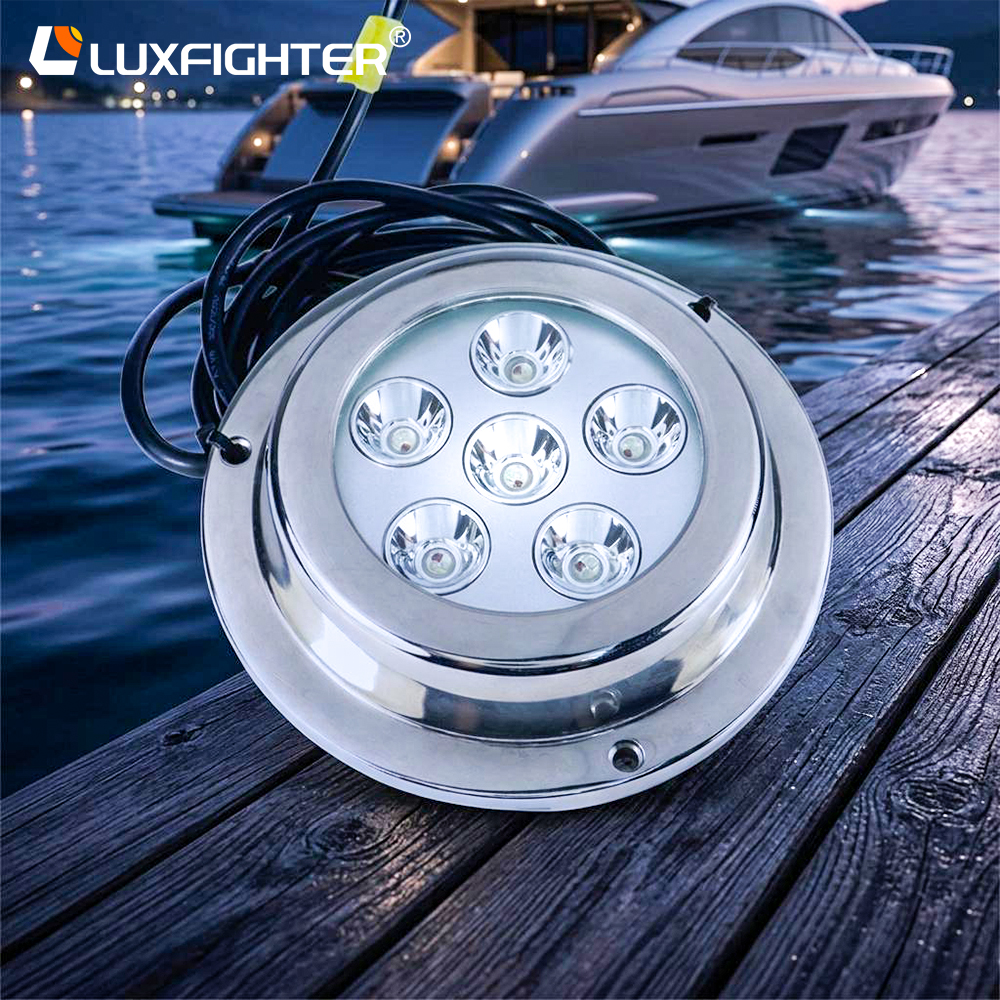
Walk into any chandlery or browse a marine lighting catalog and you’ll be bombarded with terms like “lumens,” “color temperature,” “CCT,” “CRI,” and “IP ratings.” It’s easy to get lost in the numbers, but understanding what really matters on the water is the first step to cutting through the hype. Lumens might tell you total light output, but on a boat, raw brightness isn’t everything—beam angle and effective throw are just as critical for avoiding glare and preserving night vision. Similarly, a high CRI (Color Rendering Index) might sound impressive, but for most nighttime navigation, you need reliable color separation of red and green running lights, not an art gallery spectrum. Knowing which specs directly impact safety and comfort helps you ignore the marketing fluff.
Then there’s the durability talk—shockproof, waterproof, saltwater-rated. The marine environment is unforgiving, and LED fixtures live or die by their build quality, not bold claims. Genuine marine-grade LEDs use sealed housings, corrosion-resistant materials like stainless steel or anodized aluminum, and multi-stage voltage regulation to survive engine cranks and voltage spikes. The IP rating tells you about dust and water ingress, but it doesn’t mention thermal management—a silent killer of LEDs in enclosed cabin spaces. A fixture that can’t dissipate heat will fail prematurely, no matter how high its IP number. Decoding this means looking beyond the sticker and asking about the design that keeps salt air, vibration, and temperature swings at bay.
Finally, watch out for vague promises like “long lifespan” or “maintenance-free.” Marine LEDs can last tens of thousands of hours, but only if they’re driven correctly. Low-cost units often overdrive the chips to pump up brightness, trading longevity for a short-term “wow” factor. The real jargon buster is understanding the difference between emitter life and system life—the driver, connections, and lens degradation matter just as much. When a manufacturer touts “50,000 hours,” ask under what conditions: temperature, duty cycle, and salt spray exposure. By learning to decode these claims, you’ll end up with lighting that actually performs when you’re miles offshore, not just on the showroom floor.
Quick Checks for Spotting a Reliable Driver
A reliable driver often reveals themselves in the first few moments. Watch how they handle the vehicle before you even get in. Do they adjust mirrors, check blind spots, or glance at their phone while pulling up? Small habits like keeping a clean car and maintaining a calm demeanor behind the wheel speak volumes. If they appear rushed or distracted, it’s a red flag you shouldn’t ignore.
Pay attention to how they communicate. A good driver will ask about preferred routes or mention potential delays without being prompted. They don’t overshare personal stories but stay focused on the road while still making you feel at ease. If they struggle to follow basic directions or seem unsure about local landmarks, it might indicate inexperience or lack of preparation.
Trust your gut during the ride. Smooth acceleration, controlled braking, and an absence of sudden lane changes are non-negotiable signs of skill. If you notice them tailgating, honking unnecessarily, or driving aggressively, it’s not a personality quirk—it’s a warning. The best drivers balance confidence with caution, making safety feel effortless.
The Real Price of Cheap Fixtures Over Time
Opting for a budget faucet or light fixture might feel like a win at checkout, but the tally rarely stops there. Within months, you could find yourself dealing with discolored finishes, wobbly handles, or a mysterious drip that refuses to quit. Those small annoyances morph into replacement runs, plumber visits, and a creeping sense that you’ve been duped by your own good intentions.
There's also the aesthetic burden. A cheap fixture fades from trendy to tacky at warp speed, its thin plating peeling away to reveal mediocre materials underneath. You end up living with something that never quite feels right, its presence a constant reminder of that moment you chose price over quality. The room loses its luster, and you’re already mentally budgeting for the upgrade you should have made the first time.
When you zoom out, the math is damning. A $50 fixture that needs replacing every two years ends up costing more than the $200 one that lasts two decades. Factor in your time, the hassle, and the environmental toll of tossing disposable design, and it’s clear that cheap is never cheap for long. The true price includes the silent drain on your comfort and the missed chance to build a space that quietly endures.
Metals, Seals, and Coatings That Withstand Salt
Salt exposure is relentless, eating away at standard materials through electrochemical reactions that accelerate corrosion. Metals like 316 stainless steel, with its molybdenum content, offer a fighting chance, forming a passive layer that resists pitting in chloride-rich environments. However, even these alloys need backup when temperatures swing or salt concentrations spike, pushing engineers toward duplex stainless steels or titanium for long-term durability.
Seals face a similar battle, as salt crystals can abrade surfaces and cause elastomers to swell or harden. Fluorocarbon seals, often paired with spring-energized designs, maintain flexibility and a tight barrier even after prolonged immersion. In dynamic applications where movement is constant, graphite-loaded PTFE blends reduce friction while shrugging off salt’s corrosive grip, extending service life far beyond conventional rubber.
Coatings tie everything together, acting as the first line of defense. Zinc-rich primers provide sacrificial protection, corroding in place of the substrate, while ceramic-filled epoxies create a dense, impermeable shield. Thermal spray aluminum has become a go-to for offshore platforms, its layered microstructure blocking salt spray year after year with minimal upkeep.
Proven Ways to Stress-Test Before Committing
Jump into the deep end by simulating worst-case scenarios that mirror real-world chaos. Spin up a parallel environment and bombard it with double, even triple, your expected peak traffic. Watch how your system crumbles or holds—this raw exposure reveals hidden choke points no design document ever captures. Flip the switch randomly, kill critical services, and see if your fallbacks kick in before your users scream. This isn't about comfort; it's about confidence forged in simulated fire drills that leave no fragile assumption standing.
Step beyond synthetic benchmarks and orchestrate failure cascades that mimic the unpredictability of human mistakes and external outages. Inject network latency, corrupt packets, or suddenly revoke database access mid-transaction. The goal is to observe not just if your app survives, but how gracefully it degrades when dependencies tumble like dominoes. Capture every tremor in logs and metrics, then tighten the bolts before those cracks turn into customer-facing nightmares. True readiness isn't measured when everything goes right—it's tested when everything goes wrong at once.
Involve your team in game-day exercises that transform stress-testing from a checkbox task into a cultural habit. Rotate roles: have developers play panicked operators, and ops folks scrutinize the code's blind spots. Run these gauntlets in production-like settings, with real data shadows and time pressures. After each session, strip away the fluff in a blameless postmortem and prioritize fixes based on blast radius and recovery time. The result isn't just a hardened system, but a squad that trusts their defenses because they've already survived the blast together.
FAQ
Focus on ingress protection ratings like IP68 for water resistance, corrosion-resistant materials such as marine-grade aluminum or stainless steel, and compliance with maritime safety standards like those from the US Coast Guard or IMO.
Choose fixtures with robust sealing, anti-corrosion coatings, and UV-stabilized lenses. Regular maintenance and using fixtures designed specifically for saltwater conditions will extend service life significantly.
Yes, look for certifications like ABS, DNV, Lloyds Register, or local maritime authority approvals. These ensure the lights meet performance and safety standards for marine use.
Direct sourcing often offers better pricing, customization options, and more control over product quality. However, distributors may provide faster delivery and local support, which is crucial for urgent replacements.
Consider not just the upfront price but also energy efficiency, replacement interval, and maintenance requirements. A higher initial cost might be offset by lower power consumption and longer lifespan.
Color temperature affects visibility and crew comfort. Cooler temperatures around 5000K offer better contrast for task lighting, while warmer tones reduce glare and fatigue during night navigation.
Conclusion
When sourcing LED marine lights, the spec sheet is only the starting point. Saltwater, constant vibration, and unpredictable weather quickly expose weaknesses that no datasheet can capture. Instead of getting lost in marketing jargon like "marine grade" or "IP68," focus on what truly matters: the driver's reliability, the integrity of seals, and the quality of metals used. A quick check of the driver's components—looking for conformal coating and robust thermal management—can reveal more than any advertised feature. Additionally, never underestimate the aggressive nature of salt; only specific alloys like 316 stainless steel, anodized aluminum, or advanced polymer coatings survive long-term. Pressing suppliers for salt spray test results and accelerated life cycle data helps cut through the noise and identifies fixtures built for actual maritime conditions.
The initial savings from choosing cheap fixtures vanish once you factor in repeated replacements, associated labor, and potential safety hazards offshore. A truly smart sourcing strategy involves stress-testing samples before committing to a bulk order. Simulate real-world abuse: subject lights to thermal cycling, voltage fluctuations, and submersion tests to see how the driver and housing perform. Ask for evidence of long-term field usage rather than just polished showroom demos. By prioritizing proven durability over flashy specs, you not only protect your budget but also ensure reliable illumination when it counts most. In the end, the best LED marine light is one that quietly does its job without demanding constant attention, and that’s only achieved through rigorous, hands-on evaluation.
Contact Us
Contact Person: Gavin Chen
Email: [email protected]
Tel/WhatsApp: (+86)756-6831079
Website: https://www.luxfighter.com/