

Motor Magnet Manufacturer Insights for Reliable Component Sourcing
2026-08-16
Every motor project eventually hits the same wall: finding a magnet supplier who understands torque curves, temperature drift, and the realities of your assembly line. That’s where DAWA changes the conversation—offering manufacturer-level insight that turns sourcing from a gamble into a repeatable process.
What Separates a Motor Magnet Supplier from a Commodity Vendor
A commodity vendor sells a magnet. A motor magnet supplier sells a magnetic solution that has to hold up under heat, vibration, and continuous duty cycles. The real difference shows up in how they handle the details most buyers never see—grade selection for a specific air gap, coating compatibility with potting compounds, and flux consistency across a production run. A vendor may quote the same N35SH label, but the supplier knows that two batches with identical labels can behave differently inside a rotor stack.
That depth usually comes from working backward from the motor's performance requirements, not forward from a stock list. A focused supplier will ask about operating temperature, demagnetization curves, cogging torque, and assembly methods before they ever quote a price. They are also more likely to keep traceability data, dimensional reports, and magnetic test results on file—not because a customer demanded it once, but because they know that repeatability is what keeps a production line stable.
Over time, that turns into a less transactional relationship. The commodity vendor can undercut a quote and ship something that looks identical. The supplier is the one who flags a subtle shift in coercivity that could cause field failures six months later, or suggests a lighter coating that saves a few grams per unit without sacrificing corrosion resistance. That is not just service; it is the difference between buying parts and buying confidence.
Reading Batch Reports to Spot Early Red Flags
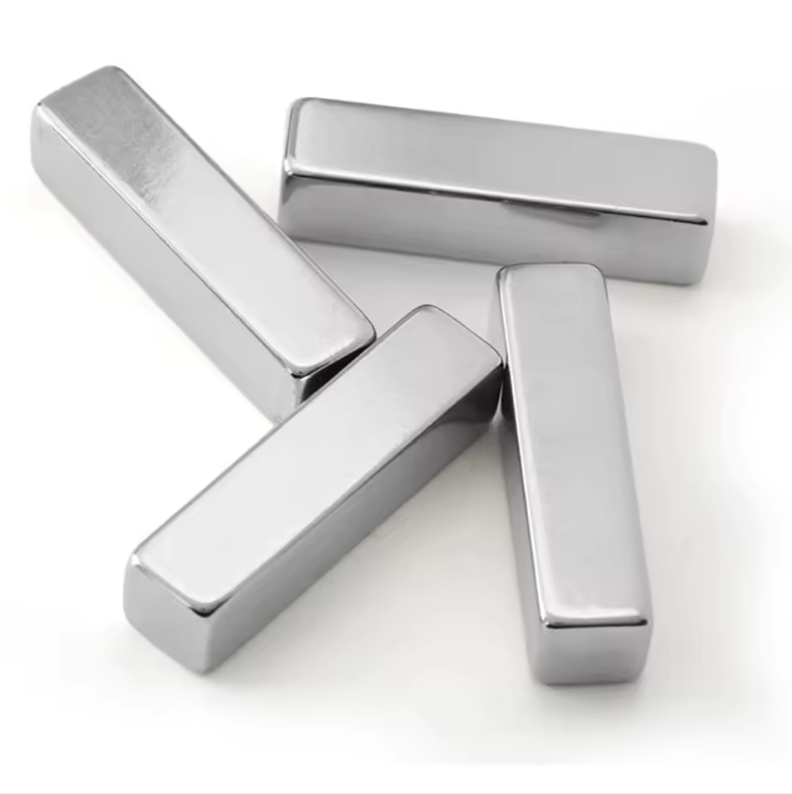
Batch reports can feel like a wall of numbers, but buried inside them are the earliest signs that something is drifting off course. Instead of skimming for totals, glance at the edges first: unusual overages, repeated corrections on the same line item, or a sudden shift in how frequently certain exceptions appear. These small deviations rarely trigger alarms on their own, but when you see two or three clustered around the same batch or operator, that cluster is worth a closer look.
One practical habit is to compare each new batch against the rolling pattern from the previous four or five runs. A single spike might be a fluke, but a slow climb in rejected items, delayed approvals, or rework notes often points to a worn process rather than a one-off mistake. Pay attention to timing as well. Red flags that show up late in a reporting cycle tend to be either hidden errors finally surfacing or controls being bypassed under deadline pressure.
Finally, write down what you notice, even if it seems minor. Early red flags are rarely dramatic; they look like a vendor consistently invoicing one day later, or the same employee approving batches just outside normal hours. Keeping a short log of these observations helps you spot patterns that would otherwise dissolve into the noise of daily operations. Over time, that log becomes your fastest tool for catching problems while they are still cheap to fix.
The Real Trade-Offs Behind Cheaper Magnet Quotes
A lower price tag on a magnet quote almost never means the same magnet at a better deal. It typically signals downgraded material grades, looser dimensional tolerances, or thinner protective coatings that quietly degrade performance. In high-temperature or corrosive environments, these shortcuts translate into faster flux loss, erratic holding force, and premature failure that manufacturers won't advertise up front.
The hidden costs surface after installation. Magnets with inconsistent magnetic fields cause production line jams, sensor misreads, or motor inefficiencies that eat into operational budgets. Reputable suppliers factor in batch testing, full traceability, and coating adhesion checks; budget quotes often skip these steps, leaving you to discover variability only when your equipment starts underperforming.
There's also the lifespan equation. A neodymium magnet spec'd with the correct coercivity grade and nickel-copper-nickel plating may cost 20% more initially but outlast three cheaper alternatives in a humid plant. When you calculate replacement labor, downtime, and scrap, the "savings" evaporate fast. Real trade-offs involve total cost of ownership, not just the invoice number.
Coating Failures That Surface Only After Motor Assembly
A coating can pass every visual check and adhesion test on the bench, yet fail within hours of motor assembly. The culprit is rarely the coating alone. Tightening bolts over coated flanges creates localized pressure that exceeds the film's compressive strength, causing micro-cracks that propagate once the motor reaches operating temperature. Similarly, the insertion of bearings or laminations can scrape through a coating that has not fully cured, leaving bare metal that corrodes quietly behind the end bell.
Assembly fluids introduce a second wave of failures. Cutting oils, cleaning solvents, and thread-locking compounds often sit against coated surfaces during installation. Some formulations soften epoxy or urethane films, leading to blistering that only becomes visible after the motor is sealed. Even when the fluid itself is benign, trapped moisture from compressed air lines can condense inside the housing and attack a coating that was never designed for high humidity conditions.
The most overlooked cause is differential thermal expansion. Stators and rotors heat unevenly during the first few run cycles, and coatings at the interface between aluminum and steel components experience shear stress well above what standard pull-off tests predict. As the motor cycles on and off, the film delaminates at edges and corners, where stress concentrates. By the time the failure is spotted, it often gets blamed on poor surface preparation, when the real issue is that the coating was specified without regard for assembly loads and thermal movement.
How to Ask for Process Data Without Getting a Brochure
Most companies don’t withhold process data out of secrecy; they simply default to what’s easier to share. If your request sounds like “tell me about your process,” you’ll get a capabilities deck. Instead, anchor the conversation to a specific run, shift, or batch. Ask for the unedited log from last Tuesday, the scrap tally by line, or the timestamped sequence for order 7841. When you name the artifact rather than the theme, the brochure has no place to hide.
Another trick is to ask for numbers that a marketing team wouldn’t think to polish. Cycle-time distributions, queue lengths at 2 p.m. versus 2 a.m., rework percentages after a tool change, the actual interval between “done” and “shipped.” These aren’t impressive metrics, so they rarely appear in a glossy PDF. That’s exactly why they’re useful. If the person you’re talking to can’t pull them, you’ve learned something a brochure could never tell you.
Finally, lower the stakes. People send brochures when they think you want a vendor pitch. Say plainly that you’re not evaluating them yet, just trying to understand how the work actually moves. Offer to sign an NDA or accept redacted screenshots. When you make it safe to show warts, you’re far more likely to get the kind of messy, real data that reveals whether a process is healthy.
Building a Sourcing Plan Around Tolerance Risk, Not Just Price
Most procurement teams still anchor their sourcing decisions to unit cost, the number everyone can see and compare on a spreadsheet. But over the life of a product, tolerance risk quietly erodes those savings through rework, line stoppages, and field failures. A fastener that drifts a few microns outside spec may pass incoming inspection today and seize a gearbox in month fourteen. Building a sourcing plan around tolerance risk means treating dimensional and material variability as a first-class cost driver, not an afterthought for the quality department.
Start by mapping the tolerance stack across your bill of materials. Identify the ten or twenty components whose variation has the greatest effect on assembly fit, function, or durability. For each, work with suppliers to understand their process capability indices and historical drift patterns. A low-price supplier running at Cpk 1.0 may look attractive until you calculate the expected scrap rate when three such parts land in the same assembly. In many cases, paying eight percent more for a supplier at Cpk 1.67 reduces total landed cost by double digits once rework and warranty claims enter the model.
Finally, write tolerance expectations into the commercial agreement, not just the engineering drawing. Use targeted audits and shared data feeds to verify that the process remains centered over time. When a supplier's variability begins to creep, have a pre-agreed correction path rather than a surprise chargeback. Companies that manage tolerance risk this way stop chasing the cheapest quote and start buying predictable performance, which is ultimately the cheaper outcome.
FAQ
Request batch-level test reports from an independent lab, not just the supplier's in-house certificate. Check the remanence (Br) and coercivity (Hcj) values against your design's thermal operating point. A common failure is accepting room-temperature specs for magnets that will run hot. Also ask for a sample from the actual production line, not a hand-picked prototype, and run your own BH curve test if the volume justifies it.
Inconsistent performance usually comes from raw alloy sourcing or subtle shifts in sintering and heat treatment parameters. Even the same grade like N42 can vary if the supplier blends scrap material. Insist on a locked process control plan that specifies the exact rare earth composition, milling particle size, and aging temperature. Quarterly audits of the powder preparation stage tend to reveal more than final magnet inspection.
Sometimes, but only for low-stress applications with a wide design margin. If your rotor operates near the knee point of the BH curve or sees frequent temperature spikes, cheaper magnets often hide lower coercivity or thinner, less uniform nickel-copper-nickel coating. Ask the supplier for the full demagnetization curve at your maximum operating temperature, not just the room-temperature grade number. The cost saving often vanishes after one field failure.
It depends more on edge coverage and pinhole density than on the coating type name. A standard Ni-Cu-Ni coating can be fine if the plating line controls thickness across sharp corners and the supplier performs a salt spray test on finished magnets, not just test coupons. For direct exposure to condensation, push for epoxy or a topcoat sealant, and require a minimum coating thickness on the chamfered edges rather than the flat faces.
Look beyond their sales pitch and ask for a breakdown of their rare earth oxide suppliers, not just their magnet production capacity. A manufacturer that buys raw material on the spot market will have more price and lead time volatility than one with long-term oxide contracts or a stake in a separation facility. Also check how they manage dysprosium or terbium addition for high-coercivity grades, since that supply is even tighter.
For standard pressed blocks, expect tolerances around plus or minus 0.05 mm on thickness and plus or minus 2 percent on length and width unless secondary machining is specified. Tighter tolerances on all faces usually require grinding after sintering, which adds cost and can introduce micro-cracks if not stress-relieved properly. Clarify which surfaces are functional in the magnetic circuit; often you only need one or two critical dimensions held tightly.
The break-even point depends on wasted material and assembly labor. If a standard rectangular block leaves a large air gap or requires extra adhesive fixtures to align, a custom arc segment or trapezoid often reduces total motor cost even with a higher magnet unit price. Ask your supplier to quote the full magnet weight per motor, including grinding loss and any orientation-related pressing limitations, before dismissing a custom shape.
Conclusion
Sourcing motor magnets reliably starts with recognizing that a true manufacturer does more than fill orders. The difference shows up in batch reports, where a slight drift in coercivity or a subtle dimensional shift can signal process instability long before motor assembly. A commodity vendor will quote a lower price, but that price usually hides trade-offs: wider tolerance ranges, less consistent magnetic output, or recycled feedstock that behaves unpredictably under load. Those hidden costs surface later as field failures or rework.
Coating defects are a classic example. The magnet may pass incoming inspection, yet after thermal cycling, vibration, or contact with oils, the coating lifts or cracks. To prevent that, ask for actual process data instead of glossy brochures—furnace soak times, coating adhesion results, CpK values for critical dimensions, and lot-level traceability. Build your sourcing plan around tolerance risk, not just unit price. Specify which dimensions genuinely affect air gap and back EMF, and hold the supplier to evidence. That is what separates a dependable magnet manufacturer from a vendor selling parts.
Contact Us
Contact Person: Kelvin Lo
Email: [email protected]
Tel/WhatsApp: 0769-88561131
Website: https://dawamagnetic.com/