

OEM 5-Ton Dual-Axle Hydraulic Lifting Trailer: China’s Premier Heavy-Duty Hauling Solution
2026-07-13
When it comes to moving massive loads across unpredictable terrain, you need more than just muscle—you need precision engineering. Enter the OEM 5-Ton Dual-Axle Hydraulic Lifting Trailer, designed and manufactured by Whole Chain Tech. This isn’t just another heavy hauler; it’s a purpose-built solution that redefines reliability and control in demanding industrial environments. Curious how a single trailer can change the way you think about hauling? Let’s dive into what makes this beast a standout choice for operators who refuse to compromise.
Unpacking the 5-Ton Dual-Axle Design
The dual-axle configuration isn't just about stacking capacity—it fundamentally changes how the trailer behaves under load. Each 5-ton axle operates independently through a balanced suspension linkage, meaning bumps and dips get absorbed without transferring harsh jolts to the frame. Instead of a rigid seesaw effect, the axles pivot on a central trunnion, letting the wheels follow terrain contours while keeping the load platform level. This is particularly handy on uneven worksites where a single-axle setup would pitch and twist, stressing both the cargo and the hitch point.
Strength comes from the deliberate overbuilding of the axle stubs and spindles. Rather than relying on off-the-shelf light-duty components, the spindles are machined from solid alloy billets with oil-bathed tapered roller bearings preloaded to handle simultaneous radial and thrust forces. The axle tubes themselves are cold-drawn seamless steel with a wall thickness that laughs at potholes. Twin leaf spring packs are clamped hard to the axle seats, spreading the load over a wider frame section and virtually eliminating the chronic spring-wrap issues seen in cheaper single-point suspension systems.
What truly sets this apart is the braking setup. Each wheel station gets a mechanical expanding-shoe brake actuated by a servo-assisted linkage, which multiplies the pedal force before it even reaches the drums. This isn't the typical hydraulic-surging headache; instead, a sealed cable system with automatic slack adjusters ensures both axles contribute evenly to stopping power. That means less nose-diving, shorter straight-line stops, and no fighting the trailer when backing down a ramp with a full 10-ton load. It’s a design that puts predictability ahead of raw brute force.
How the Hydraulic Lift Gets the Job Done
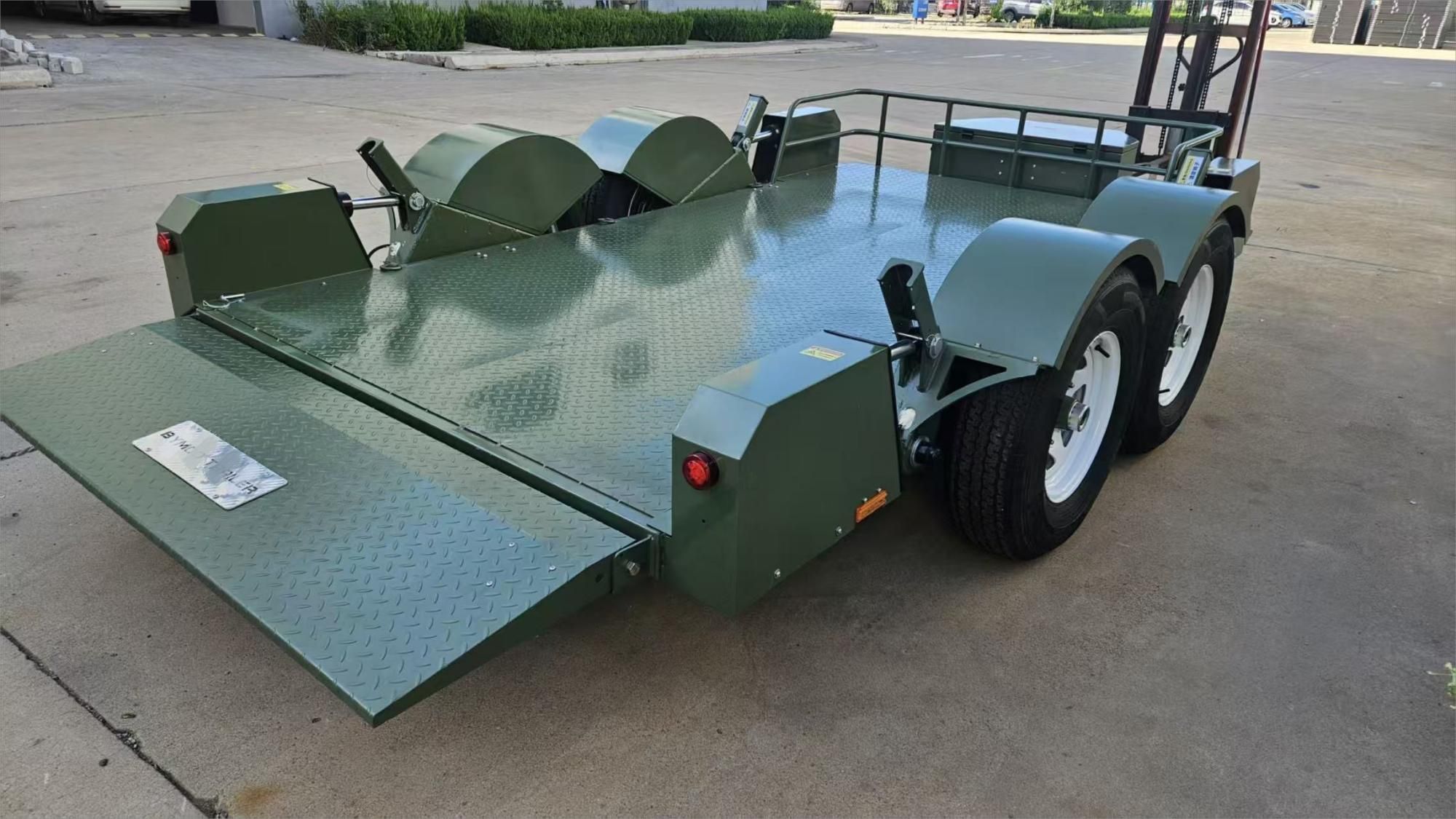
At the core of any hydraulic lift is a simple yet powerful fluid-driven system. Pressurized oil or other hydraulic fluid moves from a pump into a cylinder, where it pushes a piston. This piston is connected to the lifting mechanism, whether it's a scissor arm, a platform, or a vehicle ramp. Because liquids can't be compressed, the force transfers directly and evenly, creating a smooth upward motion. It's the same principle that lets a small push on a brake pedal stop a heavy car, just scaled up here to elevate tons of weight without breaking a sweat.
The key to how much a lift can handle comes down to the area of that piston. By using a wider cylinder, the same fluid pressure generates a much larger total force. Think of it like pressing down on a wide water balloon versus a narrow tube—the wide one lifts more. Industrial lifts often pair a high-pressure pump with a large-diameter cylinder, so operators can raise heavy machinery, pallets, or vehicles with minimal effort. And when it's time to bring things back down, a valve simply releases the fluid smoothly into a reservoir, controlling descent without sudden drops.
What makes hydraulic lifts stand out over electric or pneumatic options is their reliability under tough, repetitive work. They don't need complex gears or chains that wear out quickly; the sealed fluid loop handles shock loads and continuous cycling without complaint. Maintenance is mostly about keeping the fluid clean and checking seals. In busy workshops or warehouses, that translates to less downtime and a quieter, safer lift that just keeps doing its job day after day.
Built Tough: What ‘Heavy-Duty’ Really Means Here
When we say heavy-duty, we’re talking about more than just a label slapped on a product. It’s a philosophy that runs through every weld, every bolt, and every design choice we make. From the steel thickness in our frames to the stress-tested moving parts, durability isn’t an afterthought—it’s the starting point. We don’t build for occasional use; we build for the daily grind, the unforgiving jobsites, and the moments when failure simply isn’t an option.
That commitment shows up in details you might not notice at first glance. Reinforced stress points, oversized bearings, and corrosion-resistant coatings aren’t there for looks—they’re there because we know what happens out in the field. Every piece of equipment goes through testing that simulates years of abuse: vibration rigs, overload cycles, and exposure to the elements. If it survives that, it earns the right to carry our name. And if it doesn’t, we go back to the drawing board without hesitation.
Real-world feedback also drives our definition of heavy-duty. We spend time with the people who use our gear—welders, riggers, mechanics—and listen to their stories. Their insights push us to improve things like ergonomic handles, quick-access service panels, and smarter safety features. The result is equipment that doesn’t just meet industry standards; it sets a new bar for what tough ought to feel like in your hands, day after day.
OEM Customization: More Than Just a Paint Job
When most people think of OEM customization, the first thing that comes to mind is a unique color scheme or a flashy graphic wrap. But true customization runs far deeper than surface-level aesthetics. It’s about tailoring every tangible and intangible element to align with a brand’s identity and functional requirements. From bespoke hardware configurations and pre-loaded software suites to custom packaging and even the unboxing experience, the goal is to make the product feel like it was born from the brand itself, not simply relabeled.
Consider the firmware and user interface. A skilled OEM partner can reimagine the entire digital experience—modifying boot animations, creating distinctive icon packs, and integrating proprietary apps that add real value, not just bloat. This layer of customization ensures that the device behaves in a way that’s consistent with the brand’s ecosystem, making it a seamless extension of the services users already love. It’s the difference between a generic tool and a branded companion.
Even deeper, there’s engineering customization that addresses specific use cases. Perhaps a field-service tablet needs a reinforced chassis and a sunlight-readable display, or a medical device requires antimicrobial coatings and specialized scanning modules. These enhancements aren’t just cosmetic—they’re critical to performance and longevity in demanding environments. Ultimately, OEM customization, when done right, blurs the line between off-the-shelf and completely bespoke, delivering a product that feels intentionally crafted for its purpose and its audience.
Where This Trailer Shines: Real Job Stories
Instead of actors reading scripts, you hear actual employees describing their daily routines — the unexpected challenges, the small victories, and the moments that make them stay. One mechanic talks about diagnosing an engine issue in freezing weather only to get a handwritten thank-you note from the driver later. These aren't polished corporate tales; they're messy, honest snapshots of what it really feels like to work here.
A standout segment follows a warehouse team during peak season, where a rookie's mistake nearly delayed a major shipment. Rather than staging a dramatic rescue, the story focuses on how the crew quietly stepped in, fixed the error, and then roasted the new guy gently at lunch. It's this kind of candid detail — the banter, the shared stress, the inside jokes — that makes the trailer feel less like a recruitment pitch and more like eavesdropping on a break room conversation.
What lingers after viewing isn't a list of benefits or career paths, but the voice of a veteran driver reflecting on two decades of early mornings: "You don't do this job for the applause. You do it because you're good at it and the people next to you become family." That raw, unscripted honesty does more to attract the right candidates than any glossy footage ever could.
The Precision Behind China’s Premier Hauling Gear
In the demanding world of heavy transport, the finest Chinese hauling systems are engineered with an obsessive attention to detail. Every gear tooth, bearing, and load-bearing component is crafted to tolerances that rival the best in the industry. This isn't just about meeting specifications—it's about anticipating the stresses of long-haul journeys across diverse terrains, from steep mountain passes to scorching desert highways.
What sets this equipment apart is the seamless integration of advanced metallurgy and real-world testing. Alloys are selected not only for sheer strength but for their ability to resist fatigue over hundreds of thousands of cycles. Prototypes undergo punishing trials that simulate decades of use, ensuring that when a driver relies on this gear to pull massive payloads, there's no question of its durability. The result is a rig that performs consistently, even in conditions that would compromise lesser machinery.
Behind this precision lies a culture of continuous refinement, where feedback from veteran haulers directly shapes design improvements. From the ergonomic placement of controls to the silent operation of heavy-duty winches, each element is tuned to reduce operator strain and enhance efficiency. This blend of human insight and technical mastery ensures that China's premier hauling gear doesn't just move loads—it sets new benchmarks for reliability in an industry where every millimeter matters.
FAQ
Its 5-ton capacity combined with a dual-axle setup distributes weight evenly, so it handles bulky loads without swaying or bottoming out. The hydraulic lifting system gives you controlled elevation and smooth lowering, which is critical when moving heavy machinery or uneven cargo.
Absolutely. The cylinders are built with reinforced seals and hard-chrome rods to resist wear from daily cycles. We’ve seen these units endure hundreds of lifts a week in busy yards without leaks or sluggishness.
Yes, since it’s an OEM offering. You can specify deck length, ramp styles, tie-down points, even the colour. If you’re hauling something unusual like long pipes or skid-mounted gear, we can adjust the trailer layout to match.
There’s a mechanical safety lock that engages automatically if hydraulic pressure drops, plus an overload bypass valve. The deck has a high-friction coating, and all pivot points are guarded to prevent pinch injuries during loading.
Two axles mean better load-sharing and less strain on each tire, so you get longer tread life and more stability on uneven ground. It also reduces bounce when the trailer is empty, making towing more comfortable.
It’s built in a facility that’s been making heavy trailers for over 20 years, with ISO-certified welding and rigorous load-testing before paint. You get the reliability of well-established manufacturing without the price tag that often comes with European or North American brands.
Just basic care: keep the rams clean, check the fluid level every few months, and grease the pivot pins. If it’s used in dusty conditions, a quick wipe-down of the chrome rods prevents scoring. Simple as that.
From palletized bricks and steel beams to mini excavators and scissor lifts. It’s a go-to for construction crews, landscapers, and even small-scale logistics providers who need a versatile flatbed that can tip and unload fast.
Conclusion
The 5-ton dual-axle hydraulic lifting trailer from China combines robust engineering with smart functionality, delivering a hauling solution that genuinely stands apart. Beneath its utilitarian exterior lies a dual-axle configuration that evenly distributes massive loads, enhancing stability on rough terrain and at highway speeds. The integrated hydraulic lift isn’t just a bolt-on feature; it’s a thoughtfully designed system that tilts and lowers with smooth precision, letting operators load and unload heavy machinery or palletized goods without extra equipment. And when we say “heavy-duty,” it’s more than marketing speak—boxed reinforcing ribs, high-tensile steel frames, and stress-tested welds ensure this trailer endures the daily grind without complaint.
Beyond the core build, the OEM customization options make this trailer a true partner for diverse industries. You’re not limited to standard colors; manufacturers can engineer tailored axle spacing, adjustable couplers, reinforced side rails, and custom lighting layouts to match regional regulations or specific cargo profiles. Real-world applications range from construction sites hauling mini excavators across muddy access roads to agricultural operations moving large harvest bins over field terrain. Behind all of this is the precision manufacturing increasingly found in China’s top-tier trailer plants—laser-cut components, robotic welding arms, and multi-stage powder coating deliver consistent quality that rivals global benchmarks. It’s a combination of practical design, personalization, and exacting craftsmanship that turns a simple trailer into a reliable workhorse for the most demanding jobs.
Contact Us
Contact Person: Ethan
Email: [email protected]
Tel/WhatsApp: +86 13963964935
Website: https://www.wholechaintech.com/