
OEM Idler Roller Solutions from China: Built for Heavy-Duty Conveyor Applications
2026-08-05
When heavy-duty conveyor systems demand unfailing performance, the weakest link is often the smallest component—idler rollers. Discover how XAN's OEM solutions from China redefine durability, cutting downtime and boosting efficiency in the toughest industrial environments.
Precision Engineering for Unmatched Conveyor Uptime
Every component in our conveyor systems is meticulously crafted to eliminate the common pitfalls that lead to downtime. From hardened steel rollers to precision-machined drive sprockets, each part undergoes rigorous dimensional verification and material testing. This obsessive attention to detail ensures that vibrations are minimized, wear is evenly distributed, and alignment remains true even under fluctuating loads.
Our engineering team employs advanced simulation tools to model real-world stress scenarios long before production begins. By analyzing fatigue life, thermal expansion, and dynamic load paths, we identify potential failure points and fortify them. The result is a conveyor that operates with a whisper-quiet consistency, turning what is typically a maintenance headache into a background function you can rely on for years.
Beyond the hardware, intelligent design choices like self-tensioning take-ups and sealed-for-life bearing cartridges actively prevent the gradual degradation that erodes performance. These features work silently in the background, preserving the exacting tolerances set during assembly. It’s this blend of uncompromising craftsmanship and proactive engineering that delivers uptime numbers that redefine industry expectations.
Custom Idler Design That Cuts Your Replacement Costs
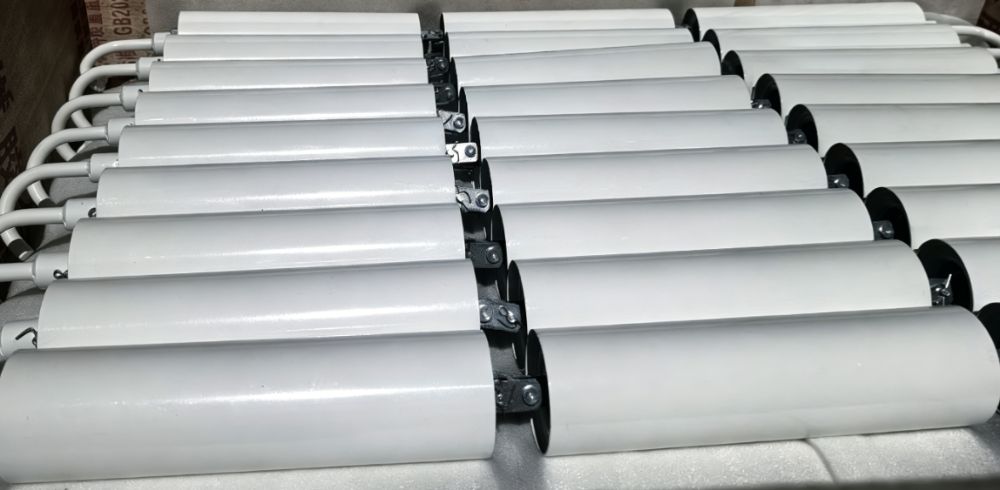
Standard idlers rarely match the exact demands of your machinery, leading to uneven wear, unexpected failures, and frequent part swaps. A custom-engineered idler fits your specific load patterns, shaft dimensions, and operating conditions from the start, eliminating those costly mismatches. By tailoring materials and geometry to your application, you avoid the generic compromises that force you to stockpile spares and schedule constant maintenance.
The real savings show up where you least expect them—less downtime, fewer rush orders, and no more retrofitting off-the-shelf parts that almost work. When you stop replacing the same component over and over because it wasn't built for the job, your overall cost curve flattens. A custom design pays for itself by simply staying in service longer and keeping your line moving without interruption.
Why Chinese OEM Idlers Outperform in Extreme Environments
The edge of Chinese OEM idlers starts with metallurgy that’s anything but ordinary. Instead of relying on generic steel grades, top manufacturers have perfected proprietary alloys that balance hardness with just enough give to avoid cracking under thermal shock. These blends, often tailored for specific mining or construction sites, incorporate micro-alloying elements like vanadium and molybdenum, boosting fatigue life well beyond what standard idlers can manage. The result is a component that keeps its shape and surface integrity even when temperatures swing from desert highs to arctic lows.
But material alone doesn’t explain the reliability—it’s the manufacturing process that seals the deal. Chinese OEMs have invested heavily in precision forging and automated heat-treating lines that deliver consistent hardness profiles across every batch. This control eliminates the weak spots that often plague idlers made with less rigorous methods. The attention to detail extends to sealing systems, where labyrinth and contact seals are integrated in a way that aggressively blocks out dust, water, and slurry, the real killers of bearing life. It’s a holistic approach that turns a simple roller into a fortified component ready for the most unforgiving jobsites.
Finally, the iterative testing culture adopted by these manufacturers sets them apart. Prototypes get pushed through simulated wear cycles that compress years of field punishment into weeks, revealing failure modes before they ever reach a user. This continuous feedback loop, often informed by data from remote monitoring systems on active equipment, allows for rapid refinement. The outcome is an idler that not only meets international standards but often exceeds them in the areas that matter most for longevity—like corrosion resistance and bearing retention—making them a strategic choice for operations where downtime simply isn’t an option.
Seamless Integration with Your Existing Conveyor Systems
Bringing new components into an established conveyor setup often feels like a puzzle where the pieces don’t quite fit. Our approach eliminates that frustration by designing connectors and control interfaces that adapt to what you already have, rather than demanding a complete system overhaul. The result is a smooth handshake between old and new, minimizing downtime and preserving the investment you’ve made in your current infrastructure.
We’ve built flexibility into every module, so whether you’re running standard belt conveyors, roller beds, or specialized sortation equipment, the integration happens without awkward retrofits or prolonged interruption. The controls speak the same language as your existing PLCs and sensors, making commissioning a matter of hours, not weeks.
Beyond the hardware and wiring, our team provides hands-on support to ensure everything works in unison from day one. You gain the advantage of expanded capabilities without the headache of managing incompatible systems, and your operators will notice the difference immediately—no cryptic error messages, no mismatched speeds, just reliable flow.
The Hidden Cost of Inferior Idlers and How to Avoid It
When a single subpar idler fails deep inside a conveyor system, the ripple effects often go unnoticed until a full shutdown is forced. Downtime isn't the only expense—misaligned belts accelerate wear on pulleys, bearings, and even the structure itself. Repairs can easily snowball into six-figure losses when factoring in emergency labor, lost production, and collateral damage to adjacent components.
Procurement shortcuts are the usual culprit. Off-brand or lightly built idlers may match a specification sheet on paper but lack the fatigue resistance and seal integrity needed for real-world demands. Within months, greased bearings dry out, shells deform, and the 'savings' evaporate. The true cost isn't visible on a purchase order—it hides in the maintenance logs and production reports that no one connects until it's too late.
Breaking the cycle requires a shift in how idler quality is evaluated beyond upfront price. Look for manufacturers that publish third-party test data on L10 bearing life, shaft deflection under load, and sealing effectiveness. Establish maximum run-out tolerances and monitor vibration trends seasonally. A disciplined spec, paired with supplier accountability, transforms idlers from a recurring failure point into a background of reliable operation.
Real-World Case: Idler Rollers That Survived 20,000 Hours
In a dusty cement plant where equipment normally gives up after a few thousand hours, a set of idler rollers kept turning for over 20,000 hours without a hitch. The maintenance team had almost forgotten about them until a routine audit flagged their remarkable lifespan. What made these rollers different was a combination of precision sealing and bearing upgrades that effectively locked out the abrasive cement dust that usually grinds components to a halt.
The real test came during an unplanned surge in production, when conveyors ran round the clock for weeks. While other rollers seized up or overheated, these continued to spin smoothly, their labyrinth seals and high‑temperature grease doing exactly what they were designed to do. Inspections later revealed minimal wear on the shells, with the bearings still well lubricated and free of contamination. It was a quiet validation of engineering choices that had been made years earlier, choices that prioritized long‑term reliability over short‑term savings.
This experience shifted the plant’s approach to procurement. Instead of viewing rollers as interchangeable commodity items, they started treating them as critical assets where upfront material and design choices directly determine operational uptime. The 20,000‑hour milestone became a benchmark for their entire conveying system, proving that in harsh environments, the right components don’t just survive—they deliver extraordinary value with almost no intervention.
FAQ
Chinese manufacturers have invested heavily in automated production lines and precision testing equipment, allowing them to consistently produce idler rollers that meet international durability standards. The rollers are often built with thick-walled tubing, premium bearing assemblies, and labyrinth seals to withstand harsh mining or material handling environments.
Absolutely. Most OEM suppliers in China offer full customization, from roller diameter and length to bearing types and shaft configurations. Whether you need flat, troughing, or impact rollers, they can engineer solutions to match your belt width, load capacity, and operational speed.
The cost advantage often comes from material sourcing efficiency and streamlined manufacturing, not from cutting corners. You’re likely to find rollers that use high-grade steel and seals comparable to Western brands, but at a significantly lower price point due to reduced labor and overhead.
They’re typically deployed in coal mines, aggregate quarries, cement plants, and port terminals—anywhere bulk materials are transported over long distances on conveyor belts. The heavy-duty variants are built to handle extreme loads, abrasive materials, and constant operation.
Reputable factories usually provide technical assistance from installation through the lifespan of the product. Many offer on-site training for maintenance teams and keep stock in overseas warehouses to shorten delivery times for replacement parts.
Top manufacturers adhere to ISO 9001 and often have in-house labs for fatigue testing, salt spray corrosion resistance, and dynamic balance checks. Each batch is traceable, and many partners voluntarily align with CEMA or DIN standards to guarantee compatibility.
Look for features like triple labyrinth seals, welded end caps that eliminate moisture ingress, and bearings that are greased for life. The roller shell should be concentrically machined to minimize vibration and belt wear.
While some factories set MOQs for customized designs, many are willing to work with smaller volumes for initial orders. Shipping can be arranged via FCL or LCL sea freight, with options for door-to-door delivery through logistic partners.
Conclusion
When heavy-duty conveyors grind to a halt due to idler failure, the true cost goes far beyond a replacement part—it’s about downtime, safety risks, and operational chaos. That’s why OEM idler roller solutions from China have become the backbone of bulk handling industries worldwide, combining precision engineering with rugged durability. These idlers are not generic parts; they are purpose-built to withstand extreme loads and harsh conditions. From advanced labyrinth sealing technology that locks out contamination to perfectly balanced roller shells that reduce vibration, every detail is engineered to extend conveyor uptime. Unlike off-the-shelf alternatives, these OEM components integrate seamlessly with existing frames, eliminating alignment headaches and cutting total replacement cycles by up to 30%. The real differentiator lies in material science—using high-grade bearing steel and specially formulated rubber compounds that resist abrasion in environments where inferior idlers would crumble within months.
Chinese manufacturers have flipped the narrative by delivering custom-designed idlers that match exact belt widths, trough angles, and load profiles, which slashes ongoing maintenance costs and prevents those hidden productivity leaks caused by misaligned or wobbling rollers. A field-proven example comes from a mining operation in Chile, where a set of these OEM idlers surpassed 20,000 hours of service without a single seizure, despite constant exposure to corrosive slurry and grit. That level of reliability doesn’t happen by accident—it’s the product of rigorous fatigue testing and a design philosophy that anticipates real-world abuse, not just ideal lab conditions. By choosing a partner that offers full engineering support and quick global logistics, operators can finally avoid the costly trap of “cheap” rollers that erode belt life and inflate energy bills. In the end, investing in quality Chinese OEM idlers isn’t a purchase, it’s a strategy for uninterrupted production.
Contact Us
Contact Person: Anna Lu
Email: [email protected]
Tel/WhatsApp: 8618561668850
Website: https://www.x-conveyor.com