

OEM Laundry Detergent Capsules Explained for Growing Brands
2026-11-16
Most growing brands treat laundry detergent capsules as a simple private-label decision. Then they discover the hidden variables: film dissolution speed, fill weight tolerance, fragrance stability, and packaging that actually survives shipping. This guide breaks down what OEM laundry detergent capsules really involve—and why brands like LANJIEYA are changing how small and mid-sized companies approach production.
Rethinking Laundry Capsule Sourcing as Your Brand Grows
Early on, buying capsules from a single supplier often feels like the simplest move. But once order volumes climb, that comfort can quietly turn into risk. Lead times stretch, minimum order quantities start working against your cash flow, and a single production line can hold your entire launch calendar hostage.
Growing brands usually need more than just larger batches. Look for partners who can handle varied capsule sizes, custom film options, and tighter filling tolerances without treating every request as a special project. The goal is to shift from asking “Can you make this?” to “How fast can you adjust when we change the brief?”
Sourcing should also account for what happens after the product leaves the facility. Packaging, transport conditions, and regional compliance all play a bigger role as distribution widens. A supplier that understands these downstream pressures can help you avoid rework, rejected shipments, and awkward conversations with retailers.
What Actually Happens Inside an OEM Capsule Production Run
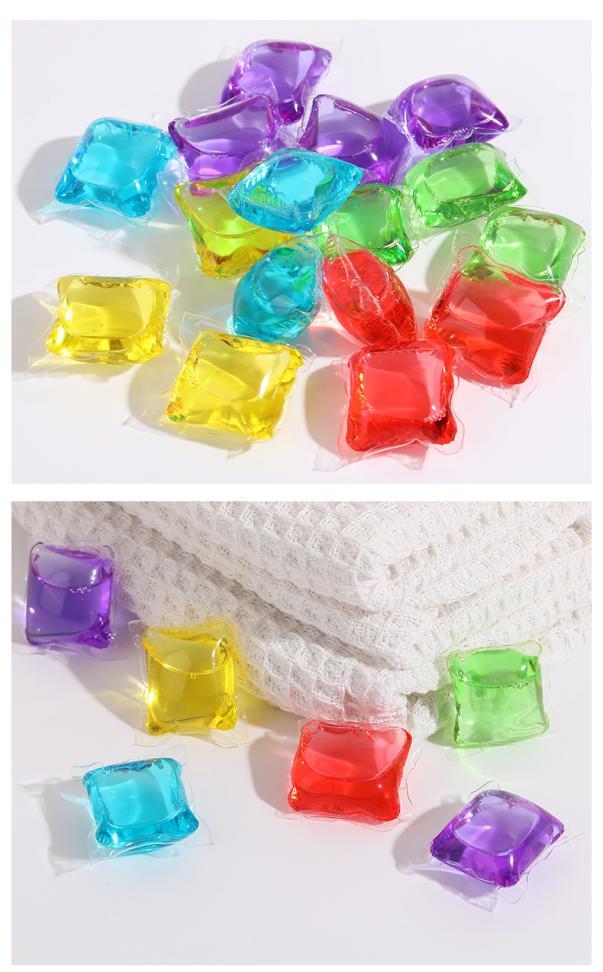
The day starts with a batch ticket that reads like a lab notebook crossed with a shipping manifest. Raw gelatin or plant-based polymer arrives in sealed drums, each lot carrying its own viscosity and moisture profile. Blending isn't just dumping powder into a hopper; the material gets conditioned overnight in temperature-controlled silos so it flows evenly through the encapsulation dies. Operators pull samples every twenty minutes, checking ribbon thickness with a micrometer and weighing filled capsules against a rolling average. When a reading drifts by more than a fraction of a milligram, the line slows and the die rollers get adjusted on the fly—nobody waits for a full shift report to catch a drift.
Inside the machine itself, two rotating pins dip into the gel mass, draw it upward, and meet at the center to form the shell while a piston fires the fill. That fill might be a hygroscopic powder, a paste, or a liquid suspension, and each behaves differently under pressure. A powder that clumps will starve the piston; a thin liquid can leak past the seal and contaminate the next cavity. Skilled operators read the subtle rhythm of the machine—the soft thump of the fill pump, the way the shell peels off the pin—and make small corrections before a defective capsule ever reaches the drying tunnel.
After forming, capsules move through a series of rotating drums where warm, dry air pulls moisture out of the shell without cracking it. This isn't a single pass; the capsules cycle through staged humidity zones over several hours. Then they hit the sorting tables, where a combination of metal detectors, weight checkers, and visual inspection cameras flags anything with air bubbles, split seams, or fill weight outside tolerance. A surprising number of rejected capsules never get counted in official waste reports because they're recycled back into the gel melting pot—only the fill is lost. By the end of the run, the batch record contains more handwritten notes than a field researcher's journal, and every page gets signed by at least two people who actually stood at the line.
Formulation Choices That Match the Customers You Already Have
Most brands start with a product idea and then go hunting for buyers. The sharper move is to flip that sequence: look at the purchase patterns, return reasons, and support questions coming from your existing customer base, and let those signals shape the formula itself. If repeat buyers keep asking for a lighter texture or a fragrance-free version, those aren't just support tickets—they're formulation briefs. A customer who already trusts your label is far more likely to buy a second product that feels like it was made for their specific complaints, not just another generic addition to the line.
This approach also changes how you evaluate raw materials. Instead of chasing trendy ingredients that might attract a stranger, you prioritize the stabilizers, preservatives, and actives that keep your current customers' skin or hair from reacting badly. A formula built around the sensitivities of a known audience tends to be simpler, more stable, and easier to explain—because the reasons behind each choice already live in your customer reviews and conversation threads. The result is a product that doesn't need to shout for attention; it quietly fits into a routine that's already working.
Practically, that means spending more time on small-batch trials with a panel drawn from your repeat buyers. Let them test a version with a slightly different emulsifier or a lower pH, and watch how they describe it in their own words. When the final formula lands, the launch story writes itself: no invented hero ingredient, just a straightforward answer to problems people have already told you about. That kind of alignment is hard to copy, because it's rooted in the specific history of your own customer list.
Pricing, Minimums, and Timelines Most Vendors Leave Unsaid
The unit price on a quote rarely survives contact with reality. Setup charges, plate or mold fees, packaging adjustments, hangtag printing, inner and outer cartons, and even the cost of palletizing tend to appear after the design is already locked. Minimum order quantities work the same way: what looks like a single MOQ is often a negotiation lever hiding per-color, per-size, or per-fabric thresholds. If you don’t push for a line-by-line breakdown, the vendor has no reason to volunteer the combinations that quietly push your landed cost higher.
Timelines are where the real padding—or the real risk—lives. A quoted lead time frequently starts from the moment the factory actually begins production, not from deposit, material purchase, sample approval, or pattern work. Those earlier steps can swallow two to four weeks on their own, and that’s before you account for local holidays, subcontractor delays, or the back-and-forth of revisions. Ask for a dated production schedule that names the moving parts: fabric or component sourcing, pre-production sample sign-off, cutting, sewing or assembly, inspection, and container loading. If any milestone is missing, assume it’s missing because nobody wants to commit to it.
The most useful move is to make the quiet parts explicit. Request an all-in price with every fee listed, break the MOQ down by color, size, and SKU, and require the vendor to confirm start dates, inspection dates, and ship dates in writing. A verbal promise about flexibility is worthless next to a purchase order that lacks those details. Where a supplier stays vague, treat the blank space as a risk you’ll eventually pay for.
Making Your Capsule Line Look Like Yours, Not a Category Clone
A capsule wardrobe often starts with a list of so-called essentials, but that list can quietly push you toward a uniform that belongs to no one. If every shirt is a plain button-down in white or light blue, you may have a tidy rack and no point of view. To change that, let the pieces carry a few fingerprints: a collar shape you always reach for, a sleeve length that suits how you actually move, or a color that keeps showing up in your favorite rooms and weekend bags.
Look at the small consistencies in what you already wear before adding anything new. Maybe you prefer a boxy jacket over a tailored one, or you habitually roll cuffs because standard proportions feel off. Those tendencies are not flaws to correct; they are the raw material for a capsule that could not be copied from a catalog. Use them as filters when a new item seems to meet every “must-have” rule but still feels like someone else's.
The point is not to break every convention, but to refuse anonymous basics. A neutral palette works only when the shapes, textures, and proportions carry enough of your habits to make the combination recognizable. Swap one expected piece for a version with an odd pocket, an uneven hem, or a fabric that ages in a way you like. Small deviations like that turn a range of garments into a system that feels less like a category clone and more like your own handwriting.
Pre-Launch Quality Checks That Keep a Growing Brand Out of Trouble
Before a launch, the checks that matter most are rarely glamorous. We open a fresh sample from the actual production batch, not the polished prototype, and look for loose threads, smeared ink, weak seals, and the kind of packaging damage that happens inside a delivery truck. If the unboxing feels rough in an air-conditioned office, it will feel worse on a customer's doorstep.
The website gets the same skeptical treatment. We place a test order on a phone with a weak connection, enter the wrong zip code, abandon the cart, and try to use a discount code twice. Every message the customer receives after paying is checked for timing and tone, because a confusing confirmation email creates more support tickets than almost any product flaw.
Finally, the team runs a live handoff from order to warehouse to carrier. The goal is not to prove the process works, but to find the moments where it quietly breaks: a missing SKU on the packing slip, a notification that goes out late, or a return label that leads to the wrong address. Fixing those details before launch keeps a brand from spending its first month apologizing instead of selling.
FAQ
OEM here means you are working with a manufacturer that already has proven capsule formulas, tooling, and filling lines, but the finished product goes out under your name. For a growing brand, this skips the long R&D and plant setup phase. You choose a base formula, decide on scent, color, and packaging, and the factory handles filling, stability testing, and often compliance paperwork. The trade-off is that you are not building proprietary chemistry from scratch, so your edge has to come from positioning, scent selection, and how clearly you speak to your customer.
Stock formulas are usually a manufacturer's existing recipe sold to multiple brands with little room to change anything beyond the label. Private label gives you more control over scent strength, color, pod count per package, and sometimes the number of chambers. For example, you might request a lower-foam formula for high-efficiency machines or a lighter fragrance for a sensitive-skin line. The capsule structure itself, whether single-chamber or multi-chamber, often stays within the factory's current production capabilities. If you ask for a genuinely new film or a custom enzyme blend, expect longer timelines and higher upfront cost.
Ask for a sample run before you talk about price per unit. Check the pod's dissolution at 15 degrees Celsius and 30 degrees Celsius, not just a hot wash. Look at leak resistance after a drop test and after temperature cycling, because capsules that burst or stick together in shipping will destroy your reviews. Also confirm who owns the formula and whether the manufacturer can switch raw materials without your approval. If they cannot provide a clear spec sheet with enzyme activity, pH, and viscosity data, treat that as a warning sign.
You can usually choose from existing size ranges, such as 10 to 20 milliliter fill volumes, and select between single-chamber, dual-chamber, or sometimes triple-chamber formats. The film is typically standard polyvinyl alcohol, but some suppliers offer bittering agents for child safety or faster-dissolving grades for cold cycles. True film reformulation is expensive and rarely practical for smaller runs. That means your best move is to test the manufacturer's existing film at your target wash temperatures and pick the format that already performs rather than trying to engineer a new one.
This varies more than most suppliers admit. For filled capsules in generic pouches, you might find minimums around 5,000 to 10,000 units. For custom packaging with boxes, child-resistant pouches, and unique artwork, 20,000 to 50,000 units is common. Some contract manufacturers will split production into smaller batches for a fee, letting you launch with lower inventory but higher per-unit cost. Do not sign a large run just to get a better unit price until you have real sales data or at least a strong pre-order signal.
A responsible manufacturer should offer documentation for biodegradability, phosphate-free claims, and child-resistant packaging compliance. In many regions, the capsule film should meet standards for soluble packaging, and the detergent itself should be safe for septic systems. If you are selling into the EU or UK, check REACH and CLP obligations. For the US, look for products that meet CPSC child-resistant packaging requirements. Certifications like EU Ecolabel or Nordic Swan can help, but they require full formula disclosure and may not be available on a short private label run.
Start by narrowing the claim. Instead of powerful cleaning, pick one visible problem, such as front-load washer odor, hard water residue, or activewear sweat buildup, and have the manufacturer's lab confirm which base formula supports that claim. Then create a scent story that is not just fresh linen. A brand can use a faint eucalyptus note, a warm cedar, or an unscented formula with a very low allergen profile. Packaging also does more work than the pod itself: a wider pouch with clear dosing instructions and a distinctive color system can make the product feel less generic even if the capsule inside is shared.
Shipping and storage often surprise people because capsules are water-soluble and sensitive to humidity. You may need climate-controlled warehousing or at least careful inventory rotation. Artwork and plate fees for custom pouches can run into the hundreds or thousands. Third-party testing for stability, child-resistant packaging, or specific marketing claims is another line item. Then there is the cost of samples, courier fees, and possible reformulation if a fragrance does not survive the filling process. Build these into your unit economics before you compare factory prices.
Conclusion
Growth changes the sourcing conversation faster than most brand owners expect. A supplier that worked when you were moving a few thousand units can become a bottleneck once orders scale, and the shift to OEM production often reveals how little visibility you had into the actual capsule run. Inside a typical production cycle, filling speed, film compatibility, and water content are adjusted in ways that affect shelf stability and dissolve time. If you are not asking about those variables, you end up approving a sample that performs nothing like the bulk shipment. Smart growing brands treat formulation as a retention tool rather than a cost line: matching fragrance intensity, stain-fighting enzymes, and color-safe profiles to the customers who already buy from you keeps repeat rates steadier than chasing a generic premium claim.
The parts that rarely appear on a quote sheet matter just as much. Minimum order quantities can be negotiated around shared raw material batches or seasonal production slots, and lead times often hinge on film inventory rather than mixing capacity. Beyond price per capsule, ask how much flexibility you have with carton structure, pod color, and label finishing; small changes in embossing, matte lamination, or capsule shape help your line read as a distinct brand instead of a private-label clone. Finally, push for pre-shipment testing on seal integrity, humidity exposure, and cold-water dissolution. A single batch that leaks or fails to dissolve can erode trust faster than a late delivery. Those checks are the difference between a launch that holds up on shelf and one that quietly generates returns.
Contact Us
Contact Person: Zhao Yanlong
Email: [email protected]
Tel/WhatsApp: 8615832007309
Website: https://www.gzlanjieya.com