
OEM Shearing Machine Solutions for Your Manufacturing Needs
2026-11-16
Every production line thrives on precision, but finding a shearing machine that aligns perfectly with your manufacturing workflow can feel like chasing a missing piece. That’s where OEM solutions step in—not just to cut metal, but to shape possibilities. At HUNSONE, we believe your equipment should adapt to your ambitions, not the other way around. Curious how a tailored approach can redefine your output? Let’s dive in.
Precision Cutting That Adapts to Your Production Line
When your production line demands more than off-the-shelf solutions, our cutting systems step in with adaptive precision that moulds itself to your workflow—not the other way around. Every material, from delicate composites to hardened alloys, encounters a calibrated response that preserves integrity while hitting exact specifications, run after run.
The intelligence isn’t just in the blade or beam; it’s in how the system reads shifts in material density, speed variations, and edge wear, then adjusts on the fly without human nudging. That means fewer bottlenecks at the inspection stage and a line that breathes with the pace you set, whether it’s a high-volume sprint or a meticulous, low-cadence batch.
Real-world results show up in the quiet moments—when tolerances stay tight through a double shift, when scrap drops without anyone tweaking a dial, and when your team trusts the output enough to move on to the next innovation. That’s the kind of adaptable precision that turns a machine into a long-term advantage, not just another tool on the floor.
Built to Your Specs, Not Ours
Every line of code, every component choice, every interface flow starts with a conversation about what you actually need—not what’s easiest for us to ship. We don’t hand you a feature list and ask where you fit. Instead, your constraints, your audience, and your vision set the boundaries. If an off-the-shelf pattern compromises the experience you want, we leave it behind without a second thought.
That means no hidden assumptions about how things “should” work. When you describe a friction point, we build around it rather than trying to convince you it’s standard. One project might demand a real-time collaborative layer that most platforms avoid; another might need to strip away complexity to serve a non-technical user base. The build follows the purpose, not the other way around.
The result feels different because it is different. You don’t get a rebranded template with your logo slapped on top—you get infrastructure, interactions, and details shaped entirely by how you see the problem. It’s the slow, attentive route, but it’s the only one that leaves you with something that actually behaves like yours.
How Custom Shear Design Eliminates Bottlenecks
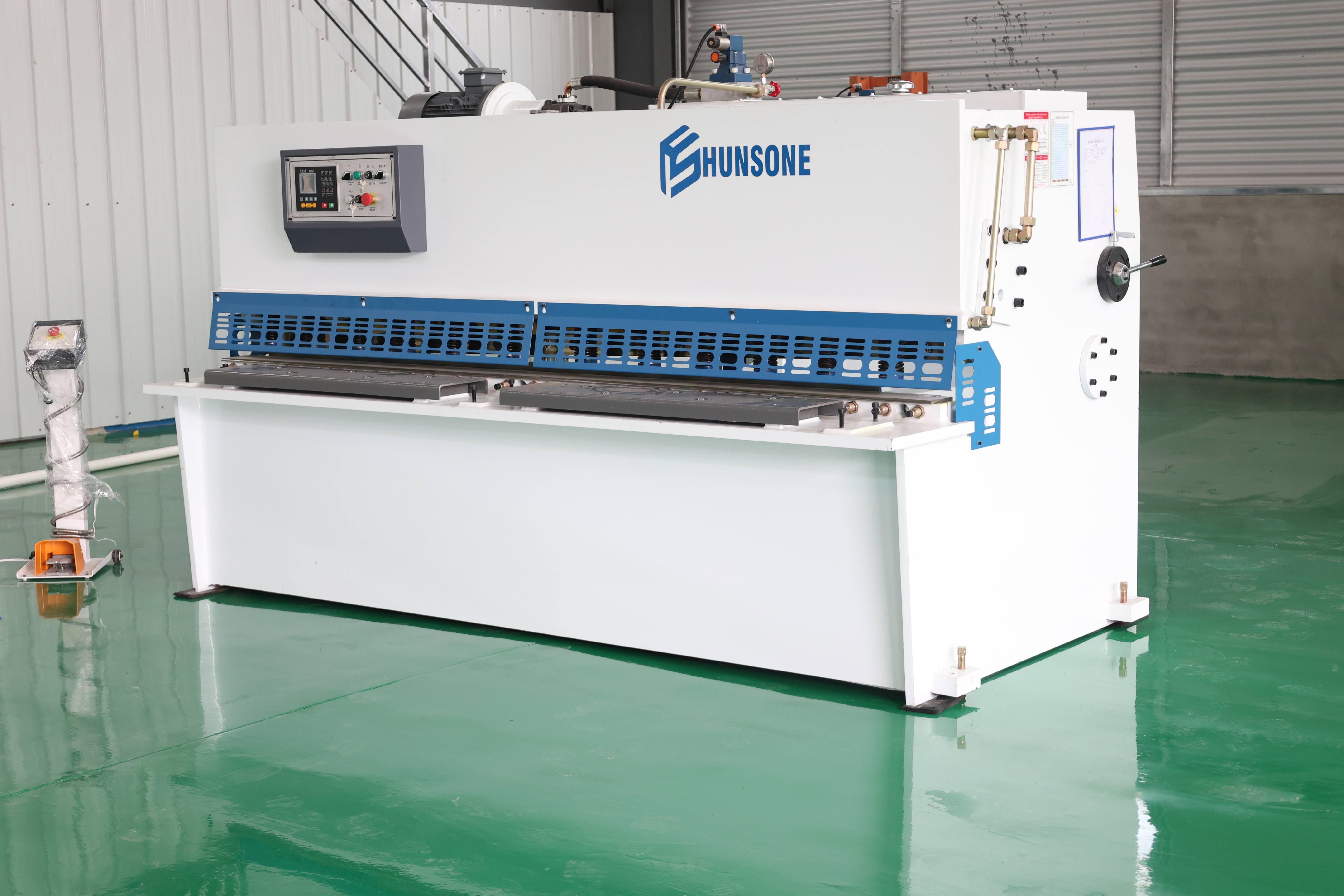
Off-the-shelf shearing equipment often forces operators to work around fixed blade geometries and limited throat depths, which can strangulate entire production lines when material sizes or shapes fall outside a narrow comfort zone. A custom shear design attacks the problem at its root by matching the cutting angle, hold-down pressure, and clearance to the actual range of stock moving through your shop. Instead of piling up half-cut sheets waiting for a second pass, every stroke separates cleanly and moves the piece directly to the next station.
Beyond blade geometry, integrating the shear into an automated feed system removes the stop-start rhythm that kills throughput. When the machine is engineered to accept coil or blank stock at a consistent rate and discharge cut lengths onto a conveyor without manual repositioning, the operator stops being a bottleneck himself. The design can also incorporate quick-change blade cartridges so that switching between material thicknesses takes minutes instead of hours, keeping the line fluid even when job specifications swing wildly from one order to the next.
Another overlooked flow-breaker is scrap handling. Custom shears can include built-in scrap diversion chutes and trim removal paths that route waste directly into bins or shredders without interrupting the primary material stream. By simultaneously addressing cut quality, material handling, and tooling changeover, a purpose-built shear turns what used to be a persistent choke point into a seamless segment of the fabrication sequence.
Real-World Performance Data from Installed OEM Systems
Gathering metrics directly from equipment operating in the field tells a story that lab tests often miss. Instead of idealized conditions, these numbers reflect how a system behaves under variable loads, fluctuating ambient temperatures, and the subtle wear that comes with daily cycles. One manufacturer’s rooftop unit, for instance, logged an average part-load COP 18% higher than its nominal rating, simply because the installed controls responded more aggressively to zone-level demand than the test protocol assumed.
What makes this data genuinely useful is the granularity. A chiller at a mid-sized hospital showed a gradual 4% efficiency drift over six months—not a sudden fault, but a trend traced back to a slowly fouling condenser barrel that would have evaded a snap-shot inspection. By comparing fleet-wide performance, engineers spotted that units in coastal installations reached a stable performance plateau three weeks later than inland ones, a delay attributed to the protective response of the corrosion control coating activating differently in humid salt-air. This kind of insight only surfaces when you stop treating a machine’s nameplate as its destiny and start reading the operational logs like a biography.
From Raw Material to Finished Cut—Streamlined
Turning rough stock into precisely cut components doesn’t have to be a drawn-out affair. It begins the moment material hits the dock—raw bars, sheets, or blanks are scanned into the system, and from there every move is tracked. Instead of shuttling parts between disconnected stations, the workflow is arranged in a tight physical sequence: sawing, milling, drilling, and finishing flow into one another with as little waiting as possible. Tooling and fixtures are preset offline, so changeovers happen in minutes rather than hours. This kind of layout keeps material moving forward without getting lost in staging areas or buried under paperwork.
Technology does a lot of the heavy lifting once the stock enters the first machine. Adaptive cutting strategies read tool wear and material inconsistencies in real time, adjusting feeds and speeds to hold tolerances without operator intervention. Automated loading and unloading systems keep spindles running, while in-process probing checks critical dimensions before a part ever leaves the cutting zone. The result is fewer paused machines and less scrap to recycle. By the time a blank exits as a finished cut piece, it has often been measured, deburred, and cleaned in one continuous cell—no shuttling to a separate quality lab required.
The payoff shows up on the shop floor as a steady, predictable rhythm. Work orders don’t pile up at bottlenecks because each step is paced to a rate that the next can handle smoothly. Operators spend less time hunting for drawings or chasing missing setups and more time overseeing the flow. Emergency rushes become rare because the pipeline itself is built to handle variety without breaking stride. In the end, the journey from raw material to finished cut feels less like a marathon with pit stops and more like a clean, uninterrupted run through a well-designed circuit.
Why Off-the-Shelf Machines Fall Short in Specialized Workflows
通用设备在特定行业流程中的局限性,往往不是性能参数的短板,而是一种深层的磨合不足。比如在精密蚀刻或多层柔性电路板的生产中,操作节奏、温控曲线以及废料排除逻辑都高度依赖经验调校。标准机型搭载的固件只能提供宽泛的工艺包,无法捕捉那些只有老技师才掌握的微调习惯,结果就是良率忽高忽低,反复返工反而吞噬了硬件账面上的速度优势。
另一个被低估的问题在于物理接口的兼容性。许多专用产线并不会遵循标准的送料尺寸或通信协议,它们可能延伸自三四十年前的设计蓝图,仍在使用并行信号或定制载具。原厂机器一旦面对这类异形衔接,通常需要加装大量第三方转接模块,电控逻辑因此变得碎片化,故障时难以精确定位,维护成本迅速超过设备本身的采购溢价。
更隐蔽的落差出现在环境适应力上。特殊流程常伴随着饱和水汽、含氟废气或持续低频振动,这些条件会缓慢腐蚀标准等级的主轴密封和电路板涂覆层。而我们看到的故障报告很少直接指向环境元凶,更多表现为随机停机与传感器飘移,这让团队陷入无休止的换件循环,却始终触不到问题的根源。
FAQ
It's a fully customized shearing machine built to your exact specifications, integrating directly into your existing production line. Unlike off-the-shelf machines, every component—from the blade gap adjustment to the control panel—is tailored to match your material types, thicknesses, and workflow requirements.
Because it eliminates costly workarounds. Standard machines often force you to adapt your process, leading to slower cycles and inconsistent cuts. An OEM solution is designed from day one to fit your specific manufacturing needs, resulting in seamless operation, less scrap, and better overall equipment effectiveness.
Just about everything that impacts performance. We routinely tailor cutting length, throat depth, hydraulic pressure, CNC controls, back gauge systems, safety guarding, and even the physical footprint to fit your floor layout. Material-specific blades and specialized feeding mechanisms are also common requests.
We start with rigorous design reviews using your production data, then source precision-ground blades and high-grade hydraulic components from trusted suppliers. Every machine undergoes load testing under simulated production conditions before shipment. We also provide detailed build documentation so your maintenance team knows exactly what's inside.
The package covers on-site commissioning, operator training, and a first-year warranty with prioritized parts shipping. Many clients also opt for extended service agreements that include scheduled preventive maintenance visits, real-time remote diagnostics, and guaranteed response times for technical support.
By removing bottlenecks. A perfectly matched shearing machine cuts faster with greater accuracy, so you see higher throughput and far fewer rejects. Automated features like programmable back gauges and sheet support systems reduce manual handling, allowing one operator to manage what might otherwise require two or three people.
Conclusion
A manufacturing line lives and dies by how well its cutting equipment integrates with the rhythm of production. Off-the-shelf shearing machines often force operations to adapt to fixed limitations, but an OEM approach flips that dynamic entirely. When a shear is designed specifically for your workflow, precision cutting isn't just a specification—it becomes a seamless extension of how materials move from one stage to the next. Engineers collaborate directly with your team to map out every detail, from blade geometry to material handling interfaces, so the machine aligns with existing conveyors, feeding systems, and downstream processes. The result isn't a generic metal cutter bolted onto the floor; it's a tailored solution that anticipates your exact gauge ranges, material types, and throughput targets. Custom shear design eliminates the bottlenecks that plague standardized equipment—those frustrating pauses caused by mismatched speeds, awkward loading angles, or repeated setup changes between jobs. Instead of asking your production line to adapt, the machine adapts to it, resetting itself rapidly and holding tolerances that keep rework to a bare minimum.
Real performance isn't theoretical. Installed OEM systems generate data that maps directly to shop-floor realities—cycle times, blade life under your specific loads, and part consistency over thousands of cuts. These numbers aren't lab projections; they come from machines that run the same alloys, the same thicknesses, and the same shift patterns your operation demands. What emerges is a clear view of a streamlined journey from raw material to finished cut, where handling steps shrink and scrap rates drop because the shear is built to handle your input stock as-is, without extra flattening or pre-trimming. Specialized workflows—think perforated sheets, high-strength steels, or tight nest cutting—reveal why catalog machines so often fall short. They lack the rigidity, the custom clamping, or the programmable stroke control that preserves material integrity when it matters most. An OEM solution closes that gap, merging robust construction with software tuned to your recipes, so operators spend less time compensating for a machine's shortcomings and more time shipping quality parts.
Contact Us
Contact Person: James Chen
Email: [email protected]
Tel/WhatsApp: 86 13770803946
Website: https://www.hunsone.com/