

Pharmaceutical Excipient Silica Manufacturer: Ensuring Purity and Performance in Drug Formulations
2026-05-28
In pharmaceutical formulations, even the smallest ingredient can have a massive impact on drug stability and bioavailability. Silica-based excipients must deliver uncompromising purity and consistent performance—yet not all manufacturers meet these critical demands. As a trusted name in the industry, Zhonglian has built its reputation on precision-engineered silica that helps formulators overcome challenges like moisture sensitivity and poor flowability. Discover what sets a truly high-quality excipient supplier apart, and why more pharmaceutical companies are rethinking their silica sourcing strategies.
Why Purity in Silica Excipients Can’t Be Compromised
Trace impurities in pharmaceutical excipients might seem negligible, but their impact on drug safety can be profound. Even minute amounts of reactive metals or organic residues in silica can catalyze degradation pathways, leading to unexpected changes in a formulation's potency or shelf life. A compromised excipient doesn't just risk batch failure—it introduces variables that are nearly impossible to retrace once a product is in circulation.
Silica is often chosen for its inertness, but that reputation holds only when purity is rigorously controlled. Low-grade material can carry ionic contaminants that interfere with sensitive active pharmaceutical ingredients, or surface silanol groups that trigger unwanted moisture uptake. In oral solid dosage forms, these defects may alter dissolution profiles; in parenterals, they become a direct threat to patient safety. Skimping on purity is never a simple cost-saving measure—it silently erodes the reliability of the entire dosage form.
Beyond immediate chemical concerns, pure silica underpins the consistency that regulatory expectations and patient health demand. Variability from one lot to the next—caused by inconsistent raw material quality—can disrupt manufacturing processes, leading to rejected batches and supply delays. When every tablet or vial must meet strict specifications, the excipient's integrity is not a luxury. It is the foundation that keeps a medicine predictable, effective, and safe from bench to bedside.
The Hidden Science Behind Consistent Drug Performance
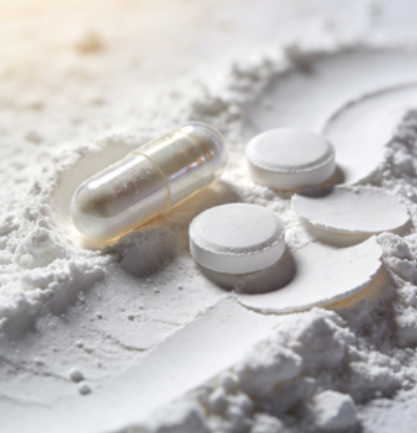
Achieving reliable drug performance goes far beyond the active ingredient listed on the label. It hinges on a delicate interplay of formulation science: the choice of excipients, particle size distribution, and manufacturing processes that govern how a tablet disintegrates and dissolves in the body. Even minor shifts in humidity or compression force during production can alter the crystalline structure of the drug, impacting its bioavailability in ways that are invisible to the naked eye but critical for therapeutic effect.
At the molecular level, the consistency of a drug’s action is shaped by pharmacokinetic factors that most people never see—such as the polymorphism of the compound, where the same chemical can exist in different crystal forms with drastically different solubilities. Advanced analytical techniques like Raman spectroscopy and X‑ray diffraction are routinely used to monitor these forms, ensuring that every batch mirrors the behavior of the original clinical trial material. This silent guardianship prevents the kind of variability that could turn a life‑saving medication into an unpredictable gamble.
What patients experience as a consistent therapeutic effect is actually the result of rigorous in‑process controls and real‑time release testing. Rather than relying solely on end‑product lab checks, modern manufacturing weaves quality into every step—from blending and granulation to coating. By continuously measuring critical quality attributes, producers can detect and correct deviations before they become failures. This behind‑the‑scenes choreography, built on decades of materials science and engineering, is what keeps a pill working the same way at dose one and dose one hundred.
Manufacturing Excellence: More Than Just Meeting Standards
Real manufacturing excellence isn't simply about ticking boxes on a compliance checklist. It emerges when a facility internalizes quality so deeply that every operator, every line supervisor, and every engineer instinctively reaches for a higher benchmark. The machinery hums with a rhythm born of preventive care, not frantic repairs. Raw materials arrive just in time, not because a system mandates it, but because supply chain partners share the same obsession with flow. Walk onto a shop floor that has moved beyond standards, and you’ll notice the quiet confidence: problems are surfaced immediately, not hidden until an audit, and improvements come from the people actually running the processes.
This level of performance demands that organizations treat standards as a floor, not a ceiling. Certification audits become affirmations of existing practice rather than stressful events. The real work happens in the daily huddles where a cell leader asks, “What slowed us down yesterday?” and the team debates whether a minor fixture change could shave three seconds off cycle time. It lives in the way maintenance technicians are empowered to stop a line the moment they sense an unusual vibration, trusting that preventing a defect is valued more than hitting hourly targets. Over time, this relentless, ground-level curiosity builds a reservoir of tacit knowledge that cannot be captured in any procedures manual.
Factories that truly embody manufacturing excellence also redefine relationships—with equipment, with data, and with the wider community. They move beyond reactive dashboards to predictive signals, using sensor patterns not just to monitor but to anticipate. Yet technology serves human judgment rather than replacing it. Operators own their stations in a way that turns every shift into a chapter of continuous evolution. Externally, these manufacturers often become anchors in their regions, sharing best practices with local suppliers and even competitors, knowing that a healthy industrial ecosystem lifts everyone. That outward mindset, combined with inner discipline, creates a resilience that mere standards-based conformity can never replicate.
}How Excipient Choice Dictates Drug Bioavailability
Far from being inert fillers, excipients actively shape a drug's journey from pill to plasma. The choice of solubilizer, disintegrant, or even coating polymer can tip the balance between therapeutic success and failure. For instance, a poorly water-soluble compound might remain trapped in its crystalline form unless a suitable amorphous dispersion polymer, such as HPMCAS or PVP, is selected to hold the drug in a high-energy state during dissolution. This molecular-level interaction isn't just about solubility—it governs the free drug concentration available to cross the gut wall, directly impacting the rate and extent of absorption.
Beyond solubilization, excipients can modulate gastrointestinal physiology in ways that dramatically alter bioavailability. Certain lipid-based excipients stimulate bile secretion, promoting micelle formation and lymphatic uptake for highly lipophilic drugs. Meanwhile, surfactants like polysorbate 80 or sodium lauryl sulfate may open tight junctions or fluidize the membrane, but they can also wreak havoc on gut microbiota, indirectly affecting drug metabolism. A poorly considered choice can trigger efflux transporters such as P-glycoprotein, effectively pumping the drug back into the lumen before it ever reaches circulation. Successful formulation relies on understanding these dynamic interactions, ensuring that the excipient not only stabilizes the drug but aligns with the body's own absorption mechanisms.
Beyond the Specification Sheet: Real-World Performance
Spec sheets paint a pristine picture, but the moment you step outside the controlled lab, reality sets in. That sleek smartphone with a 48-hour battery life might barely limp through a full day of actual use, juggling spotty 5G signals, background app refreshes, and a display brightness that auto-adjusts to blazing sunlight. Numbers on paper rarely survive contact with the messiness of daily routines, where Wi-Fi dead zones, colder temperatures, and multitasking habits transform theoretical performance into a more modest, sometimes frustrating truth.
Take a laptop rated for 15 hours of video playback—in practice, that figure evaporates once you open a dozen browser tabs, run a video call, and stream music in the background. The processor’s turbo boost might spike for benchmarks but settle into a more conservative rhythm once thermal constraints kick in, and a fanless design that stays whisper-quiet on a shelf can become uncomfortably warm on your actual lap. Real-world demands don’t come in neat, isolated benchmarks; they’re layered, unpredictable, and often expose where a product’s thoughtful engineering ends and wishful thinking begins.
Then there’s the stuff no box ever mentions: how a device ages. That instant-on responsiveness and flawless battery health you enjoy on day one can degrade subtly over months, shaped by your unique charging patterns, the cumulative weight of software updates, and even the number of times you’ve accidentally left it in a hot car. The truly telling test isn’t a head-to-head comparison fresh out of the box—it’s whether you’re still delighted with the experience six months, a year later, long after the initial excitement and tidy spec lists have faded.
Future-Proofing Formulations with Advanced Silica Solutions
Advanced silica technologies are reshaping how manufacturers approach long-term formulation stability and performance. Unlike conventional fillers, these engineered particles offer multifunctional benefits—acting as rheology modifiers, anti-caking agents, and carriers—all while maintaining clean-label appeal. Their tunable surface chemistry allows formulators to fine-tune product texture and shelf life without compromising on purity or sensory experience, making them a strategic asset in an era where consumer expectations and regulatory demands evolve rapidly.
One of the most compelling aspects of modern silica solutions is their ability to adapt across diverse product categories. From dry powder blends that require effortless flow to liquid suspensions needing suspension stability, silica's versatility reduces the need for multiple additives. This simplification streamlines supply chains and accelerates reformulation cycles, giving brands the agility to respond to market shifts—whether it's a sudden demand for plant-based alternatives or stricter sustainability targets—without overhauling entire production lines.
Looking ahead, silica-based innovations are poised to address emerging challenges such as moisture sensitivity in novel ingredients and the push for biodegradable packaging compatibility. By investing in these advanced materials now, companies build resilience into their product portfolios, ensuring that today's formulations remain relevant, efficient, and aligned with the next wave of industry standards. The key lies in collaborative development, where silica is not just an additive but a tailored solution that evolves alongside a brand's vision.
FAQ
Silica is widely used to improve powder flow, prevent caking, and enhance the stability of solid dosage forms like tablets and capsules.
Through rigorous quality control including heavy metal testing, microbial limit checks, and adherence to pharmacopoeial standards such as USP-NF and Ph. Eur.
Fumed silica and precipitated silica are common, with fumed silica often preferred for its high surface area and anti-caking efficiency.
Particle size affects flowability and dissolution profiles; consistent micronization ensures uniform mixing and reproducible drug release.
By providing full documentation, including certificates of analysis, safety data sheets, and drug master files for regulatory filings.
Low moisture content, high oil absorption capacity, and minimal leachables to avoid interactions with active pharmaceutical ingredients.
Yes, manufacturers can modify surface chemistry or porosity to meet the needs of modified-release, inhalation, or topical formulations.
By ensuring dose uniformity and protecting sensitive APIs from degradation, silica helps maintain therapeutic efficacy and reduces risks.
Conclusion
The role of silica excipients in pharmaceutical formulations extends far beyond simple filler functionality. Purity stands as a non-negotiable cornerstone, as even trace contaminants can trigger degradation, interact unpredictably with active ingredients, or compromise patient safety. Manufacturers who prioritize rigorous raw material sourcing and multi-stage purification processes ensure that each batch meets the highest pharmacopeial standards, but true reliability comes from going further. It demands a deep understanding of surface chemistry, particle morphology, and the subtle interplay between excipient and drug substance. This level of control is not achieved by accident; it requires manufacturing environments engineered to eliminate cross-contamination and variability, supported by analytical techniques that detect impurities at levels conventional testing often misses. The result is an excipient that consistently delivers the intended therapeutic outcome, forming the silent backbone of countless safe and effective medicines.
Behind every predictable dose-response curve lies a hidden science that connects excipient selection directly to drug performance. The porosity, specific surface area, and silanol group density of silica can dramatically influence dissolution rates and, consequently, bioavailability. A well-designed excipient does more than prevent caking or improve flow; it can stabilize amorphous drug forms, modulate release kinetics, and even protect hygroscopic actives from moisture-induced decomposition. Practical experience shows that performance in real-world manufacturing—under varying humidity, compression forces, and storage conditions—often diverges from what specification sheets alone can predict. Forward-thinking formulators partner with manufacturers who invest in advanced silica technologies, such as surface-functionalized or nanostructured grades, to address emerging formulation challenges. This collaborative approach not only solves immediate processing hurdles but also future-proofs drug products against evolving regulatory expectations and complex delivery requirements, ensuring that innovation in excipient science keeps pace with the next generation of therapies.
Contact Us
Contact Person: Levin Wang
Email: [email protected]
Tel/WhatsApp: 8618668999988
Website: https://www.silicaplant.com/