

Powerful Manufacturer of Concrete House Mould Drives Innovation in Modern Building
2026-06-24
In the rapidly evolving world of modern construction, the demand for efficient, durable, and innovative building solutions has never been higher. At the heart of this transformation lies a powerful force: the concrete house mould. As a leading innovator, LugongMachinery is redefining what's possible, driving a new era of precision and speed in residential and commercial projects. This piece explores how advanced mould technology is not just shaping structures, but reshaping the entire industry's approach to quality and sustainability.
Rethinking Construction: The Rise of Advanced Concrete Moulds
For decades, concrete formwork remained stubbornly low-tech—plywood sheets, dimensional lumber, and a staggering amount of manual labor. The shift that’s now reshaping job sites isn’t just about swapping materials; it’s a fundamental rethinking of how we shape concrete. Advanced mould systems borrow from aerospace and automotive manufacturing, using precision-engineered aluminum frames, magnetically clamped steel panels, and polymer composites that can withstand hundreds of pours without warping. One German contractor recently completed a 12-story residential tower using a single set of modular, digitally fabricated moulds that were reconfigured for every floor plate—reducing waste by 70% and shaving weeks off the schedule. The real breakthrough isn’t the material itself, but the logic it imposes on the entire construction sequence.
What makes these systems transformative is their capacity to blur the line between temporary works and permanent building components. Expandable tunnel forms, for instance, allow walls and slabs to be cast in a single continuous pour, eliminating cold joints and the thermal bridges that plague energy performance. Meanwhile, 3D-printed sand forms are enabling architects to cast complex doubly curved panels without the cost of CNC-milled foam—simply print the sacrificial mold, pour, and wash away the unbonded sand. A small studio in Rotterdam is experimenting with wax-based moulds that melt out after curing, leaving intricate void networks for integrated ventilation ducts. These techniques don’t just accelerate production; they unlock geometries that would have been financially insane to attempt five years ago.
The quiet revolution, though, is happening in the digital backbone that ties these physical tools together. Parametric design platforms now talk directly to robotic form handlers, adjusting joinery details and reinforcement layouts in real time as site conditions shift. A contractor in Singapore recently used a combination of lidar-scanned as-built data and adaptive mould kinematics to cast perfectly plumb core walls despite a 15-millimeter drift in the foundation slab. This isn’t about construction becoming automated—it’s about the mould becoming an intelligent interface between design intent and material behavior, absorbing tolerances that would normally cascade into costly rework. The result is a concrete structure that doesn’t feel like it was built so much as grown from a highly informed process.
Behind the Scenes: What Makes This Mould Manufacturer Stand Out
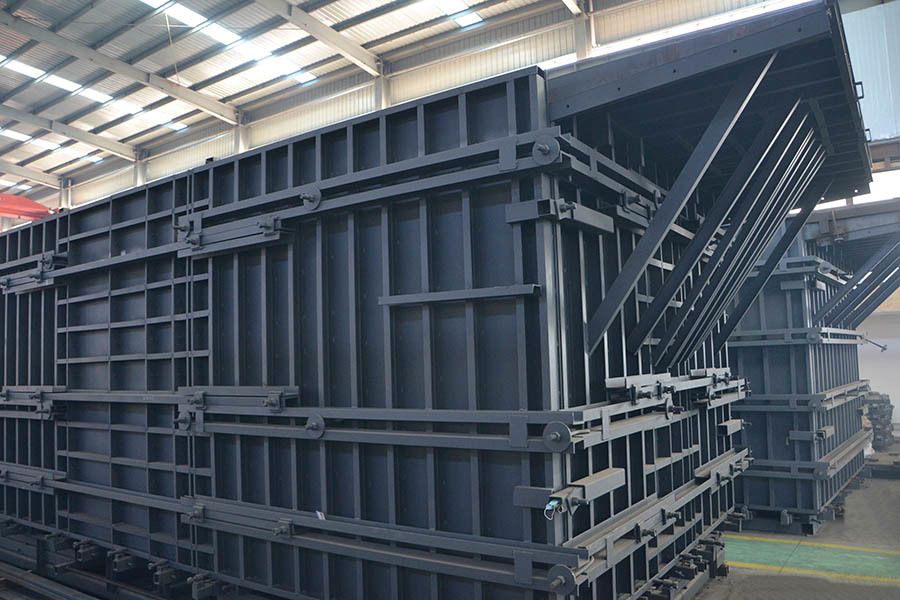
Peek into our facility, and you’ll notice something missing: the usual chaos of a high-output factory. Instead, a quiet rhythm of precision defines every corner — from climate-controlled metrology labs to CNC machines that self-correct in real time. This isn’t just about tighter tolerances; it’s a philosophy that treats every mould as a one-off masterpiece, regardless of the order size.
The real differentiator, though, is how we fuse old-school craftsmanship with data-driven insight. Our senior toolmakers — some with 30+ years of tactile knowledge — work alongside AI process models that predict wear patterns before they emerge. That hybrid approach means we catch micro-defects during cooling simulations, not on the customer’s production floor.
And then there’s the material science most moulders never discuss. We don’t just accept standard steel grades; our in-house annealing protocols and surface treatments are tuned to each resin’s personality. It’s a tedious, unglamorous process, but it’s why our tools often outlast the product lines they were built for.
From Concept to Concrete: How Innovation Is Streamlined
Bringing a new idea to life often gets tangled in endless meetings and overthinking. The real shift happens when teams stop treating innovation like a fragile artifact and start treating it like a rough sketch—meant to be tested, broken, and rebuilt fast. Small, cross-functional groups with clear decision-making power can bypass the usual bottlenecks. Instead of waiting for perfect data, they run quick experiments, learning what actually works from real-world feedback rather than boardroom theories.
This fast-cycling approach demands a culture that rewards curiosity over caution. When every prototype is seen as a question rather than a finished answer, failure becomes just another data point. Tools and processes are chosen for speed and adaptability, not for their ability to generate reports. The goal is to shrink the gap between "what if" and "what is" so dramatically that by the time a concept is fully formed, it has already been validated in the hands of users.
Streamlining innovation also means cutting away the layers of approval that often suffocate fresh thinking. Instead of a stage-gate marathon, progress is measured in short sprints that deliver tiny, tangible outcomes. Leaders shift from gatekeeping to coaching, asking "How can we test this by tomorrow?" rather than "Have you filled out the risk assessment form?" This relentless focus on action turns abstract visions into solid products while the market window is still wide open.
Building Smarter: Efficiency Gains That Reshape Projects
Efficiency in construction isn’t just about speed—it’s about weaving smarter decisions into every layer of a project. When teams embrace lean principles, waste gets stripped from workflows before it ever materializes on site. Digital twins let us simulate structural behavior, clash detection, and even material fatigue long before a shovel hits the ground. That means fewer reworks, tighter budgets, and timelines that actually hold up in the real world.
What really reshapes a project is how technology amplifies human judgment. AI-driven analytics can flag bottlenecks the moment they start forming, not after they’ve stalled three crews. IoT sensors embedded in formwork or cranes feed live data straight to the project hub, letting superintendents adjust on the fly instead of waiting for a weekly report. This fluid coordination turns static blueprints into living systems, where every decision is backed by evidence, not guesswork.
Beyond the tools, the real shift is cultural. When field workers, engineers, and supply chain managers share a single source of truth, silos collapse. Prefab components arrive exactly when needed, inventories stay lean, and safety hazards get predicted rather than reacted to. That’s the quiet revolution: efficiency gains that don’t just finish projects faster, but fundamentally reshape how we think about building—leaving behind the old model of reactive problem-solving for good.
Durable by Design: The Secret to High-Performance House Moulds
The foundation of a high-performance house mould lies in its engineering. Instead of simply casting a shape, we calculate every load path and stress point, reinforcing critical areas to withstand years of repetitive use. This isn't about adding more material; it's about placing it exactly where it's needed. The result is a mould that maintains its precision even after thousands of cycles, resisting flex and deformation that would compromise finished components.
Material selection is just as crucial. We pair hardened steel surfaces with carefully chosen backing structures that absorb impact and distribute pressure evenly. Heat treatment and surface coatings aren't afterthoughts—they're integrated into the design phase to combat wear, corrosion, and galling. This proactive approach means less downtime for maintenance and more consistent output, turning long production runs from a liability into a predictable process.
What sets durable moulds apart is the marriage of smart design and disciplined manufacturing. Every cooling channel is positioned for uniform temperature control, minimizing thermal stress that leads to cracking. Tolerance stacking is managed from the start, ensuring that every component fits perfectly and moves smoothly under load. Durability isn't a promise—it's a measurable trait built into every corner radius, every rib, and every parting line.
A Look Ahead: The Future of Modern Building Starts Here
The buildings we inhabit tomorrow will shed the rigid identities of the past. Instead of static containers, they are becoming responsive organisms—structures that breathe, adapt, and even repair themselves. This shift isn't about piling on more technology; it's about rethinking the very fabric of construction, from foundations that sequester carbon to facades that generate energy without a single visible panel.
Material science is quietly rewriting the rules. Mycelium composites, grown from fungal networks, now rival traditional insulation, while transparent wood offers a strength-to-weight ratio that makes glass seem archaic. These aren't lab curiosities—prototype homes have already weathered Scandinavian winters, outperforming their conventional counterparts. The real breakthrough lies in supple integration: sensors embedded in timber that monitor stress, or coatings that neutralize urban air pollutants, turning a building's skin into an environmental asset.
Perhaps the most profound change is less about physical structure and more about how spaces read us. Upcoming designs abandon the one-size-fits-all approach, using ambient intelligence to adjust lighting, acoustics, and even partition layouts based on subtle cues—the cadence of a conversation, the number of people in a room, the time of day. These environments don't just shelter; they anticipate, creating a quiet collaboration between dweller and dwelling that feels entirely natural, never intrusive.
FAQ
They combine decades of hands-on experience with a relentless focus on precision engineering. Their moulds are known for exceptional durability and tight tolerances, which consistently produce high-quality wall panels and structural elements.
By actively collaborating with architects and builders, they develop moulds that accommodate cutting-edge designs and new construction techniques. This includes adjustable systems for modular housing and integrated features for faster on-site assembly.
The lineup spans from standard wall and floor panel moulds to specialized versions for roofs, staircases, and decorative facades. They also offer complete casting systems for entire room units, supporting both load-bearing and non-structural applications.
Yes, customization is a core part of their service. Their engineering team works directly with project specs to create bespoke moulds, whether it’s for curved walls, unusual textures, or specific dimensional needs.
The moulds are designed for quick setup and repeated use with minimal maintenance. Precise manufacturing means fewer adjustments on site, less material waste, and faster concrete cycling times, all of which shorten construction schedules.
By enabling precise concrete placement and reducing material overage, the moulds help minimize raw resource use. Moreover, the resulting structures often feature superior thermal mass and airtightness, contributing to lower energy consumption over the building’s life.
Every mould undergoes rigorous testing under simulated job-site conditions, and only high-grade steel and coating materials are used. They also provide detailed maintenance guides and support to keep the equipment in peak condition for years.
Conclusion
The way we think about building homes is shifting rapidly. Concrete, long valued for its strength, is now being shaped by a new generation of mould systems that push the boundaries of what’s possible. Leading this change is a manufacturer whose approach goes beyond standard formwork. By re-engineering the entire production cycle, they’ve erased the friction between design intent and physical execution. Complex architectural shapes that once required tedious manual work now emerge from reusable, precision-engineered moulds with astonishing consistency. Behind the scenes, it’s not just machinery that sets them apart—it’s a deep integration of material science, real-time feedback loops, and a stubborn refusal to accept conventional limits. This means that from the earliest sketch to the final pour, every stage is connected, reducing translation errors that typically add time and waste. The result is a construction process that feels less like patchwork assembly and more like a deliberate, repeatable flow.
Efficiency gains are tangible: project timelines compress because casting happens in controlled environments, freeing on-site crews from weather delays and rework. Modular components arrive ready to assemble, slashing labor hours and letting developers rethink how they schedule entire builds. But speed doesn’t come at the cost of longevity. The secret lies in the moulds themselves—designed with advanced composites and surface treatments that produce concrete surfaces nearly impervious to moisture, cracking, and wear. Every joint and rib is engineered to direct stress away from weak points, so the finished house stands up to harsh climates without constant upkeep. Looking forward, this manufacturer is already exploring embedded sensors and self-healing admixtures that could make structures not just durable, but intelligent. It’s a quiet revolution, one that suggests the future of modern building isn’t about futuristic gimmicks—it’s about making high-performance construction radically simple and broadly accessible.
Contact Us
Contact Person: Zhang Zhenlai
Email: [email protected]
Tel/WhatsApp: 8618563210000
Website: https://en.lugongmachinery.com/