

Precision Turning Machine Factory: Advancing Manufacturing with High-Precision Solutions
2026-08-02
In an era where manufacturing precision defines competitive edge, the demand for advanced turning solutions has never been greater. Step inside the world of WINNRUI CNC, a precision turning machine factory that is quietly redefining what's possible on the shop floor. Here, high-precision engineering meets relentless innovation, giving rise to machinery that doesn’t just cut metal—it sculpts the future of production. Whether you’re chasing micron-level accuracy or scalable throughput, this is where the blueprint for tomorrow’s manufacturing takes shape.
Engineering the Core of Modern Machining
At its heart, modern machining isn't just about removing material faster—it's a discipline where precision, material science, and adaptive control converge. The core has shifted from standalone mechanical lathes and mills to integrated systems where multi-axis kinematics, high-frequency spindles, and toolpath algorithms respond to material grain structure in real time. What often gets overlooked is how much the foundational engineering now leans on feedback loops: sensors embedded in the spindle measure micrometers of deflection, coolant delivery is pressure-mapped to thermal zones, and the entire process self-corrects before a single tolerance is violated.
This re-engineering of the machining core also means confronting inherent physical limits head-on. Chatter instability, for instance, isn’t simply the machine’s enemy anymore; vibration signatures are analyzed to identify the precise modal stiffness of the setup, pushing stable depth-of-cut boundaries. Likewise, tooling has evolved from geometric cutting edges to engineered surfaces with controlled chip-breaking topographies, designed through finite element analysis to distribute heat away from the shear zone. In many ways, the core of modern machining is less about brute force and more about orchestrating a delicate, data-driven dance between the machine, the workpiece, and the physics that bind them.
Where Innovation Meets Micron-Level Precision
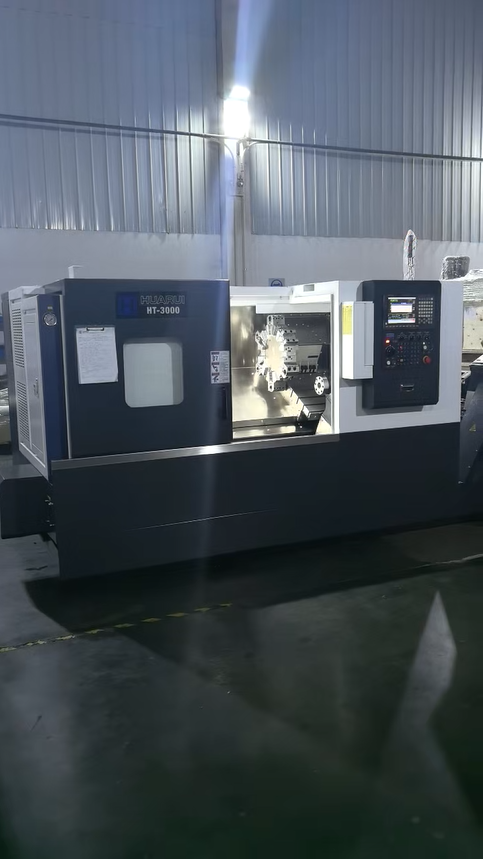
Precision at the micron scale isn’t just a technical feat—it’s where bold ideas crystallize into tangible breakthroughs. Every micrometer hides a universe of possibility, from medical implants that mimic natural tissue to optics that capture light with near-perfect fidelity. In this realm, innovation isn’t an abstract concept; it’s a relentless chase after the invisible, a dance between design intent and physical reality.
Our approach fuses unconventional thinking with rigorous process control. Instead of following established blueprints, we engineer from the material up, often reimagining how light, motion, and matter interact at scales most people never consider. That means turning brittle ceramics into compliant mechanisms, or etching channels thinner than a human hair to guide fluids without turbulence. The result isn’t just smaller—it’s smarter, more efficient, and often defies traditional manufacturing logic.
What sets this work apart is the refusal to settle for “close enough.” When tolerances shrink below a single micron, every vibration, thermal drift, or impurity becomes a major obstacle. Overcoming them demands more than advanced machinery; it calls for a mindset where curiosity fuels problem-solving and failures are just stepping stones. That’s the intersection we occupy daily—a place where the smallest details unlock entirely new capabilities, and where precision stops being a constraint and becomes a creative catalyst.
Tailored Solutions for Complex Manufacturing Needs
Every manufacturing challenge carries its own nuances—unexpected material behaviors, tight supply chains, or scaling pressures that off-the-shelf systems simply weren't built to handle. Blanket approaches often leave critical gaps, forcing teams to divert time and energy into workarounds. What sets a lasting solution apart is the ability to adapt from the ground up, aligning not just with immediate targets but with the subtle realities of your production floor.
We start by listening—really listening—to the friction points your engineers and operators encounter daily. Whether it's a need for high-mix, low-volume flexibility or a push toward lights-out machining, the design process wraps around your actual workflows. Past projects have ranged from custom fixturing that slashed setup times by 40% to fully reworked assembly sequences that brought a stalled product line back to life, all without requiring a full factory overhaul.
The result isn't a generic feature set dressed up in marketing language. It's a solution that feels native to your environment, built with deep understanding of the constraints you navigate. That means faster time-to-value, fewer hidden surprises, and a production rhythm that actually makes sense for the people running it every day.
A Commitment to Quality That Exceeds Standards
Quality for us is more than a checklist—it's a mindset woven into every decision we make. While industry benchmarks provide a starting point, we believe true excellence lives in the details that go unnoticed. From sourcing raw materials to final inspection, each step carries a quiet insistence on doing better than expected. You'll see it in the precision of a seam, the weight of the fabric, the way a product performs on the hundredth use just as it did on the first.
Rather than chase approval from external auditors, we hold ourselves to measures that can't be copied down in a manual. Our team regularly questions how something could last longer, feel more intuitive, or bring a moment of delight. That might mean reinventing a process that everyone else accepts as good enough, or spending extra hours perfecting a finish most people wouldn't even notice. These choices aren't driven by marketing demands—they come from a shared refusal to settle.
In the end, surpassing standards isn't about winning awards or recognition. It's about handing over something we genuinely care about, knowing that the person who receives it will sense the thoughtfulness they might never need to articulate. That intangible trust, built through uncompromising attention, defines the only benchmark that really counts for us.
Driving Efficiency Through Intelligent Turning Systems
Modern manufacturing thrives on precision and speed, yet conventional turning often leaves untapped potential on the table. Intelligent turning systems step into this gap by embedding adaptive controls and real-time monitoring directly into the machining process. Instead of relying on static parameters, these systems continuously sense tool wear, material inconsistencies, and thermal dynamics, automatically adjusting feed rates and cutting paths mid-operation. This dynamic responsiveness not only prevents costly errors but also slashes cycle times, enabling shops to produce more components without compromising quality.
Beyond immediate adjustments, the data backbone of intelligent turning fuels smarter decisions across entire production lines. Vibration signatures, power consumption patterns, and thermal profiles are captured and analyzed, turning raw machine data into actionable insights. Maintenance teams can pinpoint potential failures before they cause downtime, while process engineers uncover subtle inefficiencies that manual inspection would miss. The result is a self-optimizing ecosystem where every part run contributes to the next, steadily driving up overall equipment effectiveness without human intervention.
What sets intelligent turning apart is its ability to merge rigorous engineering with practical simplicity. Operators are freed from constant manual overrides, instead guiding the process through intuitive dashboards that flag anomalies and suggest optimal paths. The technology handles complexity behind the scenes—compensating for tool deflection, thermal growth, and material hardness shifts—so the shop floor stays focused on throughput. This harmony between human expertise and machine intelligence transforms turning from a reactive task into a proactive asset, ultimately delivering tighter tolerances and reduced waste at a pace that manual methods can’t match.
Partnering with Industries for Seamless Production
True production harmony comes from hand-in-hand collaboration with industry specialists who understand the subtleties of your craft. We don’t just hand off a plan and wait for results—our teams embed themselves in the process, sharing decades of combined experience to anticipate bottlenecks, fine-tune workflows, and tailor solutions that feel native to your shop floor. This is not about imposing outside ideas; it’s about listening closely, adapting, and building trust through every phase of execution.
What sets this approach apart is the depth of practical know-how that flows both ways. By working shoulder to shoulder with technicians, engineers, and operators, we capture insights that no manual can teach—like the quiet hum of a perfectly calibrated line or the slight friction in a legacy system that needs a creative touch. These nuances turn into tweaks that elevate throughput without disrupting the rhythm your team has already established.
The result isn’t just smoother output; it’s a living partnership that grows stronger with each challenge. When markets shift or new materials arrive, the relationships forged on the production floor become your fastest route to adaptation. Because seamless production isn’t a one-time fix—it’s a shared practice of responding, refining, and delivering together, day after day.
FAQ
We focus on producing precision turning machines that deliver high-accuracy components for demanding manufacturing sectors.
By offering exceptional control and repeatability, they reduce material waste and ensure consistent quality in every batch.
Aerospace, medical device, and automotive industries rely on our machines for critical parts that demand tight tolerances.
Absolutely. We work closely with clients to tailor machine specifications, from spindle speeds to automation options.
Our integration of advanced thermal stability and real-time monitoring ensures long-term precision without frequent recalibration.
Each unit undergoes rigorous testing with high-grade materials, and we use robust build practices to withstand heavy production cycles.
Yes, we offer comprehensive services including on-site training, maintenance, and rapid spare parts delivery to keep your operations running.
Typically, standard models ship within 8-10 weeks, but customized orders may require additional time for engineering and assembly.
Conclusion
At the heart of modern manufacturing lies the precision turning machine factory, where engineering excellence meets the relentless demand for accuracy. These facilities form the backbone of industries that depend on components machined to the tightest tolerances. By embedding innovation directly into every spindle and cutting path, they achieve micron-level precision that transforms raw materials into flawless parts. Far from offering one-size-fits-all solutions, the best factories work closely with clients to tailor turning systems for complex applications, whether it's aerospace alloys requiring chatter-free finishes or medical implants demanding sub-micron repeatability. This deep integration of craftsmanship and digital control ensures that each machine is not just a tool but a custom-engineered core of the production line.
Quality in such environments goes beyond inspection charts; it is woven into every process, supported by intelligent turning systems that optimize tool life and cycle times through real-time data analysis. This commitment consistently exceeds ISO and industry standards, delivering predictable, high-integrity output even in lights-out operations. The partnership doesn’t end at installation—factories engage with manufacturers for seamless production integration, from turnkey automation cells to ongoing process refinement. The result is a manufacturing ecosystem where efficiency, quality, and agility converge, enabling industries to scale without compromising on the relentless precision that defines their competitive edge.
Contact Us
Contact Person: Tim
Email: [email protected]
Tel/WhatsApp: +86 15522553731
Website: https://www.winnrui-cnc.com/