

Professional Distal Access Catheters Enhance Precision in Neurovascular Interventions
2026-10-07
Neurovascular cases leave little room for error, and reaching the distal vasculature is often the hardest part of the procedure. That's where the right access catheter makes all the difference. INT has built its professional distal access catheters around one goal: giving interventionalists the precise control and stable support they need when navigating tortuous anatomy. Whether you're dealing with small vessels or demanding angles, the design choices behind these catheters aim to turn access challenges into routine steps. Here's what sets them apart.
Where Precision Meets Distal Reach
Reaching deep into the vascular tree has always forced a trade-off: pushability and trackability often come at the cost of fine control. This device changes that calculus. Its distal segment is engineered to navigate tortuous anatomy without sacrificing the tactile feedback clinicians rely on, so the tip responds as if it were an extension of the hand.
The hybrid construction pairs a progressively soft shaft with a reinforced proximal core. That balance lets you advance through fragile side branches and sharply angled origins while maintaining one-to-one torque transfer. Small, deliberate movements at the hub translate into precise tip deflection, even at extreme working distances.
In practice, that means fewer catheter exchanges, less vessel trauma, and the confidence to treat lesions that were previously considered too far or too fragile to reach. Precision no longer fades the deeper you go—it stays with you, millimeter by millimeter.
Designing Catheters for Delicate Vascular Navigation
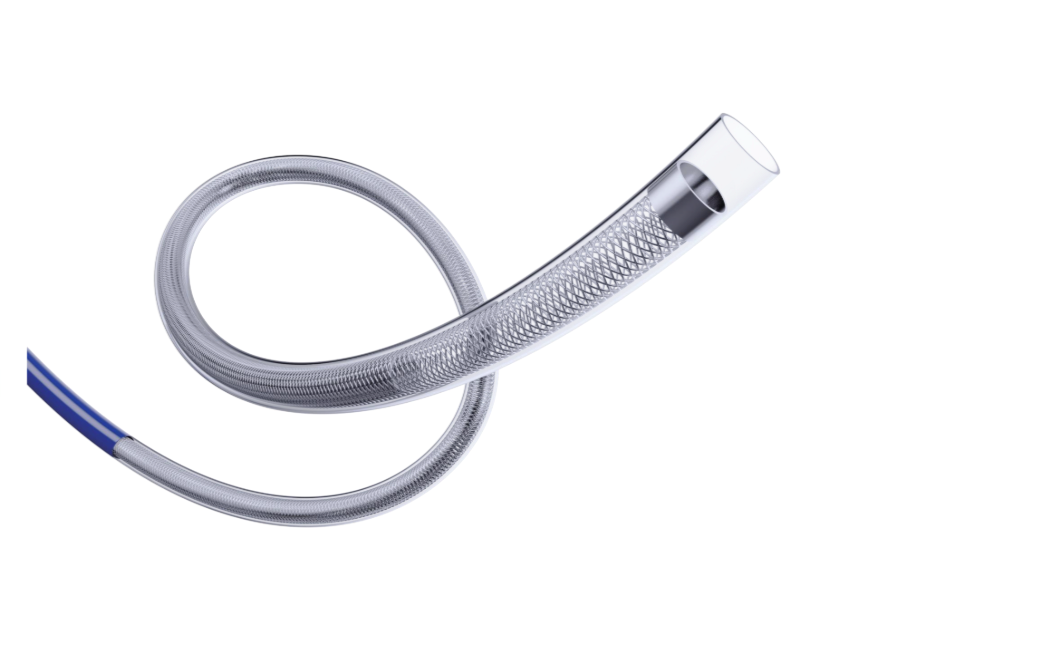
Getting a catheter to move safely through fragile, twisting vessels starts with choosing materials that bend without buckling. A shaft that is too stiff will transmit force straight into the vessel wall, while one that is too soft may loop or fail to advance. Many designs now combine a braided or coil-reinforced proximal shaft with a progressively softer distal segment, so that pushability at the hub gradually gives way to a gentler touch near the tip.
Tip geometry matters just as much as shaft stiffness. A rounded, atraumatic distal tip can slide past small side branches and atherosclerotic plaques without lifting a dissection flap. Some manufacturers shape the tip with a slight curve or use a hydrophilic coating that becomes slippery on contact with blood, reducing friction at the exact moment the catheter rounds a tight bend. This lets clinicians steer through narrow curves while keeping the force applied to the vessel wall low.
Beyond the tip and shaft, torque response has to remain predictable. In delicate territories, even a small rotational lag can cause the distal end to whip or catch on a bifurcation. Designers tune the reinforcement pattern and wall thickness so that a one-to-one turn at the handle translates into a controlled, visible movement at the tip. The goal is not to make the catheter invisible on imaging, but to make its movement feel deliberate, so the operator knows exactly where the device is heading before advancing it further.
The Distal Difference in Complex Neuro Cases
In complex neurological presentations, the pattern of distal involvement often tells you more than any single lab value. When weakness or sensory loss starts in the hands and feet and creeps proximally, it narrows the differential in ways that proximal-predominant findings simply cannot. That distal gradient—whether it's length-dependent axonal loss, a dying-back process, or a toxic-metabolic insult—tends to point toward certain etiologies early, and ruling those out becomes a faster, more confident exercise.
Yet the distal difference isn't just about localization. It shapes how you monitor progression, how you counsel patients about function, and even which electrodiagnostic findings you weigh most heavily. A patient with a pure distal small-fiber syndrome will have normal routine nerve conduction studies, and missing that distinction leads to unnecessary workups and delayed treatment. In complex cases, respecting that distal signature keeps the clinical reasoning anchored when other findings are noisy or contradictory.
Optimizing Control at the Catheter Tip
Most tip control problems trace back to how torque is carried through the shaft before it ever reaches the distal segment. A catheter with a uniform stiffness profile will feel vague because rotational input dissipates across every curve and bend. Switching to a segmented shaft—stiffer proximally, more compliant distally—lets the physician isolate movement at the tip without losing pushability. The transitions between these segments matter as much as the materials themselves; a sudden durometer jump creates a hinge point where unintended whipping starts.
The distal tip also needs a deliberate balance between column strength and lateral flexibility. If the tip is too soft, it folds back under modest vessel contact instead of advancing. If it is too stiff, small wrist movements become exaggerated at the tip, making fine navigation harder. Many designs use a short reinforced zone just behind the tip to anchor rotational force, paired with a softer atraumatic leading edge. This keeps the tip responsive to 1:1 torque without sacrificing safety during vessel engagement.
Bench testing should measure more than just tip deflection under a static load. A useful protocol includes dynamic torque input at the hub while recording high-speed video of the tip, looking for lag, overshoot, or rotational binding. Simulated tortuous paths with wet lumen conditions reveal where lubrication and liner choice affect tip consistency. Iterating on these measurements—rather than relying on subjective feel alone—produces a catheter that responds predictably in the hand.
Advancing Outcomes Through Distal Access Refinement
Refining distal access has become a pivotal factor in elevating procedural success across complex interventions. By optimizing catheter maneuverability and trackability in tortuous anatomies, clinicians gain the precision needed to navigate challenging distal territories without compromising vessel integrity. This refinement translates directly into reduced procedural time and fewer device exchanges, allowing the focus to remain on the target lesion rather than on overcoming access hurdles.
The shift toward more deliberate distal access strategies also reshapes how operators approach difficult cases. Instead of relying on sheer force or repeated attempts, refined access emphasizes controlled, stepwise advancement that respects the vessel’s natural curvature. This not only minimizes the risk of dissection or vasospasm but also preserves the option for subsequent interventions if needed. Teams that invest in distal access refinement often report a noticeable drop in bail-out techniques and a smoother overall workflow.
Beyond the immediate technical gains, refined distal access fosters better long-term outcomes by enabling more complete treatment delivery. Whether deploying coils, stents, or embolic agents, the ability to reach and stabilize within the distal vasculature ensures that therapy is applied exactly where it is needed. As techniques and tools continue to evolve, distal access refinement stands out as a practical lever for improving both patient safety and procedural confidence.
Clinical Perspectives on Distal Catheter Performance
When evaluating distal catheters in clinical practice, the focus often shifts from laboratory specifications to how the device behaves in real anatomical and physiological conditions. Clinicians report that factors such as tip stiffness, side-hole configuration, and overall flexibility significantly influence ease of placement, especially in tortuous vessels or when navigating past calcified lesions. A catheter that tracks smoothly without buckling reduces both procedural time and the need for wire exchanges, which can directly impact patient comfort and contrast load.
Beyond the procedure itself, distal catheter performance plays a role in longer-term outcomes. The mechanical interaction between the catheter tip and the vessel wall can contribute to endothelial irritation or spasm if the material is overly rigid. Conversely, overly soft catheters may whip or prolapse during injection, leading to suboptimal image quality or even vessel injury. Experienced operators often adjust their technique based on the catheter's distal behavior—favoring designs that offer a predictable transition zone between the shaft and the tip, allowing for precise positioning without sacrificing pushability.
From a practical standpoint, distal catheter performance is not just about the tip material or shape; it also encompasses how the catheter drains, how it responds to negative pressure during aspiration, and whether its lumen maintains patency in high-flow scenarios. Nurses and interventionalists alike note that a well-performing distal segment can reduce the need for repeated flushes and lower the risk of thrombus formation within the lumen. These observations, gathered from daily use rather than bench testing, often guide product selection more strongly than marketing data or technical datasheets.
FAQ
Distal access catheters are designed to travel further into tortuous intracranial vessels, providing a stable platform closer to the target lesion. This reduces the working distance for therapeutic devices, allowing more precise control during procedures like thrombectomy or aneurysm coiling.
By reaching more distal segments, they limit unintended wire and device movement, enabling finer manipulation. Their construction balances proximal pushability with distal flexibility, so clinicians can position them accurately without sacrificing support.
They are particularly useful in mechanical thrombectomy for acute ischemic stroke, aneurysm embolization, and embolization of distal arteriovenous malformations. Any case where the target lies beyond the proximal carotid or vertebral arteries can benefit from their reach.
A braided shaft with variable stiffness zones offers proximal support and distal flexibility. Hydrophilic coatings reduce friction during navigation, and a large inner lumen accommodates multiple devices while maintaining a low outer profile.
Patients with tortuous anatomy, such as severe vessel looping or atherosclerotic disease, often need the extra support and reach. Elderly patients with fragile vessels may also benefit from reduced manipulation near the target site.
It allows faster and more reliable access to the occlusion, shortening time to reperfusion. The stable platform also improves the success of stent retriever or aspiration techniques, potentially reducing the number of passes required.
They should evaluate target vessel diameter, tortuosity, and compatibility with other devices. Balancing inner lumen size against outer diameter is critical to avoid vessel trauma while maintaining device deliverability.
Yes, many models are designed for both access routes. Radial access may require longer catheters or specific curve shapes, but distal access catheters can be adapted for transradial neurointerventions, improving patient comfort and reducing access site complications.
Conclusion
Neurovascular work demands access to vessels that were once considered unreachable, and the evolution of distal access catheters has shifted what is possible in the angiography suite. Instead of relying solely on proximal support, these devices are built to track far into tortuous anatomy without sacrificing the responsiveness that operators need near the target lesion. The design itself reflects a deeper understanding of catheter physics: softer distal segments with progressive transitions reduce the risk of vessel trauma while still transmitting push and torque from the hub. In complex cases—whether treating a wide-necked aneurysm or an arteriovenous malformation—the ability to position the catheter tip just millimeters closer to the pathology changes the mechanical advantage. It shortens the distance devices must travel unsupported, stabilizes coil or stent delivery, and lowers the chance of losing access mid-procedure. This is not about reaching for the sake of it; it is about creating a stable, controlled platform where precision actually matters.
Control at the tip is where distal access refinement most clearly pays off. A catheter that responds predictably to subtle rotational input lets the operator make small corrections without overshooting, which is especially valuable in perforator-rich territories. Clinical feedback highlights that surgeons and interventionalists notice the difference when the distal segment maintains its shape under repeated passes rather than buckling or whipping. This consistency translates into shorter procedure times and fewer exchanges, and it reduces the cumulative contrast and radiation burden for the patient. Outcomes improve not through a single dramatic leap but through the accumulation of many small advantages: more confident navigation, less vessel irritation, and a stable conduit that holds its position when the microcatheter is advanced. As more teams document their experiences, the pattern is consistent—refined distal access changes the feel of the case. It turns a high-stakes maneuver into a repeatable step, and that repeatability is what ultimately elevates the standard of neurovascular care.
Contact Us
Contact Person: Jeffrey
Email: [email protected]
Tel/WhatsApp: 86-0633-2230056
Website: https://www.sd-intmedical.com