

Reliable High Temperature Diesel Air Compressor: Mastering Extreme Heat Operations
2026-11-16
When the ambient temperature soars beyond the limits of ordinary machinery, compressed air systems often become the first weak link—until now. Seize Air redefines durability with its high temperature diesel air compressor, engineered to thrive where heat shuts others down. This isn't just about surviving extreme operations; it's about mastering them with unwavering reliability. Dive into the engineering and real‑world performance that make these compressors the trusted backbone of the toughest industrial jobs.
Why Heat is the Ultimate Test for Diesel Air Compressors
Push a diesel air compressor hard on a mild spring morning and it barely breaks a sweat. The oil stays thick, the intake air is dense, and every cooling fin gets a free ride. Shove that same machine onto a sun-scorched asphalt job site in August, and suddenly every tolerance gets interrogated. Heat doesn't just make metal expand; it punishes the lubricants, starves the combustion chamber of cool oxygen, and turns the cooling system into a desperate plea. If a diesel rotary screw can hold pressure and oil temperature steady without derating when the ambient hits 105°F, it's proven something that no spec sheet can fully capture.
The real struggle happens at the thermal frontier where the fluid coolers and aftercooler fight against a dwindling temperature differential. When ambient air is already within a few degrees of the machine's maximum fluid limits, the heat exchanger loses its bite. This is where marginal components collapse—cheap thermostatic valves start oscillating, mineral oils thin out until the rotors kiss, and elastomers inside separators harden prematurely. A machine built to endure this doesn't simply have a bigger radiator; it has an oil formulation and a control logic that accounts for the fact that every 18°F rise above optimal cuts the oil's oxidative life in half. The machines that survive are the ones treating heat rejection not as a capacity contest but as a quiet, continuous war of material science.
Long after the gauge needle stops climbing, heat keeps exacting a toll on the parts nobody inspects until failure day. Gear-end bearings that saw a peak sump temperature of 220°F during a single shift may not cry out, but the grease inside has begun separating into base oil and thickener. Circuit boards in unshaded enclosures bake, capacitors degrade, and the next cold-start cycle forces brittle O-rings into a compliance they no longer possess. The ultimate test isn't whether the compressor can finish a shift in the desert; it's whether it still starts seamlessly and maintains rated flow three hundred heat-soak cycles later without a single thermal-related limp mode. That record tells you everything about how the manufacturer treated thermal management not as a set of protective trips, but as a design philosophy.
Core Technologies That Prevent Thermal Shutdown
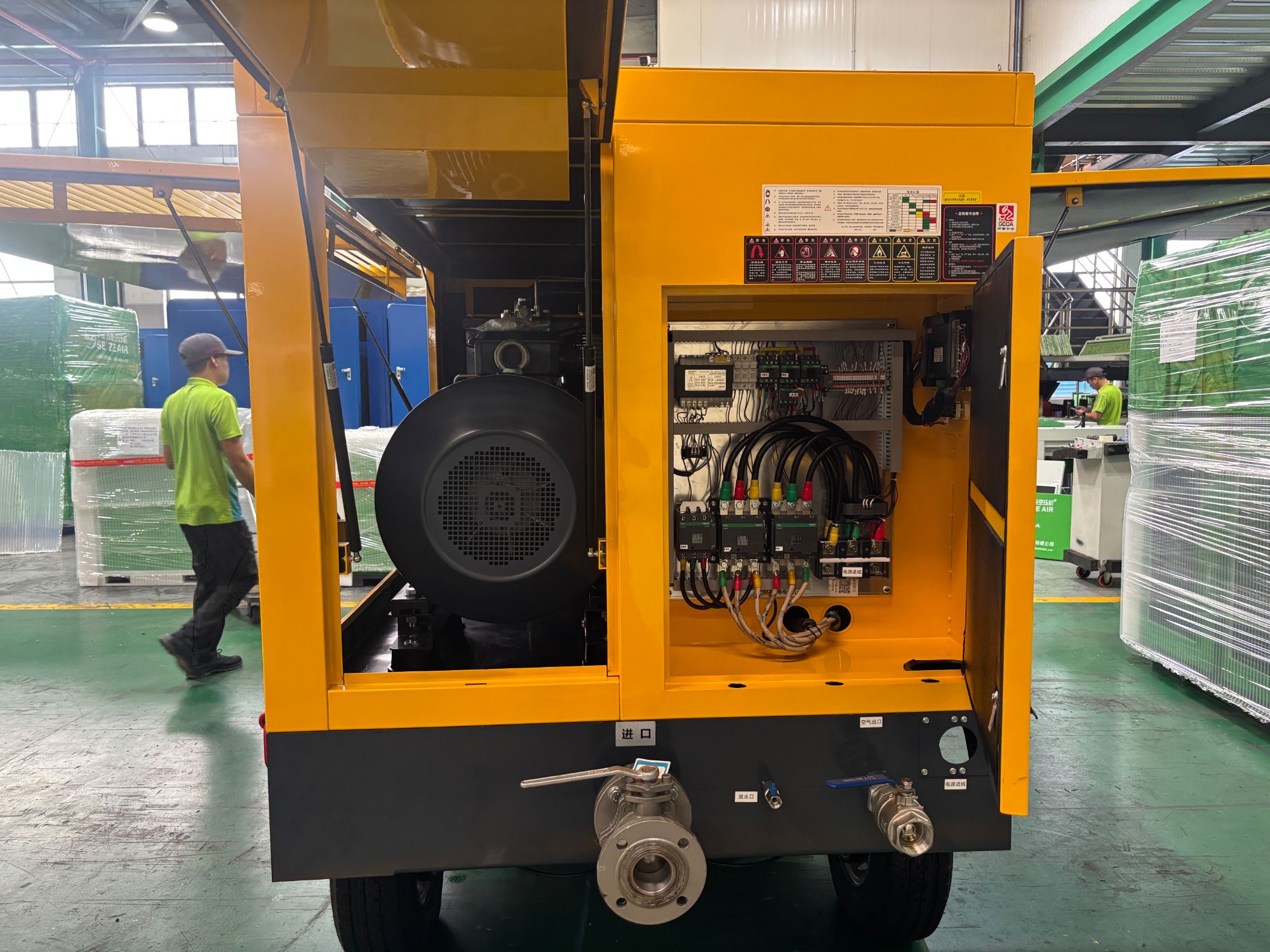
At the heart of thermal stability lies an intelligent orchestration of hardware and firmware that continuously balances performance against heat generation. Modern processors integrate on-die digital thermal sensors that feed real-time temperature maps to a dedicated power management microcontroller. This controller dynamically adjusts clock frequencies and core voltages in nanosecond intervals—a technique often called per-core dynamic voltage and frequency scaling—to cap junction temperatures well before they approach critical thresholds. Coupled with this, advanced node architectures use buried oxide layers and refined gate dielectrics to lower leakage currents, which are a primary source of waste heat during idle or low-activity states.
Beyond the silicon, passive and active cooling elements form a carefully tuned thermal stack. Vapor chambers with sintered copper wicks have largely replaced solid metal heat spreaders in high-density designs, moving heat laterally with exceptional efficiency before passing it to fin arrays. In fan-cooled systems, airflow routing is no longer an afterthought: computational fluid dynamics simulations shape blade geometry and duct curvature to minimize recirculation zones and acoustic noise. At the material level, phase-change thermal interface compounds fill microscopic surface irregularities between the die and the heat sink, reducing contact resistance by more than half compared to traditional greases. Together, these layers create a pathway of steadily decreasing thermal resistance that ensures the core never reaches a point where emergency shutdown becomes necessary.
The Science of Cooling in Extreme Environments
The relentless pursuit of higher performance in industrial systems has turned cooling from a mundane operational detail into a critical frontier of innovation. In environments where standard air or water cooling collapses—think of molten metal processing, deep-space electronics, or high-density data centers—thermal management defines the boundary between breakthrough and failure. Here, the conversation shifts from simply moving heat to fundamentally rethinking the materials and mechanisms that make heat transfer possible at extremes.
One of the most promising shifts is the move away from single-phase coolants toward phase-change materials and nano-engineered surfaces. When a liquid vaporizes, it absorbs enormous amounts of energy without a rise in temperature, a principle now being refined with micro- and nano-structured coatings that dramatically increase nucleation sites. This has given rise to ultra-thin vapor chambers and immersion cooling systems that can handle heat fluxes once thought unmanageable, keeping components safely below critical thresholds even as power densities spike beyond 1 kW per square centimeter.
For the most hostile environments, the answer increasingly lies in solid-state cooling technologies that eliminate fluids altogether. Thermoelectric and caloric materials—which respond to electric fields, magnetic fields, or mechanical stress by pumping heat—are moving out of lab studies and into ruggedized prototypes. These systems offer the allure of no moving parts, no leaks, and the ability to operate in zero gravity or corrosive atmospheres. Pairing them with adaptive control algorithms that predict and respond to thermal transients in real time is not just improving efficiency; it is redefining what it means to keep a machine cool when the surrounding world is anything but.
Material Choices That Withstand 120°F and Beyond
Designing for environments where ambient temperatures regularly top 120°F demands more than just a tolerance check on a datasheet. It’s about recognizing how materials behave when the heat never really lets up. Silicone rubber, for instance, stands out because it doesn’t just survive these temperatures—it keeps its flexibility and electrical insulation properties well past 400°F in some formulations. Unlike standard plastics that turn brittle or warp, high-consistency silicone maintains its compressibility, making it ideal for gaskets and seals in engine bays, desert solar arrays, and industrial ovens.
Metals tell a more nuanced story. Aluminum dissipates heat quickly, which prevents hot spots, but it expands noticeably, so joints need room to breathe. Stainless steel, on the other hand, shrugs off oxidation even when it’s glowing faintly in direct sun, yet its lower thermal conductivity means you might need to actively manage cooling paths. For structural elements, nickel-based alloys like Inconel earn their reputation in jet engines and exhaust systems because they retain tensile strength when lesser metals would already be sagging under their own weight.
Ceramics and advanced composites enter the picture when weight and thermal shock resistance matter as much as raw heat tolerance. Machinable glass-ceramics can take repeated cycling from a midday bake to a sudden nighttime chill without cracking, making them dependable for stove windows and furnace sight glasses. Meanwhile, polyimide-based composites—often used in aerospace—bridge the gap between high-temperature capability and design flexibility, offering the stiffness of metal with a fraction of the mass, all while shrugging off the kind of sustained heat that sends standard polymers back to the petrochemical soup they came from.
Real-World Performance: Mining and Desert Operations
Plumes of dust, relentless heat, and vibration that never quits—mining and desert operations don’t test machinery so much as they try to break it. Paper specifications rarely survive a shift in a pit where air filters clog in hours and coolant runs near its boiling point by midday. What matters is how fast a cooling system sheds heat when ambient temperatures hover above 50°C and whether sealed bearings actually keep out grit that feels finer than talc.
In places like the Pilbara or the Atacama, downtime isn’t just inconvenient—it cascades. A hydraulic line weeping on a haul truck isn’t a small leak; it’s half a circuit idling while a crew swelters inside a cab waiting for a field repair. Equipment that lasts here often relies on overbuilt filtration, smart derating that kicks in before heat soak becomes destructive, and harness branches routed well away from the constant sandblasting near wheel arches.
Fuel economy figures collected in a test cell also tell a different story once an engine breathes unfiltered desert air for three thousand hours. Subtle degradation of turbocharger seals and injector tips shows up first as slightly higher exhaust temps, then as a creeping loss of boost pressure weeks before diagnostics raise a flag. Teams who log these gradual shifts—and have the spare parts reasoning to act on them early—keep their machines running when others are parked waiting for a major overhaul.
Maintenance Habits for Sustained High-Temperature Reliability
Keeping equipment cool under relentless heat often boils down to the simple, daily rituals that engineers adopt over time. Instead of waiting for an alarm, experienced techs get into the habit of visually scanning thermal insulation for cracks or discoloration at the start of every shift. They’ll run a hand near motor housings to feel for unexpected hot spots, or listen for the faint sizzle of overheated lubricant—signals that a dust-clogged filter is silently driving internal temperatures up. These small, consistent checks catch deviations before they cascade into component failure.
Lubrication routines in high-temperature settings can’t follow a generic calendar. Synthetic oils rated for extreme heat break down more slowly, but they still oxidize and leave behind varnish if not refreshed proactively. Smart maintenance teams will couple oil analysis with scheduled partial drain-and-fills, treating it less as a chore and more as a fluid transfusion that keeps bearings alive. The same mindset applies to electrical connections: a quick torque-check on terminals during planned downtime prevents the micro-arcing that heat expansion can trigger, avoiding intermittent shutdowns.
The most reliable plants turn temperature monitoring into a passive reflex. They mount non-contact infrared sensors at critical points and make scanning the readings as routine as checking a rear-view mirror while driving. A sudden five-degree drift on a gearbox output shaft prompts an immediate inspection, not a ticket in next month’s work order. Over time, these habits build a collective sensitivity to thermal behavior, allowing crews to distinguish between a normal warm-up curve and the early whisper of an insulation breakdown.
FAQ
It all comes down to robust engineering. You need an oversized cooling system, high-temperature-rated components like special hoses and seals, and a derated engine that doesn't choke when ambient temperatures soar past 120°F. The best ones also have smart thermal management that modulates fan speed based on real-time demand, not just a simple on/off switch.
Heat is the enemy of oil and filters, so you'll be checking and changing them more often—sometimes at half the standard interval. A quality high-temp diesel compressor will use synthetic lubricants with a higher flash point, but you still need to watch for accelerated oxidation. Air filters also clog faster due to dust, so daily visual checks become non-negotiable.
When you're miles from the nearest power line and the sun is relentless, diesel is your only real, self-contained power. No cable losses, no voltage drops from the heat. You fill the tank and it runs. Modern high-temp diesels have better fuel efficiency under load even when intakes are sucking in hot air, which is something electric motors can't match without massive generators.
Look for two-stage cooling with a massive radiator and separate intercooler, not just a tiny oil cooler. Ducted fan shrouds that force air through every fin, not just blow it around. Some serious units even have a remote-mounted hydraulic fan that can reverse to blow out dust from the radiator without shutting down, which is a game-changer on a dusty site.
That combination is brutal because it reduces air density and makes moisture separation harder. Premium units deal with it by using a large aftercooler to knock down the discharge temperature below the dew point, then a high-efficiency moisture separator. You also need an automatic tank drain that opens frequently, otherwise your air tools will be spitting water all day.
Check the max ambient rating, and not just the number—demand to know the test standard. You want one rated for continuous duty at 125°F (52°C) using ISO 1217 or similar, not a quick spike test. The compressor's control panel should have a temperature gauge and ideally an automatic derate or shutdown that protects the engine before it melts. Real hot-weather machines have parts like silicone radiator hoses and urethane seal kits as standard, not as 'optional upgrades'.
Conclusion
Heat is the ultimate test because oil can thin into a useless film and thermal growth can seize rotors. The compressors that survive mine and desert sites have moved beyond oversized radiators. They use staged intercooling and smart thermal bypass valves that keep fluid viscosity stable without overcooling during short cycles. The real science hides in airflow dynamics—high-efficiency centrifugal fans pulling air through specially louvered fin stacks, not just brute fan power. Materials are chosen for hot-soak survival: cylinder heads carry high-silicon aluminum, seals are fluoroelastomer, and critical fasteners are Inconel. Without these layered choices, a machine derates before the midday heat crests, wiping out hours of productive air.
On a Pilbara iron ore bench or a Sahara wellsite, those choices translate into duty cycles that don't quit. The compressor doesn't just start; it holds rated pressure at 4 p.m. heat soak. Sustaining that takes a maintenance rhythm many crews miss. It's not about greasing more often—it's about logging discharge air temps daily, cleaning cooler fins with compressed air (not a hose that bakes mud onto cores), and sampling lube oil every 250 hours to catch the first sign of oxidation. Treat the cooler as a breathing organ, and the machine returns the favor when ambient hits triple digits. This relationship between smart hardware and gritty routine is what separates a site asset from a parked liability.
Contact Us
Contact Person: Mia
Email: [email protected]
Tel/WhatsApp: +86 19821985894
Website: https://www.seize-air.com