

Solar Panel Clamp Manufacturers from China: Top 10 Worth Knowing
2026-09-29
A solar array is only as strong as its weakest clamp—so choosing the right manufacturer matters more than most project planners realize. China's solar hardware industry is crowded, but a handful of clamp makers consistently deliver the precision and durability that installers rely on. Below, we break down the top 10, including Egret Solar, a name that keeps showing up on shortlists for good reason.
The Real Reason China Dominates Solar Clamp Production
Walk through any mid-size solar clamp factory in Zhejiang or Jiangsu and you will see the real answer sitting on the loading dock: a dense web of suppliers that most countries cannot match. The aluminum extrusion profiles, stainless steel bolts, EPDM rubber pads, and anodizing baths all come from vendors within a two-hour drive. This geographic clustering removes freight delays and lets engineers walk into a stamping shop with a revised drawing and walk out with sample parts the same afternoon. It is not just low wages; it is the ability to iterate on tooling and tolerances without waiting for international couriers or clearing customs.
The scale of domestic demand also plays a role that outsiders often overlook. China installs more solar capacity in a single quarter than many nations do in a decade, which means clamp makers are not dependent on sporadic export orders. They run production lines around the clock for local utility-scale projects, then use that volume to drive down unit costs for everyone else. A factory that stamps 200,000 clamps a month can afford laser cutters, robotic welding cells, and in-house salt-spray testing chambers, while a smaller competitor in Europe or North America struggles to justify the same capital expense.
Perhaps the least discussed advantage is the engineering response time. Most Chinese clamp suppliers keep their own mold shops and design teams on site, so when a developer in Australia needs a clamp for an unusual rail profile or a higher wind load zone, the revision happens in days, not months. They also work closely with certification bodies, submitting samples for UL 2703 or IEC 62817 before the customer even asks. That combination of fast tooling changes, aggressive testing, and a willingness to take on small-batch custom work creates a moat that low-cost labor alone cannot explain.
Spotting a Factory Worth Your Time Before You Order
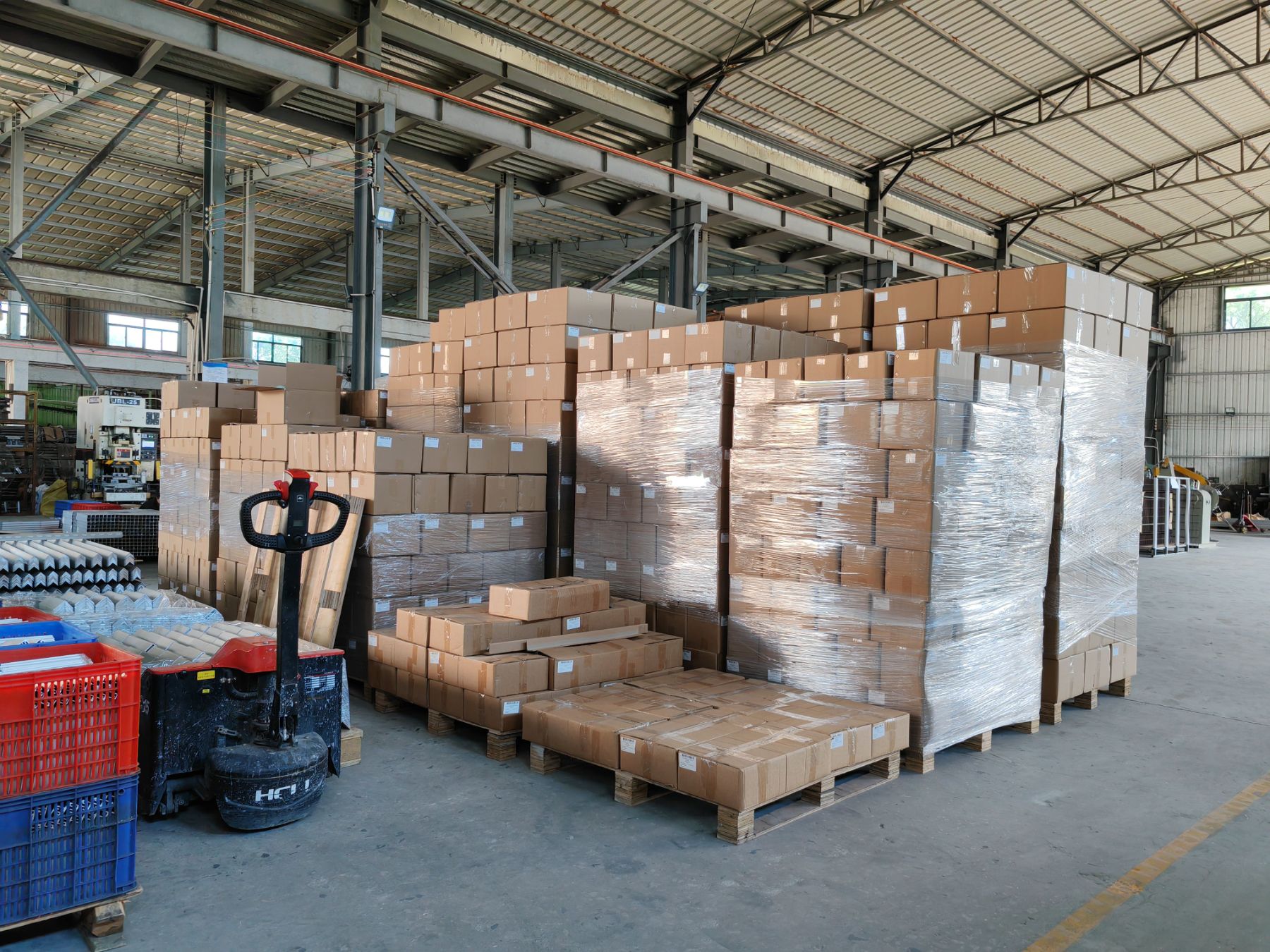
A factory worth your time will respond to your initial inquiry with specific questions about end use, order volume, and target market, rather than sending a generic catalog. This habit of clarifying details before quoting usually signals a firm grasp of production constraints and a lower chance of costly miscommunication later.
Ask for live video from the production floor instead of polished brochures. A factory that is comfortable showing running lines, inspection stations, and packing areas—and even admits the limits of certain processes—tells you more than any certificate. Brief video calls where you can see raw material storage and finished goods inventory are strong signs of a transparent operation.
Pay attention to how they handle the pre-order sample stage. A worthwhile partner will bring up inspection standards, packaging methods, and realistic shipping dates on their own. If they dodge questions about tolerances or offer unusually loose payment terms just to close the deal, treat that as a warning. Factories that put critical details on the table before you commit are the ones that will still answer your messages after the deposit clears.
Beyond Aluminum: Materials That Hold Up in the Field
While aluminum has long been the default for lightweight field equipment, its limitations show up quickly in rocky, high-abrasion environments. Scratches, dents, and galvanic corrosion near salt water or dissimilar metals force frequent replacements. Titanium and certain magnesium alloys step in here—both offer similar or better strength-to-weight ratios but handle repeated impacts and chemical exposure with far less degradation. Titanium, in particular, shrugs off salt spray and acidic soil that would pit aluminum within a season.
Carbon fiber composites and fiberglass-reinforced polymers fill a different niche. They don't dent like metal; instead, they flex and return to shape under loads that would permanently deform aluminum tubing. The trade-off is careful layup and resin selection: a field-ready composite needs UV stabilizers and a tough outer ply to resist rock strikes. When done right, a carbon fiber trekking pole or drone frame survives falls that would snap an aluminum equivalent.
For applications where cost and brute toughness matter more than shaving grams, high-strength low-alloy (HSLA) steels and even certain engineered plastics like acetal or PEEK make sense. HSLA steel handles extreme cold without becoming brittle, unlike some aluminum grades that lose toughness below freezing. PEEK and acetal resist wear and moisture absorption in moving parts—think buckles, hinges, and latch mechanisms—far longer than aluminum, which galls and seizes under repeated friction.
Custom Clamps Without the Six-Month Wait
Most shops that offer custom clamps treat every order like a special project with a long queue. You send a drawing, wait for a quote, wait for approval, then wait while the job sits behind production runs. That's why six-month lead times have become the norm, but they don't have to be.
We keep common materials and hardware in stock and run custom clamp jobs on dedicated machining cells. The design gets checked within a day, and if there's an issue, you hear from an actual engineer, not a ticketing system. Complex profiles still take longer, but a typical custom clamp ships in weeks, not seasons.
That speed doesn't mean cutting corners. Every clamp is inspected against your print, and we document the critical dimensions before it leaves. You get a fixture-ready part without babysitting the process or chasing updates.
Which Certifications Actually Reduce Your Risk
Most security certifications look impressive on a resume but do little to change how you handle real threats. CompTIA Security+ teaches vocabulary, CEH walks you through outdated attack tools, and a dozen vendor-specific badges prove you can click through a console. If you want a credential that actually shifts your risk profile, start with hands-on, lab-driven programs like OSCP or SANS GPEN. They force you to break into systems, document the path, and defend against similar moves — a far cry from multiple-choice memorization.
Audit-focused certifications hold more weight for risk reduction than most people admit. CISA, for example, trains you to trace a control failure back to a process gap, then recommend a fix that survives an external review. Pair that with ISO 27001 lead implementer training, and you stop treating compliance as paperwork. Instead, you learn to map every control to a real business loss scenario, which cuts down on the “check-the-box” mindset that lets breaches slip through.
One often-overlooked area is cloud security architecture. The AWS Certified Security – Specialty or Google Professional Cloud Security Engineer exams force you to design IAM policies, encrypt data at rest, and monitor for privilege escalation across a multi-account environment. Passing those isn't about memorizing acronyms; you have to solve realistic failure cases under time pressure. That kind of applied judgment lowers your operational risk far more than a generic risk management certificate ever will.
Pricing Traps That Catch First-Time Buyers
A listing price that looks suspiciously low often comes with a catch. Maybe the property needs a new roof, has outdated wiring, or sits in a flood zone that jacks up insurance. First-time buyers see the number and assume they're getting a deal, but the real cost only shows up after the inspection or the first insurance quote. Sellers sometimes set a low asking price to spark a bidding war, and by the time you realize the house needs $40,000 in repairs, you're already emotionally attached.
Then there's the pressure to move fast. Agents or listing platforms might hint at multiple offers or an upcoming deadline, and suddenly you're tempted to raise your bid beyond your comfort zone. That urgency is often real, but it can also be manufactured. A first-time buyer who skips the comparative market analysis or waives the inspection to beat another offer is walking into a trap where the "winning" price isn't based on the home's actual value.
Beyond the sale price, property taxes, HOA dues, utilities, and maintenance rarely get enough attention. A house with a low monthly mortgage might still crush your budget once the heating bill arrives in January or the HOA announces a special assessment. First-time buyers tend to focus on the down payment and closing costs, but the real trap is underestimating what the house costs every single month after the keys are in hand.
FAQ
They combine high-volume production with a deep local supply chain, so lead times stay short and costs remain competitive. Many factories also offer in-house anodizing, stamping, and testing, which reduces reliance on outside vendors and keeps quality checks consistent.
Most offer mid and end clamps for framed panels, plus grounding clamps, rail-less clamps for metal roofs, and tile roof hooks. You can usually request custom extrusions or pre-assembled kits with bolts and nuts included.
Ask for material certifications like AL6005-T5 or SUS304, request a small pre-production sample, and check whether the factory follows ISO 9001. Third-party inspections during loading are also common for export orders.
Yes, several companies in Xiamen and Ningbo build most of their business around exports to Europe, Australia, and the Americas. They often keep updated with IEC and UL-related requirements and provide English documentation and labeling.
Aluminum alloy grade, surface treatment thickness, bolt material, and order volume are the main factors. Anodized finishes cost more than mill finish, and custom colors or pre-assembled components add a few cents per piece.
It depends on the factory's minimum order quantity, but many specialized clamp makers accept custom profiles from 500 to 1,000 kilograms. You may need to pay for a new die, which some suppliers discount or refund after a certain volume.
Consistent communication, transparent production updates, and a willingness to share raw material sourcing details matter just as much as price. A good partner will also suggest design improvements to reduce installation time without being asked.
Conclusion
Chinese solar panel clamp manufacturers hold a dominant global share not because of one single factor, but due to a combination of an extremely concentrated aluminum extrusion supply chain, skilled workers, and rapid mold development. However, first-time buyers are easily fooled by glossy product catalogs. In reality, the most effective way to judge whether a factory is worth your order is to ask for a detailed bill of materials and tolerance drawings during the inquiry stage. If the factory is vague or evasive, move on. Suppliers that are willing to discuss anodizing thickness, salt spray test duration, and fastener grades before sampling tend to be far more reliable.
Material choice directly determines field performance. Standard 6063-T5 aluminum works fine in mild environments, but near the coast or around chemical plants, upgrading to 316 stainless steel or high-corrosion-resistant aluminum alloys is wise—even if each set costs a few cents more, it prevents widespread rusting within five years. On customization, capable factories usually keep hundreds of common profile molds on hand and can extrude samples within a week after drawing confirmation, rather than making you wait months. For certifications, ISO 9001 and TUV/CE are the baseline, but what matters more is whether they have continuously supplied large-scale solar projects. Finally, beware of pricing traps: a quote far below market average almost always hides shortcuts in wall thickness, bolt material, or packaging, and the hidden costs become obvious only after delivery.
Contact Us
Contact Person: Leite
Email: [email protected]
Tel/WhatsApp: (+86)13666072898
Website: https://www.egretsolars.com/