

Solar Portable System Company Buying Guide Without the Confusion
2026-09-22
Choosing a solar portable system company shouldn't feel like decoding a secret language—yet for many, the process is riddled with jargon, hidden specs, and pushy sales pitches. This guide cuts through the noise, giving you a straightforward roadmap to find a system that genuinely fits your lifestyle, budget, and power needs. Along the way, you'll see why SRS stands out as a brand that prioritizes clarity and real-world performance over marketing fluff. Ready to buy with confidence instead of confusion? Let's dive in.
Figure Out Your Daily Watt-Hours Before Falling for Marketing
Marketing materials love to throw big numbers at you—200-watt solar panels, 100-amp-hour batteries, generators that can supposedly run your whole house. But none of that matters if you don't know how many watt-hours you actually burn through in a day. Sit down and list the appliances you truly expect to run at the same time: a fridge, a few lights, phone chargers, maybe a laptop. Give each one its wattage and the hours per day it'll be on, then multiply. Add all those results together, and you get a daily watt-hour figure that becomes the real baseline your system needs to cover.
Once you have that number, the promises in ads start to look transparent. If you calculate you need 1,800 watt-hours a day, then a kit that only produces 900 watt-hours is never going to work for you, no matter how slick the packaging is. On the flip side, if you only need 600 watt-hours, buying a system that churns out 3,000 is just wasting money and roof space. That number lets you shop by actual need instead of getting pulled along by vague labels like "starter kit" or "family essential."
Of course, the real world won't cooperate perfectly with your math. Inverters burn some energy, cloudy days cut solar production, and you shouldn't drain a battery all the way to zero. So add a 20 to 30 percent buffer to your watt-hour figure before shopping, and use that adjusted number to compare products. That way you're not overspending because of slick marketing, and you won't end up with a system that falls flat when you need it most.
Foldable Panels: Nice for Instagram, But Are They Practical?
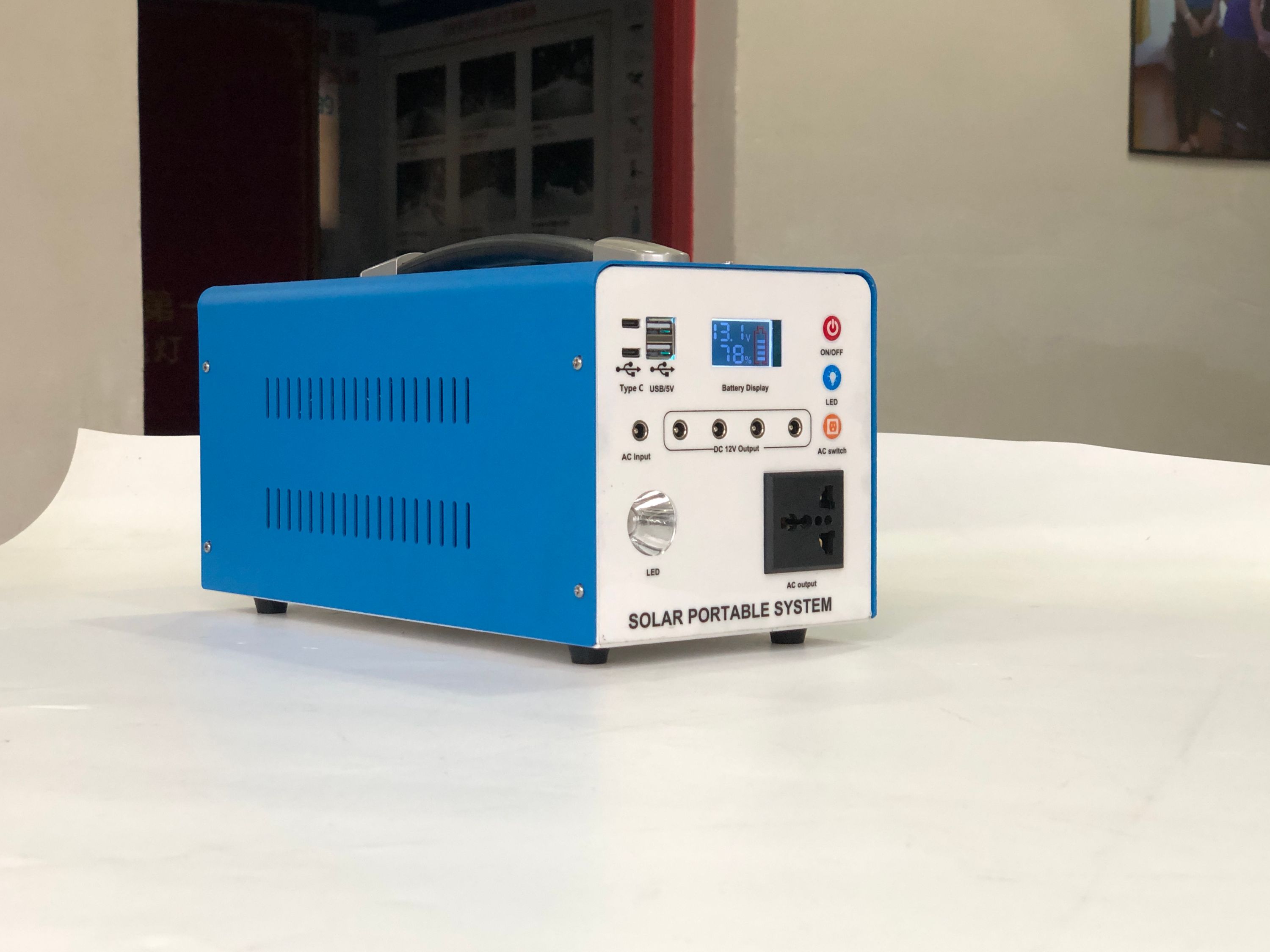
The appeal is obvious the moment you unfold one on a campsite or rooftop. Slim, photogenic, and tidy, they promise energy without the bulky rack or permanent install. But a quick scroll through social media rarely shows the fiddly connectors, the wind lifting a panel mid-charge, or the slow top-up when the sun is low.
In real use, foldables shine for modest loads: phones, power banks, a small fridge for an afternoon. They're easy to stash under a seat or in a trunk pocket. Where they start to wobble is sustained output. The hinges and fabric backing don't love being moved daily, and the thinner cells often run hotter, which shaves efficiency.
So the question isn't whether foldable panels work—they do. It's whether the convenience matches your actual power draw. If you're weekend camping and need a top-up, they're hard to beat. If you're running a fridge, laptops, and lights for days, you'll probably wish you'd bought rigid panels and a proper mount.
The Battery Chemistry That Won't Leave You Stranded
Most batteries fail when you need them most because their chemistry slowly loses the ability to hold a charge under real-world stress. The lithium iron phosphate (LFP) cells used here take a different path, trading a little energy density for inherent stability across thousands of charge cycles. Instead of relying on fragile cobalt-oxide structures, LFP chemistry holds its voltage steady even when the battery sits partially charged for weeks. That means a car left at 40 percent for a month won't greet you with a dead dashboard and a tow truck on speed dial.
The real advantage shows up in temperature extremes. While conventional lithium-ion packs lose significant capacity below freezing or degrade quickly in desert heat, LFP's phosphate-based cathode shrugs off these swings. Cold mornings still reduce range, but the chemistry maintains a predictable baseline rather than plunging unpredictably. Pair that with a battery management system that actively balances cells instead of just monitoring them, and you get a pack that ages gracefully instead of falling off a cliff after year three.
What does this mean behind the wheel? No more anxiety about leaving your EV unplugged overnight in winter or wondering if a fast-charge session quietly damaged the cells. The chemistry is boring by design—no thermal runaway drama, no sudden capacity loss, just the same dependable starting point every morning. It won't win spec-sheet battles for absolute range, but it wins the war that matters: getting you home without a surprise.
Inverters: The Part Buyers Overlook Until It Fails
Most component lists focus on the visible, expensive pieces—the panels, the batteries, the charge controllers. The inverter sits in the corner of the spec sheet, quietly doing its job, and that's exactly why it gets skipped during pre-purchase comparisons. Buyers scan for wattage ratings, assume a pure sine wave model is good enough, and move on. Then, six months down the road, a brownout hits, a cheap capacitor gives out, and suddenly the entire off-grid system is dead in the water while the owner scrambles to source a replacement from a different brand with different mounting holes.
The failure mode isn't always dramatic. Sometimes it's a slow degradation—the output voltage drifts, the cooling fan starts making a ticking noise, or the inverter refuses to start under load on a cold morning. By then, the original purchase decision is long forgotten, and the buyer is stuck with a unit that technically works but can no longer handle the actual surge demand from a fridge compressor or a well pump. That gap between the advertised continuous rating and the real-world peak requirement is where most overlooked inverters finally show their weakness.
A smarter approach is to treat the inverter as a load-bearing wall, not a light fixture. Check the surge rating at the temperature you'll actually operate in, not the lab-tested 25°C. Look for a low standby draw if your system sits idle for hours. And ask what happens when it dies—does the manufacturer stock replacement boards, or do you buy a whole new unit? These questions feel tedious during the purchasing rush, but they're exactly the ones that separate a five-year workhorse from a paperweight waiting for the next grid hiccup.
Real Portability Means Lifting It Yourself, Not Reading the Spec Sheet
Manufacturers love quoting weights that look impressive on a landing page, but those numbers rarely survive contact with reality. A device can tip the scales at a fraction under a kilogram yet feel clumsy in a backpack because the weight sits unevenly or the shape digs into your hip. Picking it up tells you what a spec sheet cannot: whether the heft matches your daily rhythm.
There is a particular honesty in lifting a gadget with one hand and walking across the room. You notice the flex in the chassis, the way a corner presses into your palm, the subtle strain in your wrist after a few minutes. These are the details that transform a portable machine into something you actually want to carry, not a burden you tolerate because the brochure called it lightweight.
Next time a comparison chart boasts about grams and millimeters, put the device in your hand first. Real portability is not a column of data; it is the quiet confidence of slinging it into a bag without a second thought and forgetting it is there until you need it.
How to Test a Company's Support Without Spending a Cent
Fire off a pre-sales question before you even hand over an email address. Ask something specific about a feature limitation or a tricky integration, then watch what happens. Do you get a robotic autoresponder that points you to a knowledge base, or does an actual human reply with a follow-up question? The timing matters too: send that email on a Saturday afternoon and see if anyone bothers to respond before Monday morning. Companies that care about support tend to have someone checking the queue even when the office is quiet.
Most SaaS tools offer a free trial or a limited free plan, and that is your backstage pass. Sign up without entering a credit card, then head straight to the support channels. Open a live chat and ask a question that requires more than a canned answer, like how the product handles a weird edge case in your workflow. Pay attention to whether the agent actually reads your message or just pastes a link to a help article. If they offer to schedule a call or record a quick video walkthrough, that is a strong signal the support team is built for real problems, not just ticket deflection.
Public communities are an underrated testing ground. Browse the company's forum, subreddit, or official social media accounts and look for unanswered questions or dismissive replies from staff. Better yet, drop a polite question about a product limitation and see if anyone from the company owns the answer honestly. A support culture that admits flaws and suggests workarounds in public is usually the same one that will treat you well when you are a paying customer. The whole point is to observe behavior, not to extract a quick yes or no.
FAQ
Look for a company that publishes full technical specs instead of just peak wattage. A trustworthy vendor will tell you the battery chemistry (LiFePO4 is the safer bet), the continuous inverter rating versus surge, and the exact weight of each component. If their product photos hide the ports or they won't share a spec sheet before checkout, walk away. Also check whether they offer replacement parts like extra cables or a standalone charge controller—if those aren't sold separately, long-term support is doubtful.
Check the cycle life rating and whether it's tied to an 80% capacity threshold. A LiFePO4 unit rated for 3,500 cycles to 80% will still be useful after a decade of daily use. Avoid companies that only say 'long-lasting' without numbers. Also ask about the battery management system: it should protect against overcharge, deep discharge, and temperature extremes. If the company can't explain the BMS in plain English, the battery probably won't survive real-world abuse.
People obsess over solar panel wattage and forget about charging speed. A 200W panel paired with a slow charge controller will take forever to refill a battery. Look for maximum input voltage and current on the solar generator—most portable units cap out around 10-30V, which limits how many panels you can chain. Also consider the no-load draw: some inverters burn 20-30 watts just being on, which drains the battery overnight. Ask for the idle consumption figure before buying.
The cheap kit usually cuts corners on three things: battery chemistry (lead-acid or unknown lithium instead of LiFePO4), inverter quality (modified sine wave instead of pure sine wave), and physical durability. A modified sine wave will make some fridges, CPAP machines, and cordless tool chargers hum or fail. The mid-range unit should have a pure sine wave inverter, a metal or reinforced plastic housing, and honest temperature derating specs. You’re not paying for the brand name—you’re paying for the battery not dying after 300 cycles.
Certifications matter only when they’re specific. UL 2743 or CE markings show the unit passed basic safety tests, but many portable solar generators are not UL-listed because the standard is newer. Look for the battery pack to carry UN38.3 certification, which means it’s safe for transport. FCC certification just means it won’t interfere with radios. If a company claims 'certified' without naming the standard or listing a certificate number, treat it as marketing noise.
Expansion depends on the input limits and whether the company sells compatible add-on batteries. Some portable generators let you chain an extra battery pack, but only from the same brand and often only up to a certain capacity. Others use standard MC4 connectors for solar panels, so you can add third-party panels as long as voltage stays within range. Before buying, ask: 'If I want more storage next year, what are my options?' If the answer is 'buy a new unit,' you’re locked in.
A full-size fridge needs around 1.5-2 kWh per day, so you’ll want at least a 2,000Wh battery and 400W of solar panels to stay ahead of clouds. That realistically starts at $1,800-2,500 for a LiFePO4 system from a reliable company. You can go cheaper with lead-acid, but you’ll replace the battery every 2-3 years. Factor in a pure sine wave inverter with at least 1,000W continuous rating—the fridge’s startup surge can trip smaller units.
Any company that claims a 100W panel will fully charge a 1,000Wh battery in 5 hours is lying—that math only works in perfect lab conditions with no inverter loss. Also be wary of kits that bundle a tiny panel with a huge battery and call it 'complete.' Real-world charging is usually 20-30% less than the sticker suggests. Another red flag: no return policy over 30 days or no phone support. If they won’t stand behind the product after you unbox it, the specs are probably exaggerated.
Conclusion
Skip the glossy spec sheets and start with your actual daily energy consumption. List every device you plan to run—phone, laptop, fridge, CPAP—then multiply watts by hours used. Add a 20% buffer for cloudy days and inverter losses. That number dictates panel size and battery capacity, not the other way around. Foldable panels look great in a photo, but they often lose efficiency after repeated flexing and delaminate within a year. Rigid tempered-glass panels cost less per watt and survive hail. For the battery, insist on LiFePO4 chemistry. It cycles thousands of times, won't overheat, and holds voltage steady. Generic lithium-ion or lead-acid might be cheaper upfront, but you'll replace them after a season or two.
Inverters are the part buyers overlook until they fail. A modified sine wave inverter can make a fridge hum loudly, damage a laptop charger, or shut down a CPAP. Always choose pure sine wave with a surge rating at least double your largest starting load. Real portability means one adult can lift the unit with one hand and carry it over uneven ground without straining. If the spec sheet says 45 pounds but the shape is awkward and the handle digs in, it is not portable—it's a stationary box you occasionally move. Finally, test the company's support before spending a cent. Call or email with a specific technical question about battery expansion or inverter grounding. If they take three days to respond, dodge the question, or immediately push a more expensive kit, walk away. A company that cannot explain its own product will not help you during a storm or a warranty claim. Ignore the marketing fluff and focus on these measurable basics: watt-hours, panel construction, battery chemistry, inverter type, lifting weight, and support responsiveness. That is the entire buying guide without the confusion.
Contact Us
Contact Person: kitty
Email: [email protected]
Tel/WhatsApp: +8618676039824
Website: https://www.srssolargroup.com/