

Stand Up Pouch With Valve Company Leads Flexible Packaging Innovation
2026-08-14
The flexible packaging industry rarely stands still, but every so often a company pushes boundaries that matter. Kody has done exactly that with its valve-equipped stand-up pouches—a design that solves real-world freshness and convenience issues while cutting waste. Yet this innovation is just the tip of the iceberg. Dive in to see how Kody is redefining what a pouch can do.
How a Valve Redefines Shelf Life for Sensitive Products
Ask any packaging engineer about the biggest threat to sensitive products, and they'll likely point to the invisible exchange of gases and moisture that happens every time a container is opened or sealed. Traditional closures either trap unwanted air inside or let outside contaminants creep in, forcing brands to rely on bulky desiccants or oxygen absorbers that often fail midway through the product's life. A well-designed valve flips that logic entirely: instead of fighting the environment, it actively manages it. By allowing excess gas to escape while blocking moisture and oxygen from entering, the valve keeps the internal atmosphere closer to ideal conditions for far longer than conventional packaging ever could.
The real difference shows up in how the product behaves weeks or months down the line. A one-way valve doesn't just delay spoilage; it shifts the entire degradation curve. Powders stay free-flowing instead of clumping from humidity, oils retain their aroma and potency without oxidizing, and active ingredients remain stable even after repeated openings. Because the valve responds to pressure differentials rather than a fixed schedule, it adapts to real-world usage patterns—whether the container sits on a shelf in a humid bathroom or gets tossed into a gym bag. That adaptive performance is what separates a valve from a simple vent or a desiccant packet: it works continuously without being consumed, exhausted, or needing replacement.
Perhaps most telling is how this changes the conversation between manufacturers and consumers. Instead of printing a conservative "use within 30 days of opening" warning, brands can promise a shelf life that holds up under actual conditions. The valve becomes the silent enabler of a longer, safer product window—one that doesn't rely on guesswork or overcompensation. For sensitive formulations where every percentage point of degradation matters, that margin isn't just a convenience. It's the difference between a product that barely survives its claimed shelf life and one that genuinely exceeds expectations.
Material Science That Keeps Pouches Standing Tall
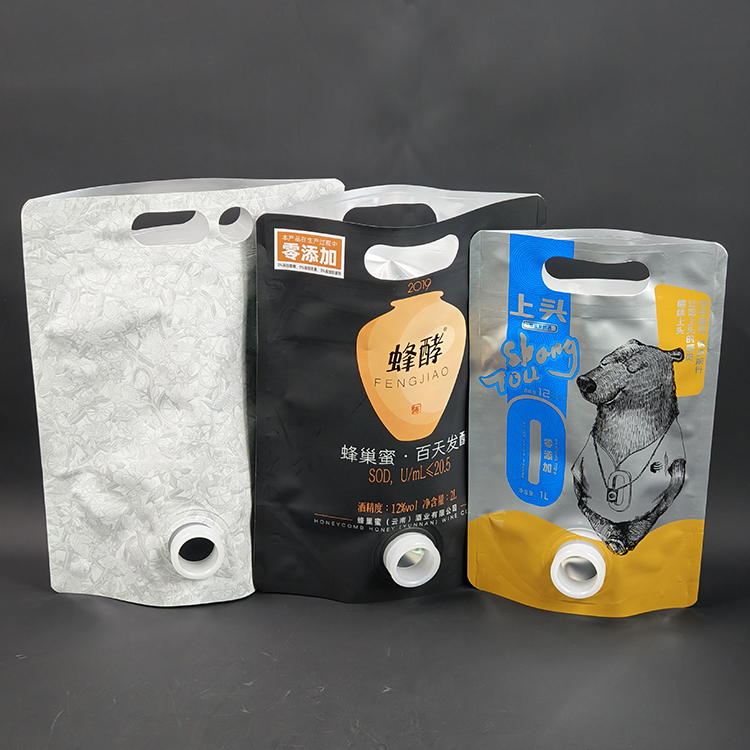
The ability of a stand-up pouch to remain upright on a shelf comes down to a careful balance of film stiffness, seal geometry, and gusset design. Rather than relying on a single thick layer, manufacturers often combine a stiff outer film—such as oriented polyester or biaxially oriented polypropylene—with a sealant layer that offers enough elasticity to absorb shocks without cracking. This laminate structure lets the pouch hold its shape even when partially empty, because the outer layers resist bending while the inner layers prevent sudden creasing at the bottom folds.
One often-overlooked factor is the bottom gusset's memory. A well-designed gusset uses a material that has been heat-set or annealed to retain a sharp fold line, so the pouch opens into a stable footprint instead of collapsing inward. Adding a subtle embossed pattern along the fold lines can further increase rigidity by creating micro-ribs that act like corrugation, distributing weight more evenly across the base. This approach lets brands use thinner overall films without sacrificing shelf presence, reducing material costs and waste.
Finally, the seal itself plays a structural role. A wider, flat bottom seal with rounded corners prevents stress concentration at the edges, which is where most standing pouches fail. By pairing a high-melt-temperature outer layer with a lower-melt sealant, converters can create a seal that is both strong and flexible, allowing the pouch to flex slightly under load rather than tearing. The result is a pouch that stands tall through shipping, handling, and repeated use—without needing an external support or rigid insert.
Custom Runs Without the Custom Wait
Most custom manufacturing projects force you to choose between getting exactly what you want and getting it quickly. The usual story goes like this: you submit your specifications, wait weeks for a quote, then wait even longer while your order sits in a queue behind dozens of others. By the time the finished parts arrive, your production timeline has already slipped, and you have paid a premium for the privilege of being patient.
That old trade-off no longer applies. Modern on-demand fabrication combines automated quoting, intelligent scheduling, and distributed production capacity to turn custom orders around in days rather than months. Your exact tolerances, materials, and finishes are still honored, but the system routes each job to the next available machine that meets the spec. There is no hand-wringing about capacity, no back-and-forth email chains, and no built-in delay disguised as “quality control.”
The result is a different kind of custom experience. You send the files, approve the instant quote, and the parts go into production the same day. For small and mid-sized teams, this means prototype iterations happen in a single week, short-run replacements arrive before the line goes down, and custom tooling stops being the bottleneck in every project plan. The wait was never the point of custom work—it was just the old way of doing things.
From Coffee to Chemicals: One Pouch, Many Jobs
The same sturdy pouch that keeps your morning coffee beans fresh can be found holding industrial adhesives, powdered detergents, or even agricultural seed treatments. What makes this format so versatile isn’t just the material—it’s the quiet engineering behind spout placement, valve seals, and barrier layers that shift to match the product inside. A pouch built for hot fill liquids gets a different film structure than one meant for fine chemical powders, yet both rely on the same core principle: protect the contents, simplify the pour, and disappear into the background until needed.
Look closer at any busy loading dock or retail shelf, and you’ll spot the pouch doing jobs no rigid container can manage as gracefully. It collapses flat when empty, trims shipping weight, and handles everything from viscous resins to oxygen-sensitive food additives. That flexibility is why one pouch design can migrate from a barista’s counter to a laboratory bench without missing a beat—it’s less about the container itself and more about how well it can be tailored to the job at hand.
Sustainability That Doesn't Sacrifice Barrier Performance
The usual trade-off in packaging development has long been that lighter, recyclable films lose the oxygen and moisture protection that keeps food fresh. Our latest barrier coating flips that assumption. It's applied as a thin water-based layer on mono-material polyethylene or polypropylene, yet it still hits oxygen transmission rates below 1 cc/m²/day and moisture vapor transmission under 2 g/m²/day. These numbers matter when you are trying to move from a multi-layer laminate with foil or PVDC to something that can actually be recycled in existing streams.
What makes this approach different is that the barrier isn't a separate film or an added liner. The coating crosslinks during drying, creating a dense but flexible network that hugs the base film without cracking on crease lines or during pouch forming. We have tested it on stand-up pouches for dry snacks, coffee, and liquid concentrates, and the shelf-life data matches the outgoing non-recyclable structure in most cases. In a few coffee trials, aroma retention actually improved because the thinner overall structure reduces the diffusion path for volatile flavor compounds.
It also simplifies the supply chain. Instead of sourcing specialty EVOH or metallized films from multiple vendors, converters can run a standard polyolefin web through a single coating station at normal line speeds. There is no solvent recovery, no chlorine chemistry, and the coated film remains fully recyclable in polyethylene or polypropylene streams. For brand owners, that means lower packaging weight, fewer materials to audit, and a sustainability story backed by shelf-life data rather than a generic promise.
Inside the Testing Lab Where Pouches Earn Their Place
Walk into the lab and the first thing you notice is the quiet hum of machines cycling through pressure, drop, and seal tests. No flashy signage, just rows of pouches lined up like candidates waiting for a job interview. Each one has to prove it can survive a fall from a shelf, a squeeze in transit, and the slow creep of humidity before it ever gets near a store display.
The real work happens in the environmental chamber where temperature swings from freezing to tropical in the span of an afternoon. A pouch that leaks after two cycles gets pulled and sent back to the design team with a note taped to its corner. It is not personal; it is just the price of admission.
There is a shelf near the back where the survivors sit, scuffed but intact. Those are the ones that make the cut. No ribbon or plaque, just a quiet nod from the lab tech who logs the final results and moves on to the next batch.
FAQ
They allow built-up pressure to escape without letting oxygen or moisture in, which keeps contents like roasted coffee or fermented goods fresh and prevents the pouch from ballooning.
Instead of treating the valve as an afterthought, they integrate it into the pouch structure during the film lamination stage, resulting in a smoother surface, fewer weak points, and more reliable one-way degassing.
Coffee roasters, pet food producers, and manufacturers of powdered nutritional products gain a lot because these goods often need to release gases after packaging while staying protected from external air.
Yes, the valve is bonded using a specialized sealing technique that maintains integrity even with dense or granular fills, so the pouch remains upright and the closure area doesn't fail under stress.
They focus on mono-material polyethylene structures and offer valve components that are compatible with existing recycling streams, reducing the need to separate layers before disposal.
High-resolution rotogravure and digital printing allow for precise color matching and matte or gloss finishes, letting brands use bold graphics and transparent windows without sacrificing barrier properties.
Every batch undergoes leak tests on the valve seal, drop tests for structure durability, and oxygen transmission rate measurements to confirm the packaging meets shelf-life targets.
They provide low minimum order quantities for trial runs and can supply pre-made samples with different valve types, so brands can evaluate performance before committing to large volumes.
Conclusion
The rise of stand-up pouches with integrated degassing valves has quietly reshaped how sensitive products reach consumers. A one-way valve lets coffee, fermented goods, and even select chemicals release built-up gas without letting oxygen back in, extending shelf life far beyond what a standard sealed pouch could manage. Supporting that performance is a deliberate blend of film layers and structural design. The pouch needs enough stiffness to stay upright on shelves, yet enough give to survive drops and transport. This company pairs those material choices with a custom-run process that avoids the usual long lead times, treating speed as part of the product rather than an afterthought.
That same pouch moves across categories with little redesign, handling coffee grounds one day and industrial powders the next because the valve and barrier can be tuned to the fill. The sustainability angle is not treated as a trade-off: recyclable and thinner-gauge structures still hold the required oxygen and moisture barrier, so green packaging does not mean weaker protection. Before any design ships, it passes through an in-house testing lab where seals are stressed, valves are cycled, and barrier films are measured under real-world conditions. The result is a flexible format that earns its place through repeatable data, not marketing claims.
Contact Us
Contact Person: Cindy Lee
Email: [email protected]
Tel/WhatsApp: 8613622669331
Website: https://www.dgkody.com