

Substantial Wheat Flour Machinery for Efficient Milling Operations
2026-11-16
Every ton of wheat that passes through your mill carries a simple demand: more flour, less waste, fewer stoppages. Meeting that demand takes more than a bigger motor—it takes machinery designed for the whole flow. That’s the thinking behind PINGLE's substantial wheat flour equipment. Built to handle high volumes without losing precision, it keeps your milling operations efficient from cleaning to packaging. In the sections ahead, we’ll break down the key features that make this possible.
Grain Intake Ramps That Keep Trucks Moving
A well-designed grain intake ramp does more than bridge a height gap—it sets the rhythm for the whole receiving operation. The right slope angle, surface texture, and width let trucks pull in, dump, and pull away without hesitation. Too steep and drivers fight the climb, spilling grain or riding the clutch. Too slick and every rainy morning turns into a lineup of spinning tires. The best ramps use a grooved or embedded aggregate surface that bites into tires while still shedding water fast, so momentum stays constant from the scale to the pit.
Beyond grip, the approach and departure geometry matters more than most operators expect. A short, abrupt ramp forces drivers to brake hard and then accelerate out, which slows the queue and strains transmissions. Adding a flared entry or a slight taper along the edges lets trucks correct their line without stopping. Some facilities also install low-profile side curbs that guide wheels without the jarring impact of a full barrier—enough to prevent a drop-off, but not so high that a misaligned trailer gets hung up. These small adjustments keep the flow steady even when four or five trucks arrive back-to-back.
Finally, the connection between the ramp and the intake pit deserves real thought. A lip that sits even a couple of inches proud of the ramp will bounce every truck that crosses it, loosening tailgates and shaking grain loose before the driver opens the hopper. A smooth, welded transition plate with a slight downward slope into the grate lets the trailer settle naturally, so the driver can dump without repositioning. When the ramp, approach, and pit edge all work as one continuous path, trucks clear the area in minutes instead of idling—and that’s what keeps a harvest running on schedule.
Conditioning Tanks That Steam Without Sogging
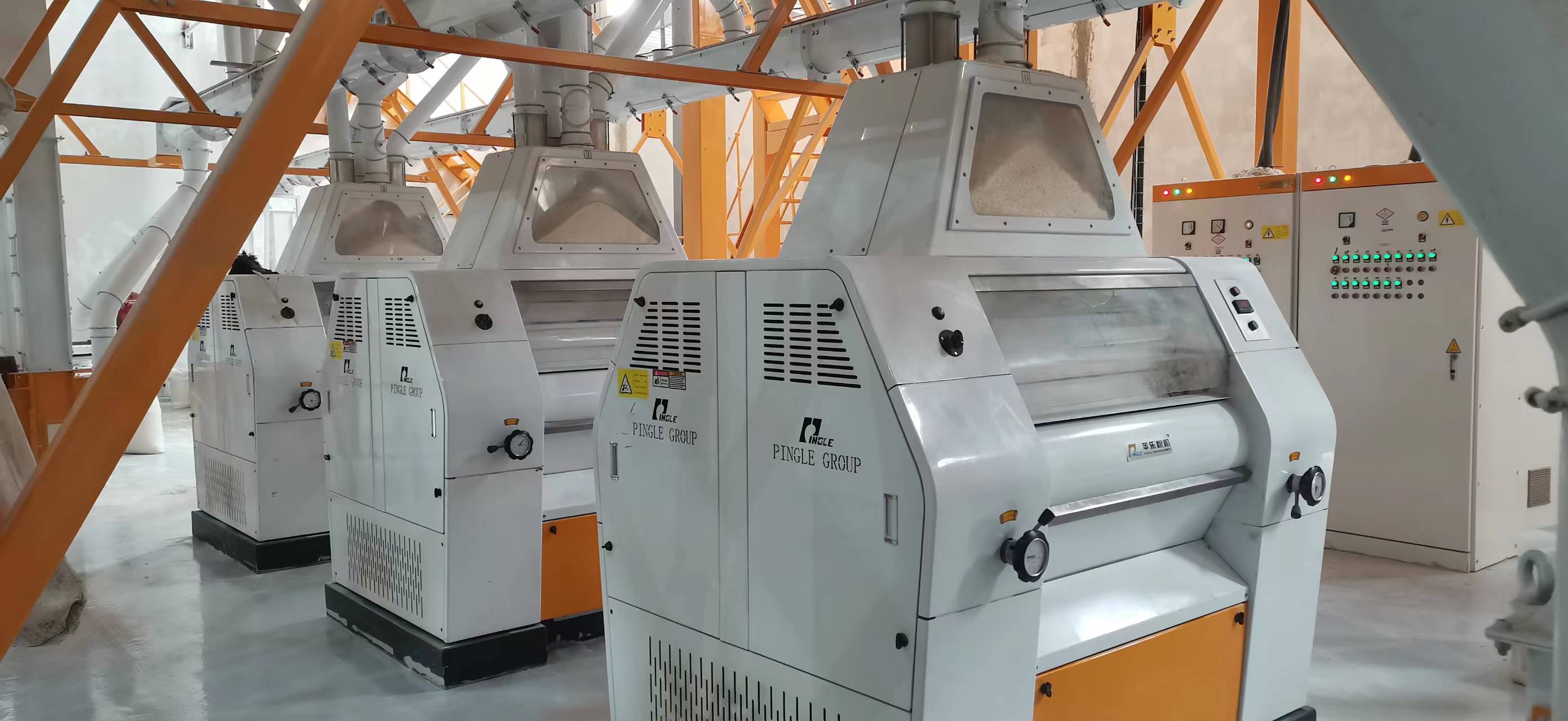
Getting steam into a conditioning tank without turning the contents into a soggy mess comes down to how the vapor is introduced. Instead of flooding the chamber with wet heat, these systems push dry steam through a diffuser that breaks it into fine, even clouds. This keeps the temperature climbing while excess moisture stays out of the material itself.
The real difference is in the separation. A well-built tank lets condensation drain away before it ever touches the load, directing only the vapor phase into the holding area. That way grains, fibers, or other bulk solids warm through and soften without clumping or waterlogging. It is a slower, steadier steam delivery that makes conditioning possible without the usual damp aftermath.
Roller Mills Built to Run Past Midnight
Most roller mills whisper to a stop when the shift ends, their bearings cooling in the quiet dark. Not these. The frames are heavier than they need to be, the roll gaps set with a mechanic's stubbornness, and every grease fitting is reachable without a ladder. They were never designed for showroom floors or spec sheets that end at 5 p.m.
The motors don't surge when the line starts at 11:40 p.m., and the journals stay cool even when the oats come through damp and uncooperative. You learn to trust a machine that doesn't flinch at the third shift, that holds its grind tolerance while the rest of the county sleeps. These mills run because someone built them with the midnight operator in mind—the one who needs consistency when there's no maintenance crew on call.
The proof isn't in the paint or the polish. It's in the wear patterns that settle in after years of running past the witching hour, in the sound of rolls meshing without complaint at 2 a.m., and in the fact that nobody has to babysit the amperage gauge. A mill built to run past midnight doesn't ask for attention—it just keeps turning.
Sifting Decks That Shake Loose Every Last Gram
A proper sifting deck isn't just a screen slapped into a frame. The mesh count, tension, and frame rigidity all decide whether you end up with dusty plant matter or clean, golden resin heads. When every gram matters, the difference shows up in the catch tray after a few passes.
The trick is patience plus movement. Cold material helps the trichome stalks snap instead of smearing, and a gentle back-and-forth glide works better than aggressive shaking. Too much force cracks plant material, contaminating the sift with green specks that drag down purity.
Most people stop too early. A second or third pass over a finer mesh often recovers a surprising amount that the first run missed, especially if you re-chill the material between rounds. That last gram usually hides in the corners and along the frame edges, so a soft brush can finish what the deck started.
Blending Lines That Adjust On the Fly
Static boundaries often feel arbitrary, leaving visual transitions awkward when layouts shift. Adaptive blending lines solve this by responding to surrounding contrast and color density in real time, softening hard edges where two regions meet. Instead of a fixed threshold, the line continuously recalculates its position and opacity based on local pixel variance, so it appears to hug the natural contour of each element rather than cutting across it.
This dynamic behavior is especially useful in responsive interfaces where content reflows unpredictably. A blending line might widen slightly over textured backgrounds, then tighten over smooth gradients, all without manual tuning. The result is a seamless integration that feels less like a border and more like a natural gradient falloff, making adjacent sections coexist without visual friction.
Implementations often rely on lightweight sampling of neighboring luminance values, adjusting the line's feathering radius a few times per frame. Because the math stays simple, the effect remains smooth even on modest hardware, while still delivering that hand-finished look designers usually reserve for static mockups.
Packing Bays That Leave No Flour in the Air
Flour dust is one of those quiet problems that builds up faster than anyone expects. In a conventional packing bay, even careful filling sends a fine cloud into the air, coating floors, equipment, and lungs. The goal here isn't just to reduce that dust, but to stop it at the source before it ever leaves the bagging line.
What makes this setup different is the way the entire path from storage bin to filled bag stays sealed. Flour moves through enclosed conveyors and drops into bags under a slight negative pressure, so any displaced air gets pulled through a filter instead of escaping into the room. The filling spout seals against the bag mouth, and a local extraction hood captures the last puff of flour as the bag is released.
The result is a packing area where you can actually see across the room after a full shift. Workers aren't wiping down surfaces every hour, and the air doesn't taste like flour. It also lowers the risk of dust explosions, which any mill operator knows is worth more than just a clean floor.
FAQ
Machines with reinforced frames, larger roller diameters, and high-capacity sifters usually fit that description. They're built to run long shifts without frequent breakdowns or drops in flour quality.
It keeps material flowing steadily from cleaning to packaging. Well-designed pneumatic systems and balanced roll speeds reduce bottlenecks, so the mill can process more wheat per hour without overloading individual components.
Heavy use wears down rollers, screens, and bearings quickly. Catching small issues early prevents sudden downtime and keeps flour particle size consistent, which directly affects product quality and customer trust.
Automation monitors moisture, feed rates, and roll gaps in real time. That lets the mill adjust instantly to changes in wheat hardness or humidity, giving you a stable product even when raw material varies.
Yes, because upfront durability lowers repair frequency and energy consumption per ton of flour. You also avoid the hidden expense of frequent part replacements and lost production hours.
Look at the mill's extraction rate, ease of roll replacement, sanitation design, and whether the control system gives clear diagnostics. A machine that's hard to clean or adjust will slow down every shift.
The key is keeping temperatures stable and monitoring ash content at multiple points. Machines with effective cooling and precision gap settings help the flour stay within spec even during peak demand.
Often, yes. Adding better sifters, upgrading the control panel, or installing a more efficient pneumatic system can boost output and yield without the cost of a full rebuild.
Conclusion
A flour mill that keeps grain moving without bottlenecks starts at the intake. Trucks pull onto wide ramps designed for fast discharge, so the receiving pit rarely backs up even during harvest peaks. Conditioning tanks then add moisture in a controlled stream, using steam that penetrates the wheat kernel without turning the bed into a sticky mess. The result is a tempered grain that rolls cleanly. Downstream, roller mills with reinforced journals and oversized bearings are built for continuous night runs. Their roll gaps stay true hour after hour, giving a steady particle size distribution without constant operator fiddling.
Sifting decks use tuned eccentric drives to shake fines through the mesh while keeping the tailings moving—nothing worth milling is left behind. Blending lines come next, with variable-speed feeders that let millers change protein or ash targets mid-shift without stopping the line. Finally, packing bays enclose spouts and use low-velocity air curtains, so flour drops into bags instead of drifting into the room. The payoff is a mill that runs longer between cleanups, loses less product to dust, and ships bags that weigh exactly what the label says.
Contact Us
Contact Person: Jiakuo Wu
Email: [email protected]
Tel/WhatsApp: +86-13011566087
Website: https://www.pinglemachine.com