

Top 10 Shipbuilding Steel Plate Companies Leading the Maritime Industry
2026-05-19
The maritime industry sails on the strength of its steel—quite literally. Behind every colossal vessel, from icebreakers to LNG carriers, lies a backbone of shipbuilding steel plates engineered to withstand relentless saltwater, pressure, and extreme temperatures. But who are the masterminds forging these maritime marvels? In this blog, we spotlight the top 10 shipbuilding steel plate companies driving the sector forward. Among them, Sanhe Steel has been quietly redefining durability standards with its advanced high-strength plates, often used in hulls that brave the roughest seas. Dive in to discover the innovators making global shipping stronger, safer, and more efficient.
Setting the Standard: How These Steel Giants Shape Modern Shipbuilding
The hum of welding torches and the clang of steel plates form the backdrop of an industry where scale meets precision. In modern shipbuilding, a handful of colossal steel producers have quietly become the backbone of maritime innovation. Their advanced high-strength alloys and corrosion-resistant grades allow naval architects to push boundaries—building vessels that are lighter, faster, and more fuel-efficient without compromising structural integrity. From the deep-freeze holds of Arctic-ready tankers to the soaring hulls of next-generation cruise ships, these materials set the physical limits of what can be imagined at sea.
Beyond supplying raw sheets and beams, these steel giants are deeply embedded in the design cycle. They collaborate with shipyards during early engineering phases, helping to refine welding procedures, reduce distortion, and optimize plate rolling for complex compound curves. This partnership has accelerated construction timelines and slashed waste—a crucial factor when a single container ship demands over 40,000 tons of steel. By tailoring micro-alloy compositions to the specific stresses of a vessel’s operational life, they turn a millennia-old material into a bespoke engineering solution.
The ripple effects extend far beyond the shipyards. As environmental regulations tighten, these producers drive the shift toward sustainable practices, introducing steel made with drastically lower carbon footprints. Their investments in hydrogen-based direct reduction and electric arc furnace recycling are rewriting the rulebook on how the maritime sector builds responsibly. In an era where a ship’s lifetime emissions are increasingly determined on land, these steelmakers do more than cut and coat—they define the future of ocean-bound commerce itself.
Innovations in Steel Plate Manufacturing for Next-Gen Vessels
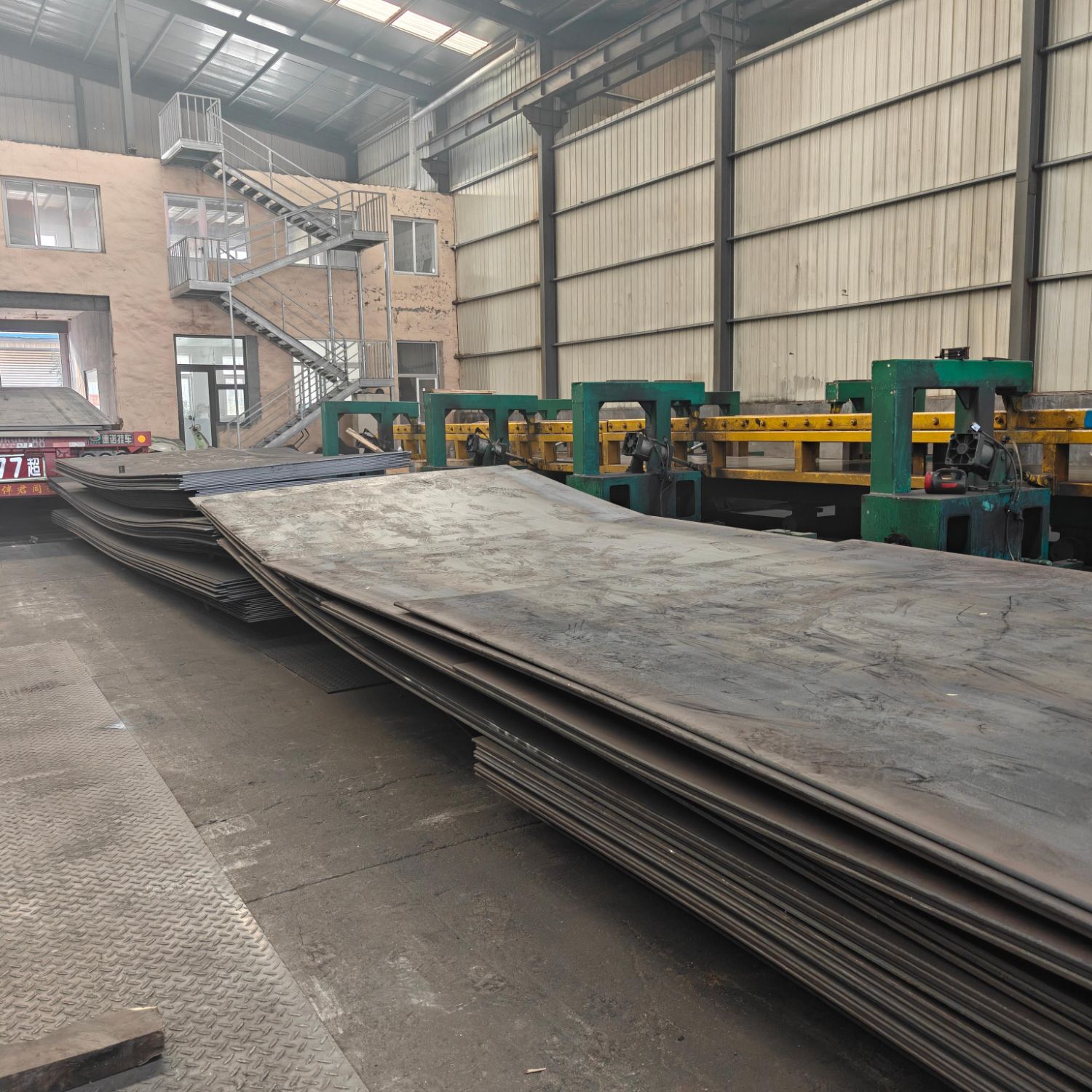
Modern shipbuilding is witnessing a quiet revolution in the way steel plates are produced, with methods that push far beyond traditional rolling and heat treatment. One of the most striking advances involves the integration of real-time grain refinement during casting, where tightly controlled cooling pathways create a microstructure that is both tougher and more formable. This isn't just about incremental improvements in tensile strength—it's about eliminating the trade-offs that used to force designers to choose between weldability and durability. The result is a new class of plates that can be shaped into complex hull geometries without sacrificing the fatigue life demanded by next-generation vessels operating in extreme environments.
Another shift is the move toward tailored property distributions within a single plate, made possible by differential thermo-mechanical processing. Instead of uniform properties, sections that will face higher stress—such as those near the bow or in ice belt zones—are engineered to possess enhanced fracture arrest capabilities, while other areas are optimized for weight and cost. This approach, often paired with hybrid microalloying strategies, allows shipyards to build lighter, more fuel-efficient vessels that still meet strict classification society standards. It's a departure from the one-size-fits-all plate mentality, and it's quietly reshaping the structural design landscape for everything from Arctic LNG carriers to autonomous survey ships.
On the factory floor, the control systems driving these innovations are equally transformative. Advanced electromagnetic acoustic transducers now map internal steel health at a scale that was unthinkable a decade ago, feeding data back into the rolling process with millisecond precision. Combined with digital twins that simulate plate behavior during bending and welding, manufacturers can deliver steel that not only meets specification but anticipates the actual loads and forming sequences it will endure. It's this convergence of metallurgy, data science, and adaptive processing that is genuinely changing what a steel plate can do—and by extension, what ships can become.
From Raw Material to Mega Structures: The Journey of Shipbuilding Steel
The story of shipbuilding steel starts far from the ocean, in the fiery depths of blast furnaces where iron ore meets coke and limestone. Once the ore is reduced to molten pig iron, it's transferred to a furnace where scrap and alloys are added, and the chemistry is fine-tuned—carbon is lowered, manganese and nickel are stirred in—all to create a material that won't crack when Arctic waves hit or buckle under the weight of towering container stacks. This isn't mass-produced commodity steel; each batch is tailored to a specific ship's demands, with properties tested rigorously long before a plate ever touches saltwater.
After the liquid steel is cast into rough slabs, it's rolled under immense pressure, sometimes back and forth dozens of times, until it becomes a plate of exact thickness and grain structure. The rolling itself is a kind of metallurgical education—it teaches the steel how to absorb energy without fracturing, a lesson that later pays off in storms. Every plate then endures ultrasonic scans and notch-toughness trials at subzero temperatures; inspectors look for invisible defects as if scanning for hidden reefs, knowing that a missed flaw could cost lives.
In the shipyard, the steel finally begins its transformation into something recognizable. Automated cutting machines trace cryptic markers on the plates, following digital blueprints that leave barely a millimeter of error. Workers then shape these massive puzzle pieces with hydraulic presses and weld them into block sections, often inside cavernous workshops to shield the process from wind and rain. As the blocks are lifted into the dry dock and stitched together, the hull emerges—a silent, gray leviathan. From here, it will face decades of relentless wave action and salt spray, but the journey from raw mineral to megastructure has already given it the resilience to endure.
Sustainability at Sea: Eco-Friendly Steel Solutions Changing the Industry
The shipping sector has long wrestled with its environmental footprint, and steel—the backbone of every vessel—is now at the center of a quiet revolution. New production methods are slashing carbon emissions by replacing coal with hydrogen in the smelting process, yielding steel that’s just as durable but far cleaner. Shipbuilders adopting these materials aren’t just ticking sustainability boxes; they’re discovering that lighter, high-strength alloys also improve fuel efficiency over a ship’s lifetime, making the business case as compelling as the ecological one.
What often goes unnoticed is the circular potential already built into maritime steel. Unlike composites or coatings that degrade after decades at sea, steel can be recycled infinitely without losing its properties. Forward-thinking yards are designing vessels with disassembly in mind, so when a ship retires, its metal flows directly into new hulls rather than landfills. This closed-loop thinking trims raw material demand and sidesteps the energy-intensive blast furnaces that dominate traditional supply chains.
Beyond the shipyard, ports are beginning to demand cleaner steel in their infrastructure, from cranes to container frames. The ripple effect pressures mills to accelerate green transitions, and classification societies are updating standards to reward emission-lowered builds. What started as a niche preference is hardening into an operational necessity—because in a world watching corporate carbon ledgers, steel that leaves a softer seascape is no longer just an option. It’s becoming the benchmark.
Global Reach: How Top Steel Makers Power International Shipyards
Modern shipbuilding relies on a seamless global supply chain where major steel producers serve as the backbone of maritime construction. From high-strength plates for massive container vessels to specialized alloys for icebreakers, mills in Asia, Europe and the Americas deliver precision-engineered materials that meet exacting class standards. This web of production networks ensures that yards from Ulsan to Rotterdam receive certified steel tailored to specific hull designs, corrosion resistance needs and welding requirements, often with lead times measured in weeks rather than months.
Behind every vessel taking shape in a dry dock lies a sophisticated logistics dance involving just-in-time delivery and material traceability. Top-tier steelmakers have established dedicated maritime service centers near major shipbuilding clusters, offering pre-treatment, cutting and shot-blasting capabilities. Their metallurgists work directly with naval architects to develop grades that push the boundaries of strength-to-weight ratios, enabling lighter ships that carry more cargo while burning less fuel. This co-engineering approach has become critical as the industry transitions toward dual-fuel and alternative propulsion systems.
Investment patterns tell the story of deepening interdependence. Steel giants are commissioning new electric arc furnaces and continuous casters sized specifically for wide ship plate, while shipyards extend long-term purchasing agreements to secure access to cutting-edge TMCP (thermo-mechanically controlled processed) steel. These partnerships prove especially vital for mega-projects like ultra-large ethane carriers and floating production units, where a single hull may consume tens of thousands of tons of steel across dozens of specifications. The result is a dynamic ecosystem where the boundaries between steel mills and shipbuilders blur into a shared technological frontier.
Navigating Tomorrow: The Future of Shipbuilding Steel and Maritime Strength
The maritime industry stands at a crossroads where tradition meets innovation, and nowhere is this more evident than in the materials that form the backbone of our fleets. Shipbuilding steel has long been the silent workhorse of global trade, but the demands of tomorrow require more than just strength—they demand intelligence, sustainability, and resilience that can adapt to an unpredictable world. From the micro-level design of corrosion-resistant alloys to macro-scale shifts toward autonomous vessels, the steel that carries our cargoes and defends our waters is being reimagined. It's not simply about building stronger hulls; it's about creating a new material language for an era where efficiency and environmental stewardship are non-negotiable.
Future maritime strength will hinge on how well we integrate green metallurgy and digital fabrication into shipyards that have changed little in decades. Breakthroughs in high-strength, low-weight steels are already allowing for leaner designs that slash fuel consumption while maintaining structural integrity in punishing seas. At the same time, coatings infused with self-healing properties and embedded sensors are turning passive steel into active participants in a vessel's lifecycle, monitoring fatigue and corrosion in real time. The drive toward full electrification and alternative fuels also places new demands on steel—think cryogenic storage for hydrogen or reinforced battery compartments—pushing metallurgists to rethink not just the composition but the very philosophy of what shipbuilding steel can do.
Yet, technological progress alone cannot navigate the future; the human element and geopolitical currents will steer this evolution. A maritime nation's strength is measured not only in the tonnage of its fleet but in the agility of its supply chains and the foresight of its workforce. As we chart these uncharted waters, the interplay between advanced materials, digital twins, and a skilled workforce will define whether tomorrow's ships are mere vessels or strategic assets that embody resilience. The steel we choose is a statement of intent—a commitment to a maritime future that is safer, cleaner, and molded by the challenges we dare to confront.
FAQ
Nippon Steel, POSCO, and ArcelorMittal consistently appear at the forefront due to their high-strength, corrosion-resistant grades that meet rigorous class society standards. Their extensive R&D pipelines keep them ahead in developing lightweight yet durable plates for everything from mega container ships to LNG carriers.
Beyond just yield strength, accredited mills invest heavily in thermomechanical controlled processing (TMCP) to achieve fine-grain structures with superior weldability. They also offer full traceability from melt to delivery, which is critical for classification certifications and lifecycle maintenance.
East Asia holds a commanding lead, with South Korea, Japan, and China accounting for the majority of global output. Within these countries, dedicated coastal plants reduce logistics costs, and close ties with major shipyards drive co-engineering of custom plate dimensions.
IMO targets push mills to lower carbon footprints via electric arc furnaces and hydrogen-based reduction. At the plate level, designers now request higher strength-to-weight ratios to improve fuel efficiency, prompting suppliers to refine their microalloying techniques.
Icebreakers and Arctic-class ships demand F-grade plates with guaranteed low-temperature toughness, often down to -60°C. Mills like SSAB and Voestalpine supply these with precisely controlled nickel content and rigorous Charpy testing to prevent brittle fracture in icy waters.
Consistency in plate flatness and surface quality reduces welding defects and rework. When a yard builds a series of sister ships, locked-in steel chemistry and processing parameters ensure repeatable structural performance, which is hard to achieve with spot purchases.
Absolutely. Specialist mills in Europe and India carve out niches by focusing on thick plates for offshore platforms or clad materials for chemical tankers. Their agility allows them to tailor small batches with short lead times, which big mills often avoid.
Conclusion
The backbone of modern maritime construction lies in the hands of a select group of shipbuilding steel plate manufacturers, whose relentless pursuit of quality and innovation sets the benchmark for the industry. These top-tier companies don't merely supply material—they engineer the very foundation of mega vessels, from advanced high-strength steels to corrosion-resistant alloys that extend hull longevity. Their influence is felt across every stage of construction, transforming raw iron ore into precisely rolled plates capable of withstanding extreme oceanic stresses.
Beyond sheer physical properties, these steel giants are redefining sustainability at sea. Eco-friendly production methods, including electric arc furnaces and scrap recycling, dramatically reduce carbon footprints. Meanwhile, collaborations with international shipyards fuel a seamless global supply chain, delivering tailored solutions to every corner of the maritime world. Looking ahead, the integration of digital twins, smart materials, and autonomous ship-ready steels promises to keep these companies at the helm of maritime strength, charting a course where innovation and tradition converge to shape the next era of shipbuilding.
Contact Us
Contact Person: Zoey
Email: [email protected]
Tel/WhatsApp: +86 15865577002
Website: https://www.sanhesteels.com