

Top 19-Inch System Integration Cabinet Solutions for Modern Data Centers
2026-07-20
When data centers hum with relentless digital demand, the 19-inch rack cabinet is the silent backbone holding everything together. Yet, not all cabinets are created equal—modern facilities need integration that goes beyond just housing hardware. From thermal management to scalable cable routing, the right solution can make or break operational efficiency. That’s where TPS steps in, offering a curated look at top-tier system integration cabinets that blend robust engineering with future-ready design. Ready to explore what truly sets a data center apart? Let’s dive into the cabinets redefining industry standards.
Rethinking Rack Design for High-Density Environments
The shift toward high-density computing has outpaced the capabilities of conventional rack architectures, leading to thermal bottlenecks and power delivery nightmares that simply weren't part of the original design brief. Racks built for lower wattage per square foot now struggle to cope with concentrated heat loads, while cable management becomes a tangled obstacle course that blocks airflow and complicates hardware swaps. It's no longer enough to just stack more equipment inside the same footprint—the entire approach to rack layout, from structural rigidity to service clearances, needs a fundamental reset.
One of the most impactful changes is the move toward integrated cooling at the rack level, such as rear-door heat exchangers or direct-to-chip liquid cooling loops that remove heat right at the source instead of relying solely on room-level air handlers. This demands racks with built-in plumbing paths, leak detection systems, and reinforced frames to support the extra weight of fluid-filled hardware. Equally important, power distribution is being rethought with bus bars and vertical power rails that eliminate the clutter of hundreds of individual cords, delivering cleaner energy routing and better voltage stability under bursty loads common in AI and analytics clusters.
Future-proofing high-density racks also means embracing modularity that decouples physical housing from the compute layers themselves. Slide-out nodes, hot-swapable power shelves, and sectional frame extensions allow datacenter operators to reconfigure on the fly without tearing down whole rows. The goal is a truly adaptable chassis that supports multiple generations of silicon and cooling methods, turning the rack into an active participant in energy efficiency rather than a passive box that just holds things in place.
Streamlined Cooling Integration in 19-Inch Cabinets
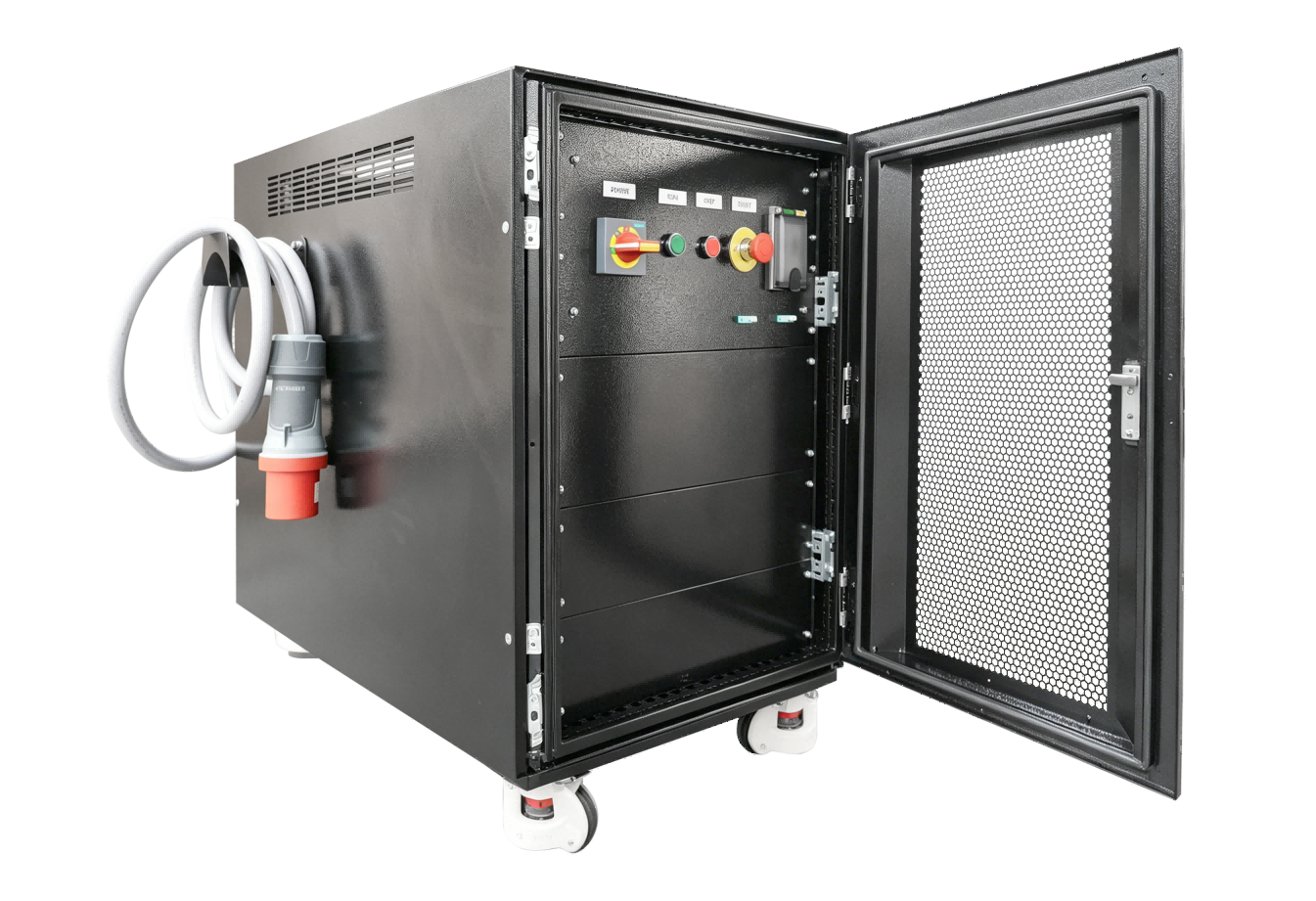
Integrating cooling directly into 19-inch cabinets has shifted from an afterthought to a core design principle. Modern solutions embed airflow pathways and thermal zones within the rack frame itself, channeling chilled air precisely where it’s needed while isolating exhaust heat before it mixes. This approach eliminates traditional hot spots and reduces reliance on raised-floor precision, allowing denser hardware configurations without thermal throttling.
Rather than bolting on external fans, streamlined cooling architectures leverage intelligent sensor networks that map real-time temperature gradients across the cabinet. These systems adjust variable-speed blowers and active venting on the fly, maintaining equilibrium even as workloads spike. The result is a self-regulating environment that trims energy waste—often cutting cooling overhead by a third—while keeping acoustic footprints remarkably low, a welcome change in labs and offices where noise matters.
Physical integration brings another layer of reliability by simplifying airflow paths. Built-in air channels with low-resistance profiles and filtered intakes protect internal components from dust buildup, extending hardware lifespan. Hot air is captured at the source through vertical exhaust ducts and expelled directly into return plenums, bypassing the room entirely. This closed-loop mindset not only stabilizes ambient conditions but also opens the door for heat reuse in building management, turning a thermal liability into a practical asset.
Cable Management that Simplifies Daily Operations
A well-organized workspace starts with how you handle the tangle of cords and cables that accumulate over time. The right approach to cable management eliminates the daily frustration of searching for the right charger or untangling knots before a meeting. By routing cables neatly under desks and along walls, you free up mental energy and create a cleaner, more focused environment. Small changes, like using clips and sleeves, turn chaotic setups into systems that work for you without constant maintenance.
Beyond the visual appeal, thoughtful cable management has a direct impact on workflow efficiency. When every cable is labeled and placed with intention, swapping out devices or troubleshooting becomes a task that takes seconds rather than minutes. This level of organization also reduces wear and tear, as cables aren't accidentally yanked or crushed by chair wheels. Ultimately, the goal is to make the physical infrastructure of your workspace invisible, so you can concentrate on the tasks that matter.
Adopting a flexible system means you're ready for changes—adding a new monitor, a docking station, or a desk lamp—without an overhaul. Modular solutions that tuck away excess length and keep connections accessible let you reconfigure on the fly. It's about building an environment where technology serves you seamlessly, and the daily ritual of managing wires simply disappears from your routine.
Scalable Security Features Without Compromise
Growing businesses often face a tough choice: ramp up security and risk slowing down operations, or scale fast with gaps in protection. That trade-off isn't necessary anymore. Modern approaches weave security directly into every layer of the infrastructure, so adding new users, devices, or locations doesn't mean starting from scratch. Instead of bolting on protections after the fact, the system expands its safeguards naturally, keeping pace with your growth. Think of it as built-in resilience that scales in lockstep with demand—no extra overhead, no sudden performance hits.
The secret lies in adaptive architectures that learn and adjust. As your footprint grows, the security model doesn't just replicate static rules; it evolves based on usage patterns and emerging threats. Zero-trust principles, automated policy enforcement, and decentralized verification eliminate the bottlenecks of traditional perimeter defenses. This means a new office in another region inherits the same robust posture instantly, without a team manually configuring firewalls or access lists. The result is consistent protection everywhere, without the complexity that usually creeps in.
Crucially, this scale-friendly security never waters down the essentials. Encryption standards don't loosen, authentication doesn't get sloppy, and visibility remains crystal clear. By decoupling security controls from the underlying hardware or network topology, you gain the freedom to expand on your terms while maintaining a hardened environment. It's a silent guardian that flexes with your ambitions, proving that you don't have to sacrifice speed for safety—or vice versa.
Customizable Configurations for Unique Application Needs
Every application operates within its own set of constraints and expectations, which is why our platform embraces a fully customizable configuration model. From fine-tuning performance parameters to adjusting interface behaviors, you have granular control over how the system responds to your specific workflows. Whether you're optimizing for speed in high-frequency trading or ensuring data integrity in sensitive research environments, these settings let you mold the tool to fit your exact operational contours, not the other way around.
We understand that no two teams work alike, so the configuration layer is designed for both simplicity and depth. You can start with sensible presets and gradually introduce bespoke rules as your needs grow. Powerful overrides, conditional triggers, and environmental variables allow you to alter behavior on the fly without touching core code. This flexibility keeps your stack lean while giving you the confidence to tackle unique challenges head-on.
Security and compliance requirements vary wildly across industries, and rigid systems often force uncomfortable compromises. With customizable configurations, you can align the software's governance features with internal policies and external regulations without cumbersome workarounds. From adjusting audit logging levels to enforcing region-specific data handling rules, the platform adapts to your compliance landscape, turning potential friction into a seamless part of your daily operations.
Smart Power Distribution for Energy Efficiency
Modern power distribution systems are shedding their rigid, one-way nature for a more fluid, responsive architecture. By embedding real-time monitoring and adaptive controls at the edge, grids can now dynamically route electricity based on immediate demand rather than fixed schedules. This not only slashes waste from over-provisioning but also allows seamless integration of erratic renewable sources, smoothing out spikes and dips without manual intervention.
A key shift lies in treating energy as a managed resource rather than a bulk commodity. Smart transformers and sectionalizing switches, for instance, can isolate faults in milliseconds and reroute power through healthier circuits, preventing cascading failures and keeping critical loads online. This self-healing capability drastically reduces downtime and the associated economic losses, all while maintaining voltage levels precisely where they're needed to minimize losses across conductors.
Beyond the hardware, the true intelligence emerges from data—granular, second-by-second insight into consumption patterns that empowers facility managers to shave peak loads and shift discretionary use to off-peak hours. Pair this with automated demand response and you get a system where chillers, lighting, and machinery collectively trim their appetite at grid stress signals, slashing capacity charges without compromising comfort or productivity. It's a quiet revolution that turns passive distribution into an active partner in efficiency.
FAQ
A 19-inch system integration cabinet is a standardized enclosure designed to house IT equipment with a mounting width of 19 inches, following the EIA-310 standard. These cabinets integrate cooling, cable management, power distribution, and physical security, making them a turnkey solution for data centers rather than just a simple rack.
Integrated cabinets offer better environmental control by containing airflow, reducing hot spots, and improving cooling efficiency. They also provide enhanced physical security, streamlined cable routing, and pre-installed power and monitoring systems, which speed up deployment and lower ongoing maintenance complexity.
Look for advanced thermal management like sealed rear doors with active fans, tool-less mounting rails, high dynamic load capacity (often 1500 kg or more), intelligent power distribution units with remote monitoring, and compatibility with DCIM software. Modularity and easy scalability are also critical for hyperscale growth.
Modern servers and storage arrays often require a depth of 1000 mm or more. A cabinet must provide adequate clearance at the rear for cable connections and airflow. If the cabinet is too shallow, you risk poor ventilation and inability to mount deep equipment. Always check the rail-to-rail depth and rear clearance specifications.
Effective cable management prevents airflow obstruction, reduces signal interference, and simplifies maintenance. Integrated solutions typically include vertical and horizontal cable managers with tool-less covers, brush strips, and designated paths for power and data cables. This keeps the installation tidy and helps maintain optimal operating temperatures.
Yes, several top-tier 19-inch cabinets are now engineered to accommodate liquid cooling. They feature built-in accommodations for rear-door heat exchangers, internal manifolds, and leak detection systems. It’s important to verify that the cabinet’s structure can handle the additional weight of coolant and that it has proper vibration damping for pumps.
They contribute by offering redundant power distribution paths, concurrent maintainability through hot-swappable cooling units, and environmental monitoring that aligns with Tier II–IV requirements. Built-in security features like electronic locks and access logging also support compliance with operational and physical security mandates.
Conclusion
Modern data centers demand rack infrastructure that rises to the challenge of escalating compute densities. The latest 19-inch system integration cabinets abandon outdated design paradigms, instead providing a chassis that supports heavier loads, optimized airflow, and modular mounting options. High-density environments no longer tolerate thermal bottlenecks; these cabinets incorporate streamlined cooling integration, from direct-to-chip liquid cooling conduits to precisely routed containment panels, ensuring even 40kW per rack can be managed without hot spots. Meanwhile, everyday operational friction is eased by thoughtful cable management. Behind sleek panels, flexible vertical managers, articulated routing rings, and toolless accessory slots turn hours-long cable tracing into minutes, simplifying moves, adds, and changes while preserving a clean aesthetic.
Security and adaptability are equally prioritized. Scalable locking mechanisms—biometric, RFID, and multi-point latch systems—integrate seamlessly, offering tiered access control that grows with compliance needs, without compromising thermal or service performance. For organizations with unique workflows, customizable configurations transform a standard cabinet into a purpose-built asset: adjustable rails, side-mounted PDUs, dedicated zero-U spaces for networking gear, and even soundproofing for colocation pods. On the power front, smart distribution units with branch circuit monitoring and outlet-level switching feed real-time data into DCIM platforms, enabling dynamic load balancing and predictive energy savings. These cabinets are not just containers; they are proactive infrastructure partners, engineered for the adaptive, efficient, and reliable operations that modern data centers demand.
Contact Us
Contact Person: Lily
Email: [email protected]
Tel/WhatsApp: +49 (0) 2161 49526-0
Website: https://tps-elektronik.com/en/