

Top Isopropyl Myristate Factory for Premium Cosmetic and Pharmaceutical Ingredients
2026-09-03
Premium gets thrown around a lot, but in cosmetic and pharmaceutical formulation, it really comes down to purity — especially with isopropyl myristate. This deceptively simple ester is what makes high-end serums feel weightless and medicated creams spread evenly, yet most factories treat it as just another commodity. That’s exactly why MingYa stands out, and why we’re taking a closer look at what a top-tier IPM factory should actually deliver.
What Separates Cosmetic-Grade IPM from the Cheaper Alternatives?
The first thing you notice with cosmetic-grade IPM is how clean it feels on the skin. Cheaper versions often carry a faint oily residue or an off-note that lingers, but the refined grade absorbs almost instantly without dragging. That difference comes down to purity: the cosmetic variant undergoes additional distillation and filtration to strip out short-chain esters and oxidation byproducts that can trigger irritation or break down formulations over time.
Formulators also rely on cosmetic-grade IPM for batch-to-batch consistency. Lower-cost alternatives may fluctuate in viscosity, odor, or acid value, forcing constant adjustments to emulsions or anhydrous systems. With the cosmetic grade, you get a predictable emollient profile every time, which matters when you're scaling from a lab sample to full production or trying to keep a serum stable for two years on a shelf.
Then there's the safety documentation. Cosmetic-grade IPM comes with full traceability, allergen statements, and purity certificates that cheaper industrial grades simply don't provide. For a brand building trust with sensitive-skin customers, that paper trail isn't just bureaucracy—it's the difference between a product that quietly performs and one that generates complaints you never saw coming.
Inside the Reactor: How Controlled Esterification Prevents Batch Drift
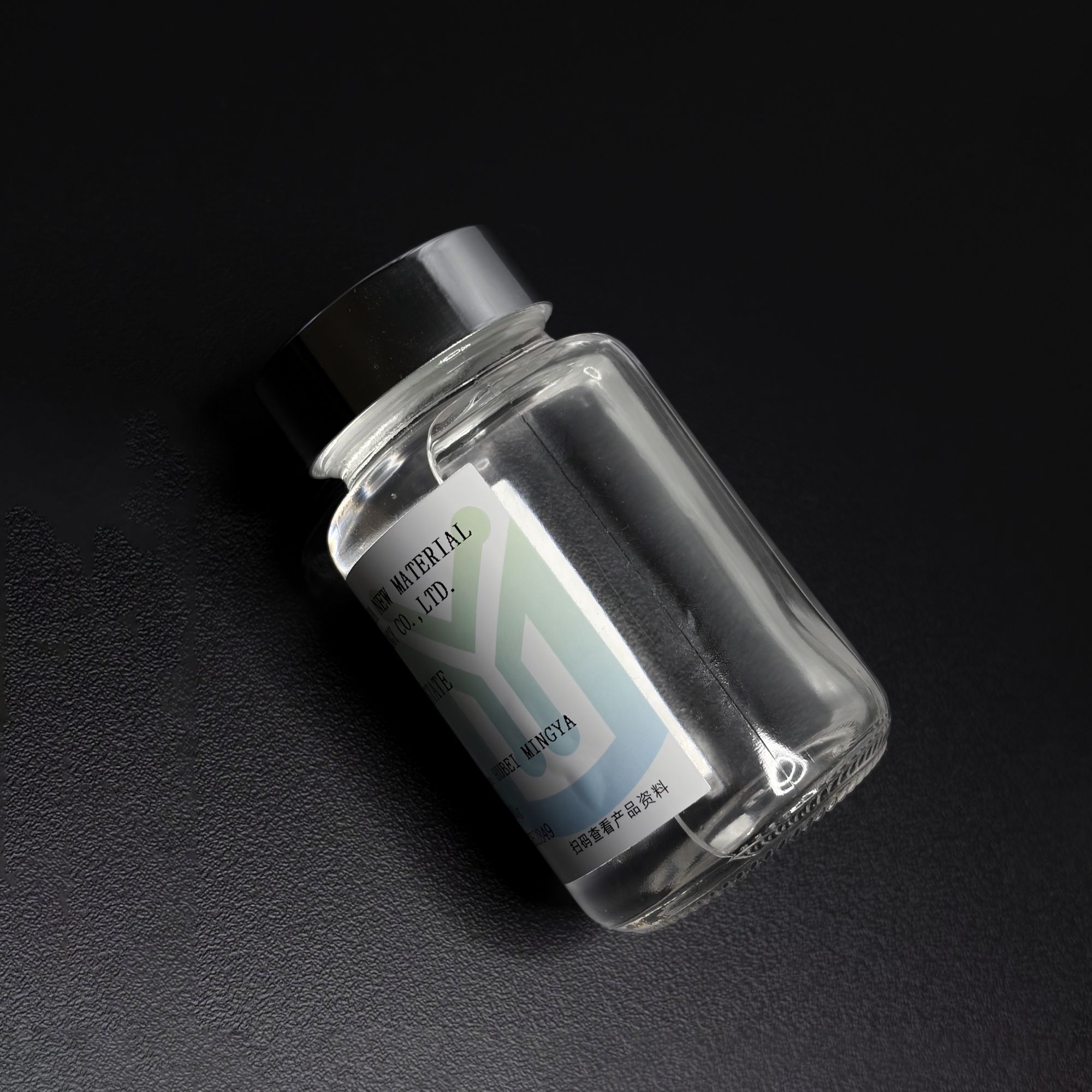
Esterification reactions are notoriously sensitive to small shifts in temperature, moisture, or mixing speed, and without tight control, batch after batch can drift in color, viscosity, or acid value. The trick lies not in chasing perfect conditions, but in building a feedback loop that corrects for the invisible variables—the trace water in a feedstock, the slight fouling on a heating coil, the lag between catalyst addition and actual reaction onset. By monitoring the rate of water removal rather than just the final acid number, operators can adjust reflux ratio or vacuum level mid-run, keeping the reaction trajectory locked onto a reference curve instead of letting it wander.
Controlled esterification treats time as a variable to be managed, not a fixed recipe step. A batch that starts slightly slower due to a cooler ambient temperature can be gently accelerated with a modest increase in jacket temperature or a small bump in catalyst, but only if the control system recognizes the early deviation. The result is not a perfectly identical product every time, but a product that stays within a narrow band of molecular weight distribution and ester content—what matters for downstream formulation. Operators learn to read the condenser’s drip rate and the reactor’s pressure drop as a kind of Morse code, telling them when to hold steady and when to intervene.
The real payoff of this approach shows up over dozens of batches. Without active drift correction, small cumulative changes—a gradually fouling heat exchanger, a slowly degrading catalyst lot, a seasonal shift in raw material purity—can push the process silently out of spec. Controlled esterification builds in checkpoints that compare live data against historical golden batches, triggering alerts only when the trajectory diverges beyond a statistical threshold. This kind of guardrail doesn’t just prevent off-spec product; it gives engineers the confidence to run longer campaigns, reduce sampling frequency, and trust that the chemistry inside the reactor is still following the intended path.
Formulating with IPM: Solving Greasiness Without Sacrificing Emollience
Isopropyl Myristate (IPM) often gets a bad rap for being too light, but that very quality is what makes it indispensable when a formula feels heavy or greasy. It is a low-viscosity ester derived from myristic acid and isopropyl alcohol, and its small molecular size allows it to spread across the skin almost immediately. Rather than sitting on the surface like mineral oil or shea butter, IPM dives into the upper layers, dragging heavier emollients with it. The result is a formula that still delivers moisture and softness, but without the sticky, occlusive film that makes people reach for a tissue.
The trick is balance. A little IPM goes a long way when you are trying to lighten a rich cream or a facial oil. Start by replacing 2-5% of your heaviest emollient with IPM and evaluate the skin feel. It works especially well alongside silicones and natural oils like squalane or jojoba, because it prevents them from clumping into a thick layer. In body butters, a small addition can turn a waxy, slow-absorbing texture into one that glides and disappears in seconds. Just avoid pushing the dose too high in leave-on products for acne-prone skin, as IPM's rapid penetration can occasionally trigger congestion in sensitive individuals.
When done right, IPM changes the entire sensory profile of a product. There is no need to sacrifice the protective, conditioning benefits of emollients; you simply change how they are delivered. The finish becomes silky rather than slick, breathable rather than suffocating. Formulators looking to solve greasiness without stripping the formula down to water and glycerin should keep a bottle of IPM on the bench. It is one of the few ingredients that can make a heavy formula feel feather-light while keeping every bit of its nourishing character.
The Audit Trail: Documentation and Compliance for Pharmaceutical Buyers
Every purchase order, every supplier qualification, every rejected batch leaves a paper trail that regulators can request at any moment. For pharmaceutical buyers, the audit trail is not a bureaucratic afterthought but the backbone of defensible procurement. Without meticulous documentation, even a routine audit can escalate into a costly warning letter or supply disruption.
Practical compliance means capturing not just the final decision but the reasoning behind it: why a particular vendor was chosen, how temperature excursions during transit were assessed, and who approved a deviation from standard operating procedures. Many teams rely on shared spreadsheets or email threads, yet these often fail under scrutiny because they lack version control and clear ownership. A robust system links each purchase to its corresponding certificate of analysis, cold chain data, and quality agreement, making it possible to reconstruct the full lifecycle of a material within minutes rather than weeks.
Beyond satisfying inspectors, a disciplined audit trail protects the buyer’s own organization. When a recall happens or a supply shortage creates pressure to accept substandard lots, documented evidence of due diligence becomes the difference between a contained incident and a systemic failure. Investing time in clear, consistent documentation upfront reduces ambiguity during audits and reinforces a culture where compliance is measured by evidence, not by memory.
Sourcing Palm-Free Isopropyl Myristate Without the Price Premium
Many formulators assume palm-free isopropyl myristate must carry a significant markup, but that assumption is increasingly outdated. The shift toward coconut-derived or mixed fatty acid feedstocks has narrowed the cost gap considerably. By working directly with mid-sized oleochemical suppliers who run diversified feedstock lines, buyers can lock in competitive pricing without sacrificing traceability documentation.
A practical approach is to request standard and palm-free quotes side by side during the same sourcing cycle. Suppliers often have excess capacity in palm-free grades and are willing to negotiate when volume commitments are clear. Consider combining shipments with other palm-free esters to reduce logistics cost per unit, which further erodes the price differential.
Finally, audit the supplier's segregation and traceability process instead of paying for premium branding. Some manufacturers use segregated storage and mass balance certification that adds little to unit cost but satisfies ethical sourcing requirements. Long-term contracts with fixed pricing windows can eliminate the typical 10–15% premium altogether, making palm-free isopropyl myristate a viable cost-neutral option.
Long-Term Stability Testing: What 24-Month Data Reveals About Oxidation
Twenty-four-month stability data is often boiled down to a simple pass or fail, but oxidation rarely follows a linear path. Many formulations look pristine through month 12, then show a sharp inflection in peroxide values and hexanal content between months 18 and 24. This late-stage jump typically signals depletion of the antioxidant reserve rather than a gradual degradation, which means early timepoints can be misleading if used to predict long-term behavior.
Temperature and packaging interactions matter more than any single variable in the dataset. A formula stored at 25°C with 60% relative humidity may stay within specification for the full 24 months, while the same batch at 30°C and 75% RH can develop rancid off-notes by month 16. High-barrier films and nitrogen flushing delay oxidation, but the data shows the real bottleneck is often not total antioxidant concentration—it is localized depletion caused by migration to the container surface or reaction with trace metal ions from manufacturing equipment.
Sensory and physical changes also appear earlier than standard chemical markers in the 24-month window. For emulsions rich in unsaturated oils, oxidation byproducts trigger browning reactions and surfactant reorganization, leading to yellowing and phase separation even when peroxide values remain within limits. Relying only on oxidative chemistry can therefore miss meaningful quality drift, so visual and rheological shifts deserve equal weight when reviewing long-term stability results.
FAQ
Its light, non-greasy skin feel makes it a favorite emollient in lotions and serums, while its high purity and compliance with pharmacopeia monographs allow use in topical pharmaceutical bases and ointments.
Production runs through closed stainless-steel systems with multiple distillation passes, and each batch is tested for acid value, saponification value, moisture, and residual catalysts before release.
High-purity material with low free acid and peroxide content generally has low irritation potential, but formulators should still run patch tests on finished products to account for other ingredients.
Standard supply is 200 L HDPE drums or 1000 L IBC totes, but smaller sterile containers or nitrogen-blanketed packaging can be arranged for oxygen-sensitive pharmaceutical projects.
Batch-to-batch shifts in viscosity, color, or odor can alter final product texture and shelf stability, so consistent control over feedstock and distillation cut points keeps reformulation work minimal.
Yes, additional purification steps or tighter impurity limits can be implemented under GMP conditions, and the team will work from your target monograph or internal specification sheet.
You receive a certificate of analysis, safety data sheet, and certificate of origin with every delivery; pharmaceutical customers can also request a drug master file reference or stability data package.
Look beyond price to on-site production capacity, third-party audit history, actual levels of mono-esters and residual alcohols in samples, and whether the supplier already serves recognized cosmetic or pharma brands.
Conclusion
A top-tier isopropyl myristate operation begins where most suppliers cut corners: raw material selection and reaction control. Cosmetic-grade IPM shouldn't just meet a spec sheet—it should behave identically in your emulsion batch after batch. That's where controlled esterification matters. By maintaining tight temperature curves and catalyst ratios inside the reactor, a capable factory prevents the subtle drift in ester distribution that creates unpredictable skin feel. The result is a light, dry emollient that cuts through greasiness in sunscreens, serums, and lotions without stripping away the cushiony after-feel formulators rely on. Cheaper alternatives often carry residual alcohol or free acid, which shows up later as odor shifts or viscosity instability. A premium factory treats IPM as a functional ingredient, not a commodity solvent.
For pharmaceutical buyers, documentation becomes part of the product. A reliable factory provides full audit trails—batch records, residual solvent data, and change control—without needing to be chased for them. This matters when your downstream application faces regulatory scrutiny. Sourcing palm-free isopropyl myristate used to mean paying a premium, but modern facilities with diversified esterification feedstocks can offer it at parity by optimizing logistics and supplier contracts rather than compromising purity. Real confidence comes from long-term data. Twenty-four-month stability studies on oxidation, acid value, and color reveal whether an IPM will stay clean in a formulation or slowly degrade in the warehouse. The best factories share that data openly, because their process is built to hold up over time, not just pass an initial COA.
Contact Us
Contact Person: Miss Pei
Email: [email protected]
Tel/WhatsApp: 8618620409116
Website: https://www.mingyachemicals.com/