

Top Ultrasonic Transducers Revolutionizing Industrial and Medical Applications
2026-08-11
Ultrasonic transducers are quietly reshaping how we clean, weld, and even heal. From precision industrial processes to non-invasive medical therapies, these devices are proving indispensable. At the heart of this innovation, companies like Siansonic are driving breakthroughs that merge reliability with cutting-edge performance. Here’s a look at the top transducer designs making waves across both sectors—and why they’re set to redefine what’s possible.
Piezoelectric Ceramics: The Powerhouse Behind High-Intensity Focused Ultrasound
High-intensity focused ultrasound (HIFU) relies on a simple yet profound principle: converting electrical energy into precisely focused mechanical vibrations. At the core of this conversion are piezoelectric ceramics, materials that deform when an electric field is applied. In a HIFU transducer, these ceramics are shaped into discs, rings, or spherical shells and driven at ultrasonic frequencies, causing them to oscillate back and forth. This rapid mechanical motion generates pressure waves that propagate through tissue. Unlike imaging ultrasound, where the power levels are low, HIFU uses ceramics engineered to handle extreme electrical and mechanical loads without fracturing or overheating, delivering acoustic intensities thousands of times higher than diagnostic devices.
The choice of piezoelectric material is critical. Commonly used ceramics like lead zirconate titanate (PZT) offer a unique balance of high electromechanical coupling, mechanical durability, and tunable dielectric properties. Manufacturers can adjust the composition by doping or modifying the zirconate-to-titanate ratio, tailoring the ceramic’s performance for specific HIFU applications—for instance, lowering the acoustic impedance to better match tissue or shifting the Curie temperature to avoid depoling during intense bursts. Advanced designs also layer multiple ceramic elements or combine them with acoustic matching and backing layers, forming a resonant stack that maximizes energy transfer. This careful engineering allows a single palm-sized transducer to focus sound into a spot smaller than a grain of rice, reaching temperatures that ablate tumors while sparing the surrounding healthy tissue.
Behind the scenes, the fabrication of these ceramics demands rigorous consistency. Even microscopic pores or grain-boundary imperfections can become nucleation points for cracks under repeated high-power cycling. Leading manufacturers use techniques like hot isostatic pressing to densify the ceramic and laser vibrometry to verify that each transducer element vibrates uniformly. As HIFU expands into neurology and targeted drug delivery, next-generation materials such as single-crystal relaxor ferroelectrics are pushing the boundaries further, offering broader bandwidths and even greater efficiency. Yet the enduring reliance on ceramic technology—decades old—speaks to its unmatched ability to turn raw electricity into a precise, noninvasive surgical scalpel.
CMUT Arrays: Microfabrication Meets Medical Imaging Precision
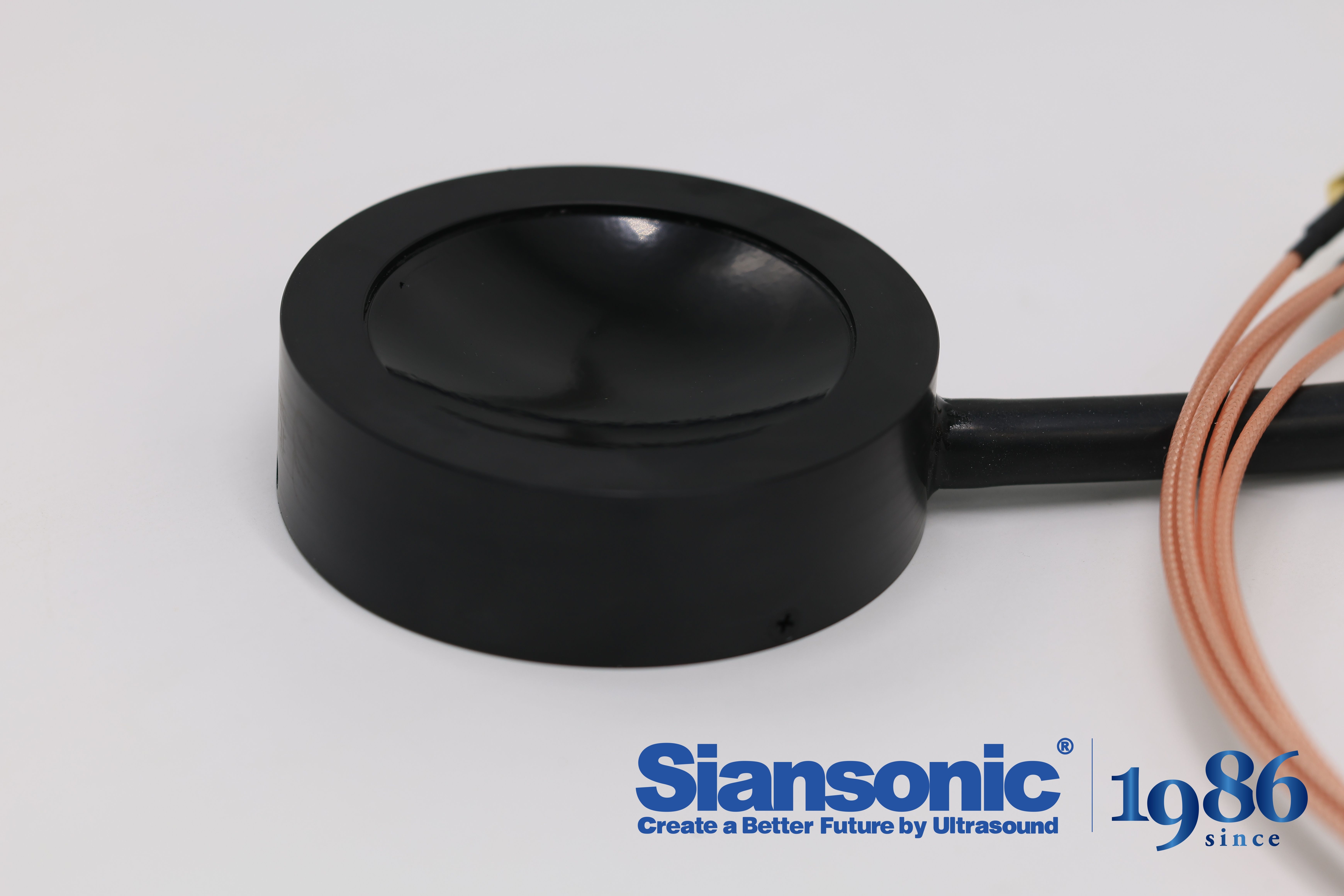
At the heart of modern ultrasound innovation, capacitive micromachined ultrasonic transducer (CMUT) arrays embody a leap in both fabrication fidelity and imaging acuity. Unlike their piezo-based predecessors, these silicon-born devices emerge from wafer-scale microfabrication—borrowed from the semiconductor industry—allowing dimensional control at the nanometer level. This precision translates directly into acoustic performance: uniform element response, wide bandwidth, and the ability to shape intricate array geometries that were once impractical. The marriage of microelectromechanical systems (MEMS) processes with medical imaging requirements yields probes that can deliver higher resolution, deeper penetration, and new functional imaging modes without the bulk or variability of traditional ceramics.
What sets CMUT arrays apart is the way they reconcile manufacturing rigor with clinical versatility. Each cell consists of a thin membrane suspended over a vacuum cavity, forming a capacitor that drives ultrasound generation and reception electrostatically. The fabrication sequence—lithography, sacrificial release, and wafer bonding—ensures nearly identical cells across entire arrays, minimizing cross-talk and phase errors. This uniformity opens the door to advanced beamforming strategies and high-channel-count designs that elevate spatial resolution. Moreover, because the membranes can be tuned via DC bias, a single array can operate across multiple frequency bands, adapting slice thickness and focal depth on the fly—a flexibility piezoelectric crystals simply cannot offer.
The transition from benchtop prototypes to clinical tools has been fueled by engineering choices that prioritize repeatability and integration. Monolithic integration with CMOS circuitry directly beneath the transducer cells reduces cable bulk and signal degradation, enabling compact, high-density interconnects. This co-design philosophy also allows for on-chip signal conditioning and multiplexing, making 2D matrix arrays feasible for real-time volumetric imaging. By leaning on established semiconductor fabrication, CMUT technology sidesteps the dicing-and-lapping inconsistencies of piezoelectric blocks, delivering predictable acoustic pulse shapes and reproducible performance from batch to batch. As a result, these arrays are finding their way into areas demanding extreme precision—intravascular ultrasound, image-guided therapy, and point-of-care diagnostics—where every micron matters and reliability is non-negotiable.
Magnetostrictive Transducers: Achieving Unmatched Penetration in Industrial NDT
The physical principle behind magnetostrictive transducers sets them apart from conventional ultrasonic probes. By exploiting the Joule effect—where a ferromagnetic material undergoes minute shape changes under a magnetic field—these devices generate guided waves that travel great distances through pipes, plates, and other structures. This mechanical deformation is not hindered by surface coatings, moderate corrosion, or complex geometries, allowing the wave to tunnel deep into the material with minimal energy loss. Unlike piezoelectric crystals that often require a couplant and a clean contact point, magnetostrictive elements can be permanently bonded or clamped onto a component, transforming a localized excitation into a long-range screening tool. The result is the ability to inspect sections that were once considered impractical, such as buried pipelines, insulated vessels, and elevated tank shells, all from a single access point.
Long-range ultrasonic testing with magnetostrictive transducers fills a critical gap in asset integrity management. Traditional spot checks miss degradation that occurs in inaccessible areas—under supports, at soil-to-air interfaces, or behind structural overlays. The torsional or longitudinal modes generated by magnetostrictive probes can sweep dozens of meters in either direction, picking up corrosion clusters, cracks, and wall thinning with remarkable sensitivity. Signal interpretation still demands skill, but the hardware itself is robust enough for field use. Technicians can mount a lightweight sensor strip directly onto a pipe, energize it with a portable pulser, and gather data that reveals cross-sectional changes as small as a few percent. This kind of coverage dramatically reduces the number of excavation points or scaffolding setups needed, slashing downtime while boosting the probability of detection.
What truly distinguishes magnetostrictive technology is its adaptability to harsh environments. Because the transduction mechanism relies on magnetic coupling rather than acoustic impedance matching, the transducers shrug off dirt, paint, and irregular surfaces that would stymie standard angle-beam probes. High-temperature variants, using materials like nickel or cobalt-iron alloys, continue to function where piezoelectrics would depole. The absence of adhesives or gels for dry-coupled configurations means inspections can proceed on hot process lines, in rainy weather, or on rough castings without constant recalibration. Engineers are now integrating these probes into permanently installed monitoring systems, streaming periodic data to cloud-based dashboards. The penetration depth stays consistent over years, offering a genuine baseline for trend analysis and early-warning alerts—a shift from reactive to predictive maintenance that pays for itself after the first avoided failure.
Miniaturized Transducers: Enabling the Next Wave of Intravascular Ultrasound
Shrinking transducers to a fraction of their former size has fundamentally altered what is thinkable in intravascular imaging. The latest designs, often built around piezoelectric micromachined ultrasonic transducers or capacitive micromachined ultrasonic transducers, now slip through vessels that once posed impassable barriers. This leap isn't simply about smaller footprints—it’s about bringing functional resolution closer to the tissue, letting clinicians map arteries with a level of detail that feels almost tactile. Where earlier probes struggled to navigate tortuous paths, these miniaturized workhorses weave through without sacrificing signal fidelity, turning previously opaque segments into data-rich landscapes.
Material choices and fabrication techniques are pushing this transformation further. Advances in thin-film processing and flexible electronics mean transducers can be mounted on guidewires or delivered via catheters barely wider than a strand of hair. Designers are no longer forced to choose between size and performance; bandwidth and sensitivity hold up even at microscale dimensions. This balance opens the door to higher-frequency imaging—well beyond the 40–60 MHz range—that peels back layers of plaque composition, revealing lipid cores, fibrotic caps, and early signs of degradation that older systems would smooth over or miss entirely.
What really sets this new generation apart is how it rethinks the entire imaging chain. Beamforming and signal processing are co-designed with the form factor, so the tiny transducer becomes part of a smarter sensing node. Some prototypes incorporate built-in multiplexing or wireless data transfer, reducing the hardware tether and letting physicians position the device with greater freedom. The result isn’t just a clearer picture—it’s a shift toward real-time, in-situ decision-making. As these miniaturized systems mature, they’re set to rewrite the rules of interventional cardiology and peripheral vascular assessment, blending diagnostics and guidance into one surprisingly compact device.
Air-Coupled Transducers: Redefining Non-Contact Material Characterization
If you’ve ever tried to inspect a delicate composite or a porous foam without touching it, you know the headache of coupling gels or immersion tanks. Air-coupled transducers sidestep that entirely by using the air itself as the couplant. It sounds simple, but it’s a quiet revolution in non-destructive testing, especially for materials that can’t get wet or contaminated.
Conventional ultrasound relies on a medium that matches acoustic impedance well enough to let sound energy cross into the sample. Air is a terrible couplant on paper—huge impedance mismatch—but modern transducer design with matching layers and high sensitivity has flipped that weakness into a strength. Now you can scan everything from aerospace laminates to wood products without a drop of gel, getting clear C-scans in seconds.
The real magic happens on the factory floor. Inline systems with air-coupled arrays can map thickness, detect delaminations, and measure elastic properties in real time, all while the material moves on a conveyor. This isn’t just a lab curiosity anymore; it’s redefining what rapid, non-contact material characterization means for high-volume manufacturing and quality assurance.
Smart Transducers with Embedded IoT: Real-Time Monitoring in Industrial Processes
Integrating smart transducers with embedded IoT capabilities transforms how industrial processes are monitored, shifting from periodic checks to continuous, data-driven oversight. These devices embed sensing, processing, and communication directly at the point of measurement, enabling instant detection of anomalies like pressure drops or temperature spikes. By transmitting data over lightweight protocols such as MQTT, they feed into dashboards or control systems without the latency of traditional polling methods, allowing operators to react in seconds rather than minutes.
The real power lies in edge computing—smart transducers can preprocess signals locally, filtering noise and extracting meaningful patterns before sending condensed insights to the cloud. This reduces bandwidth demands and ensures operations keep running even during network interruptions. For example, a vibration sensor on a pump can independently distinguish between normal wear and incipient failure, triggering alerts while storing high-resolution data for later forensic analysis. Such autonomy makes them indispensable in remote or hazardous environments where constant connectivity cannot be guaranteed.
Beyond immediate alerts, these transducers create a foundation for predictive maintenance by archiving operational signatures over time. Machine learning models, deployed either on the device or at the edge server, compare real-time streams against baseline profiles to forecast equipment degradation. This approach not only prevents costly downtimes but also optimizes energy usage and material flows. As industrial IoT ecosystems grow, smart transducers become the nervous system of smart factories, seamlessly bridging physical assets with digital twins and enabling closed-loop adjustments without human intervention.
FAQ
They now offer higher frequencies and better signal-to-noise ratios, allowing for detection of microscopic flaws in materials like composites and welds that were previously undetectable.
Advanced piezoelectric materials and miniaturized array designs have led to portable, high-resolution ultrasound devices that can be used at the bedside, improving patient access and diagnosis speed.
High-intensity focused ultrasound (HIFU) transducers are enabling non-invasive tumor ablation, while low-intensity pulsed ultrasound is accelerating bone healing and drug delivery.
They provide broader bandwidth and improved sensitivity, crucial for applications like 3D imaging and Doppler flow measurements in both industrial and medical settings.
Robust, high-temperature transducers are used for real-time monitoring of welding, bonding, and material thickness, ensuring quality control without slowing production.
Yes, they are now built with specialized housings and materials to withstand harsh conditions like extreme temperatures, corrosive chemicals, and high pressures.
Wireless connectivity and low-power designs allow ultrasound patches to continuously monitor vital signs or fetal heartbeats, transmitting data to clinicians in real time.
By electronically steering and focusing the ultrasound beam, they produce detailed cross-sectional images with improved resolution and depth, aiding in early disease detection.
Conclusion
Ultrasonic transducer technology is undergoing a profound transformation, driven by advanced materials and innovative designs that are reshaping both industrial and medical landscapes. At the heart of high-intensity focused ultrasound (HIFU) lies piezoelectric ceramics, whose exceptional energy conversion efficiency enables precise tissue ablation and therapeutic applications. Meanwhile, the advent of capacitive micromachined ultrasonic transducer (CMUT) arrays—fabricated through semiconductor microfabrication—has redefined medical imaging by delivering superior bandwidth, miniaturization, and seamless integration into compact diagnostic systems. In parallel, magnetostrictive transducers continue to dominate industrial non-destructive testing (NDT), leveraging their robust construction and deep penetration capabilities to inspect thick-walled components and coarse-grained materials where conventional approaches falter.
This revolution extends further with miniaturized transducers powering intravascular ultrasound (IVUS), offering unprecedented views from within blood vessels to guide complex cardiovascular interventions. Air-coupled transducers eliminate the need for physical coupling agents, enabling rapid, non-contact material characterization in industries ranging from aerospace to electronics manufacturing. Completing this paradigm shift, smart transducers embedded with IoT connectivity are turning routine ultrasonic probes into intelligent nodes for real-time process monitoring, predictive maintenance, and data-driven optimization. Together, these breakthrough technologies not only push the boundaries of resolution, speed, and portability but also open new frontiers in personalized medicine and autonomous industrial quality control.
Contact Us
Contact Person: Ivy Zhang
Email: [email protected]
Tel/WhatsApp: +86 1081502288
Website: https://www.siansonic.com/